Key takeaways
- The Centre has cleared Delhi UP highway projects worth ₹14,115 crore.
- The plan targets roads in and around Delhi and Uttar Pradesh.
- Officials want faster travel, smoother freight movement, and less congestion.
- These projects matter because NCR traffic slows people and goods every day.
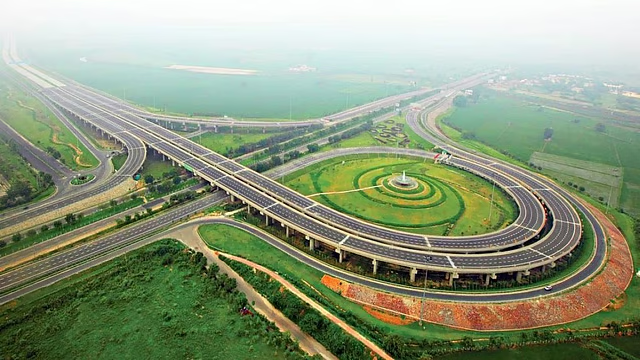
Delhi UP highway projects have won approval from the Centre at a cost of ₹14,115 crore. Delhi UP highway projects means new or upgraded major roads linking Delhi and Uttar Pradesh. The goal is simple. Cut travel time, reduce traffic jams, and help trucks move faster.
This is a big infrastructure push. Infrastructure means the basic systems a country uses, like roads and bridges. For families, it could mean shorter drives. For businesses, it could mean lower transport costs.
What exactly did the Centre clear?
The Union government cleared a set of highway works worth ₹14,115 crore, according to official reporting on the decision. The projects focus on Delhi and Uttar Pradesh, especially routes that carry heavy daily traffic. These are key roads for commuters, buses, and freight trucks.
A crore is 10 million rupees. So ₹14,115 crore equals ₹141.15 billion. That is a huge public works bill, and it shows how serious the government is about road links around the National Capital Region, or NCR. NCR is the wider Delhi region that includes nearby cities.
The approval matters because Delhi’s edge roads often choke during peak hours. A choke point is a place where traffic bunches up. One slow stretch can then delay an entire route. That hurts office workers, delivery vans, and factory supply chains.
Why do Delhi UP highway projects matter so much?
Roads around Delhi are not just local streets. They connect warehouses, airports, factories, and large housing areas. So when one link gets crowded, the effect spreads far beyond one city.
Uttar Pradesh sends and receives huge volumes of goods through NCR corridors. Freight means goods moved by truck, rail, ship, or air. Faster freight movement can lower fuel waste and help shops get stock on time. In fact, even small time savings can add up when thousands of trucks use a route each day.
For ordinary people, the value is easy to picture. If a trip falls from 90 minutes to 60, that is 30 minutes saved. Over five workdays, that becomes 150 minutes. That is two and a half hours back in a single week.
How could these roads change daily life?
If the work moves on schedule, drivers may see less stop-and-go traffic on busy approach roads. Stop-and-go traffic burns more fuel because vehicles keep braking and speeding up. It also raises stress, especially for bus drivers and people commuting every day.
Better highway links can also make travel more predictable. Predictable means you can guess the time more accurately. That helps school buses, office cabs, and ambulance routes. Meanwhile, trucking firms can plan deliveries with fewer surprise delays.
There is another effect too. Smoother roads can support new business hubs along the route. That may draw warehouses, logistics parks, and small service shops. Logistics means the planning and movement of goods from one place to another.
Delhi UP highway projects: key numbers₹14,115 cr30 min saved*Project costExample trip gain*Illustrative example, not an official estimate.
What do the numbers tell us?
The headline number is ₹14,115 crore. That is the total approved value reported for these Delhi UP highway projects. It places the move among the bigger road pushes now aimed at easing pressure around the capital region.
Here are the basic numbers in one place:
| Item | Figure | What it means |
|---|---|---|
| Total approved cost | ₹14,115 crore | Money cleared for the road works |
| Value in billions | ₹141.15 billion | Same amount in another format |
| Example weekly time saved | 150 minutes | If a commuter saves 30 minutes a day for 5 days |
Numbers alone do not build roads, of course. Execution matters most. Execution means the actual work on the ground, from land and contracts to construction and safety checks.
Will the projects finish quickly?
That is the big question. Large road schemes often face delays because land must be acquired, utilities must be shifted, and traffic has to keep moving during construction. Land acquisition means the government buys or takes land for a public project under legal rules.
Costs can also rise if work slows down. A delay of months can push up the price of steel, cement, and labour. Labour means the workers needed to build the road. So the original ₹14,115 crore figure is important, but the final impact depends on how tightly the projects are managed.
Still, approval is a key first step because it lets project agencies move ahead. That includes tendering, planning, and construction sequencing. Tendering means inviting firms to bid for the work.
How does this fit into India’s bigger transport story?
India has been spending heavily on roads, rail links, and logistics corridors to speed up movement across states. These Delhi UP highway projects fit that wider push. They also connect with efforts to improve trade flow, industrial output, and city-region travel.
Road connectivity has become even more important as digital shopping grows. More online orders mean more vans and trucks on urban edges. So stronger highway links can help both old industries and newer delivery businesses.
You can see the wider economic picture in other recent shifts too, like foreign investors buying Indian bonds worth ₹41,800 crore in June and the government’s large-scale push under India Semiconductor Mission 2.0. Those moves are different, but they point to the same theme: building capacity for future growth.
There is also a practical angle for fuel and transport markets. Better roads can help movement of commercial traffic, while energy pricing shifts affect the cost of every trip. For related context, readers can see the recent cut in windfall tax on diesel exports and the drop in 19-kg commercial LPG cylinder prices.
What should readers watch next?
Watch for route details, timelines, and contract awards. Those steps reveal which stretches will change first. They also show whether the most crowded parts get attention early.
Keep an eye on updates from the Ministry of Road Transport and Highways and the National Highways Authority of India. These are primary sources, which means official first-hand sources. They usually publish project notices, progress updates, and policy documents.
Delhi UP highway projects are meant to do one simple thing: help people and goods move faster between the capital region and Uttar Pradesh by easing some of the worst road bottlenecks.
If that happens, the payoff will be easy to feel. Less waiting. Smoother deliveries. More reliable trips. For a region as crowded as Delhi-NCR, that can make a real difference.
FAQs
What are Delhi UP highway projects?
They are major road and highway works cleared for Delhi and Uttar Pradesh. The aim is to improve traffic flow and transport links.
Why is ₹14,115 crore a big deal?
It is a very large public investment in roads. Big spending like this can reshape travel times and goods movement across busy corridors.
Who could benefit from these projects?
Daily commuters, truck operators, delivery firms, and nearby businesses could all benefit. Shorter and smoother trips save both time and fuel.