Key takeaways
- Colossal valuation talks may price the startup between $20 billion and $30 billion.
- Colossal Biosciences works on de-extinction. De-extinction means trying to bring back lost animal traits or species.
- The reported range is far above many normal biotech startup values.
- Investors seem excited, but the company still faces science, cost, and business risks.
Colossal valuation talks are about a possible new fundraising round for Colossal Biosciences. Colossal valuation talks means investors may put a price of $20 billion to $30 billion on the company. That would make it one of the most valuable private biotech startups. It also shows how much money is chasing bold science stories.
The report says Colossal Biosciences is discussing fresh funding at that huge range. A valuation is the price investors think a company is worth. In private markets, that number comes from what new backers agree to pay. So the final figure could still change before any deal closes.
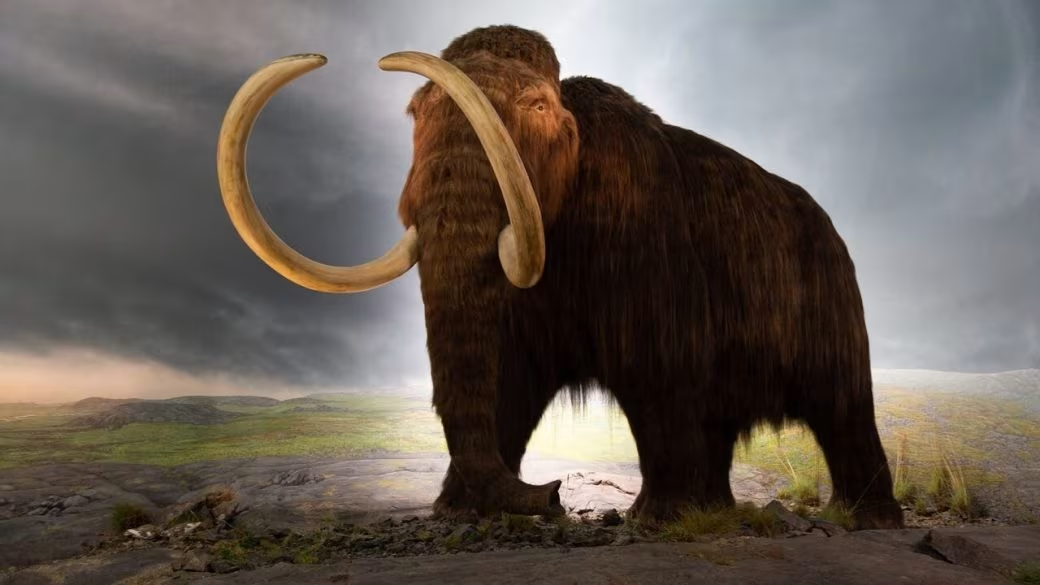
Colossal is not a normal drug company. It is best known for work tied to woolly mammoths, dire wolves, and other lost animals. The company says its tools could help conservation too. Conservation means protecting animals and nature that still exist today.
Why do Colossal valuation talks matter?
They matter because the numbers are huge. A $20 billion valuation is already enormous for a private startup. A $30 billion valuation is even more striking, especially for a company built around long-term biology bets. Biology bets are projects based on living systems, like genes and cells.
For comparison, many startups need years of sales before they reach such levels. Colossal is drawing interest mainly from its science story, team, and future promise. That makes these Colossal valuation talks a test of investor mood. In simple words, they show how much people will pay for big ideas right now.
These talks also matter beyond one company. They suggest private investors still have an appetite for moonshot science. A moonshot is a very ambitious project with a small chance of massive success. If a deal happens near the top of the range, other deep-tech founders may find fundraising easier too.
What does Colossal Biosciences actually do?
Colossal uses gene editing and other biotech tools. Gene editing means changing DNA, the code inside living things. The company has said it wants to revive traits from extinct animals and place them into close living relatives. That is different from simply cloning an extinct species from a frozen sample.
For example, the woolly mammoth effort focuses on Asian elephants. Scientists hope to add traits like thick hair or cold tolerance. Tolerance means the ability to handle harsh conditions. The idea is flashy, but it is also hard and expensive.
Colossal has argued that the same tools can aid living species. That could include helping animals resist disease or adapt to climate stress. Climate stress means damage caused by heat, drought, or shifting habitats. Supporters say this gives the company a wider purpose than just headline-making experiments.
How big is the number in these Colossal valuation talks?
It is massive. At $20 billion, the gap to $30 billion is $10 billion. That extra amount alone is larger than the full value of many public biotech firms. Public means listed on a stock exchange where anyone can buy shares.
Here is a quick look at the reported range:
Reported valuation range$20B$30BLowHigh
The chart shows only two numbers, but they say a lot. The high end is 50% above the low end. That is a giant spread for a private fundraising discussion. It suggests the deal is still being shaped, or that investors differ on how much upside they see.
| Item | Figure | What it tells us |
|---|---|---|
| Low end | $20 billion | Already a very large private biotech value |
| High end | $30 billion | Shows very strong investor optimism |
| Difference | $10 billion | A wide gap, so talks may still be fluid |
| Increase from low to high | 50% | The top case is much richer than the base case |
Why are investors willing to pay so much?
Part of it is story power. Colossal has a science pitch that people remember fast. Mammoths grab attention in a way few biotech projects can. That matters because fundraising is not only about data. It is also about belief.
Another reason is the market for frontier tech. Frontier tech means risky science that could create entirely new industries. Investors have recently paid up for AI, chips, space, and climate startups. Colossal seems to sit in that same bucket of big, hard, future-focused ideas.
There is also a platform argument. A platform is a set of tools that can support many products. If Colossal’s gene tools help conservation, agriculture, or medicine, backers may see more than one business line. That broadens the dream, even if near-term revenue stays small.
For readers tracking how investors price bold sectors, our coverage of the RBI swap facility shows how market confidence can move huge sums quickly. If you want another example of investors paying for future growth stories, see our report on Coca-Cola bottling IPO plans in India.
What are the biggest risks behind Colossal valuation talks?
The first risk is science itself. Biology can take years, and results can fail. A promising lab result does not always become a real-world product. That is why biotech investing often swings between hype and delay.
The second risk is business model clarity. A business model is how a company plans to make money. Colossal has a powerful story, but some investors may still ask where large, steady revenue will come from. Public excitement is useful, but cash flow matters too.
There are ethical questions as well. Ethical means about what is right or fair. Some scientists worry that de-extinction could pull money away from species already in danger today. Others ask whether humans should remake extinct animals at all.
Regulation could also matter later. Regulation means official rules from governments. Gene editing, animal welfare, and cross-border research can all bring legal checks. So even if Colossal valuation talks end with a blockbuster deal, the hard work would only start there.
What should readers watch next?
First, watch whether the round actually closes. Reported talks do not always become signed deals. The final valuation, investor list, and amount raised will matter more than rumors alone. Primary sources like TechCrunch and the company’s own official website are the best places to verify updates.
Second, watch for technical milestones. A milestone is a major step or proof point. If Colossal shows stronger lab results, partnerships, or conservation wins, investors may feel better about a premium price. If progress slows, the top end of these Colossal valuation talks may look harder to defend.
Third, watch the wider funding market. Big startup values depend on money being available. If risk appetite cools, even exciting companies can face tougher terms. We have seen that pattern before in sectors from software to consumer brands, including our story on how Reliance Consumer Products turned EBITDA positive before proving scale. EBITDA is a profit measure before some major costs.
Here is the plain answer: Colossal valuation talks show that investors may value a science startup on future promise, not just present sales. If the company lands funding near $30 billion, it will signal that giant private bets on biotech are still alive. If the number lands lower, interest may still be strong, but more grounded.
FAQs
What is Colossal Biosciences?
It is a biotech startup focused on de-extinction and conservation tools. It uses gene editing and related biology methods.
Why are Colossal valuation talks getting attention?
Because the reported range is huge at $20 billion to $30 billion. That is an unusually high value for a private biotech startup.
How certain is this new fundraising round?
It is not certain yet. Talks can change, and the final amount or valuation may end up different.
Why does this matter beyond one startup?
It shows how investors feel about risky science. A big deal could lift interest in other deep-tech and biotech companies too.
Get the day’s top stories in your inbox
One concise email. No spam, unsubscribe anytime.