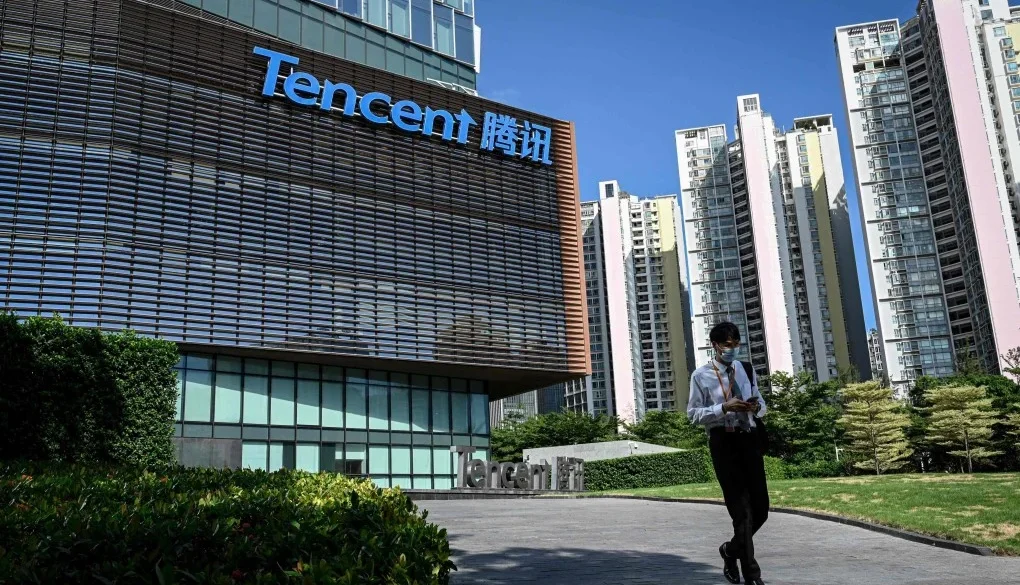
In a massive win for China’s push toward semiconductor self-reliance, ChangXin Memory Technologies (CXMT) has signed a monumental long-term supply agreement with Tencent Holdings valued at over 20 billion yuan (approximately $3 billion).
The major deal locks China’s largest domestic dynamic random-access memory (DRAM) manufacturer into the backend architecture of its most prominent internet and cloud computing giant, creating a powerful, localized alliance right as global chip supply routes tighten.
1. The Deal Specs: Securing the Cloud’s Memory
The confidential agreement spans a three- to five-year delivery window, focusing heavily on anchoring Tencent’s massive data center infrastructure:
- The Hardware Focus: CXMT will supply high-capacity server-grade DRAM chips directly to Tencent. These chips are the unglamorous but vital computational engines required to keep massive databases, cloud computing grids, and heavy AI workloads running smoothly without encountering memory bottlenecks.
- The Scarcity Hedge: For Tencent, committing to a multi-billion-dollar domestic pipeline acts as an existential defense mechanism. With global AI data center expansions soaking up DRAM faster than manufacturers can forge it—and sending market prices soaring—securing a massive, predictable flow of local silicon insulates Tencent from global supply shortfalls.
2. A Pre-IPO Blockbuster Catalyst
The timing of the announcement is a strategic masterclass for CXMT. The deal lands right as the Hefei-based manufacturer prepares for a blockbuster ₹29.5 billion yuan ($4.3 billion) initial public offering (IPO) on the Shanghai Stock Exchange’s STAR Market—slated to be mainland China’s largest listing of the year.
 [ May 2026: Regulatory Greenlight ] ──► SSE approves CXMT's blockbuster 29.5 Billion Yuan STAR Market IPO
                                                    │
                                                    ▼ (Corporate Validation Milestone)
 [ June 29: The Tencent Lock-In   ] ──► Secures $3 Billion (20B+ Yuan) long-term server DRAM contract
                                                    │
                                                    ▼ (The Expansion Blueprint)
 [ Parallel Enterprise Pipeline   ] ──► Leverages deal to close similar supply contracts with Alibaba & ByteDance
The validation from Tencent significantly strengthens CXMT’s financial prospectus. Driven by high hardware prices and massive domestic uptake, CXMT’s Q1 revenue grew by a staggering 700% year-on-year to hit 50.8 billion yuan, lifting the company into deep profitability after years of heavy research burns.
3. Shifting China’s Sovereign AI Stack
The geopolitical implications of the contract are profound. Historically, the premium global DRAM market has been tightly consolidated under a triopoly of foreign titans: South Korea’s Samsung and SK Hynix, alongside America’s Micron.
| Tech Domain | Past Vulnerability | The Onshore Workaround (Current State) |
| Server Infrastructure | Chinese cloud giants relied heavily on importing foreign memory modules, exposing them to sudden sanctions or western trade barriers. | Tencent has completed rigorous internal testing and validation of CXMT’s domestic DDR5 server chips, proving they match enterprise standards. |
| Manufacturing Scale | Limited domestic wafer output left local firms unable to fulfill high-volume hyper-scaler requests. | CXMT is constructing a massive new DRAM factory in Shanghai. Once fully operational, it is expected to double its capacity to 600,000 wafers per month. |
| AI Frontier Memory | High-Bandwidth Memory (HBM3) remains heavily restricted by western export controls. | CXMT is rapidly building a specialized HBM packaging facility in Shanghai, aiming to begin full-scale production to supply local AI accelerators before the end of the year. |
By successfully tying Tencent to its order books while simultaneously negotiating identical supply pipelines with Alibaba Cloud, ByteDance, and Xiaomi, CXMT is systematically insulating China’s primary consumer internet layer from external trade friction. Even as Western tech giants like Apple reportedly lobby Washington for special regulatory waivers to buy CXMT chips to escape rising costs, China is moving at hyper-speed to ensure its own digital ecosystem is entirely powered from within.