In one of the most severe supply chain security breaches in Apple’s history, a massive ransomware attack on Tata Electronics has resulted in confidential files, motherboard schematics, internal component maps, and prototype photographs of the unreleased iPhone 18 Pro series leaking onto the dark web.
The extortion campaign was executed by the cybercriminal syndicate World Leaks, which published over 630 gigabytes of data containing more than 200,000 internal files from Tata’s infrastructure. Because Tata Electronics serves as Apple’s primary manufacturing anchor in India, the breach has exposed highly guarded industrial secrets just months ahead of the lineup’s projected September 2026 debut.
1. The Anatomy of the Leak: What Spilled?
While Tata Electronics stated that the “cybersecurity incident” has had zero impact on its active physical factory operations, cybersecurity audits of the leaked database confirmed a deep exposure of next-generation hardware designs:
- Motherboard Schematics: The files include multi-layer circuit board layouts for the iPhone 18 Pro (internally codenamed V63) and iPhone 18 Pro Max (V43). The diagrams reveal the physical placement of the upcoming A20 Pro processor and Apple’s highly secretive, in-house C2 5G modem (codenamed Ganymede), confirming Apple is successfully accelerating its timeline to completely ditch Qualcomm silicon.
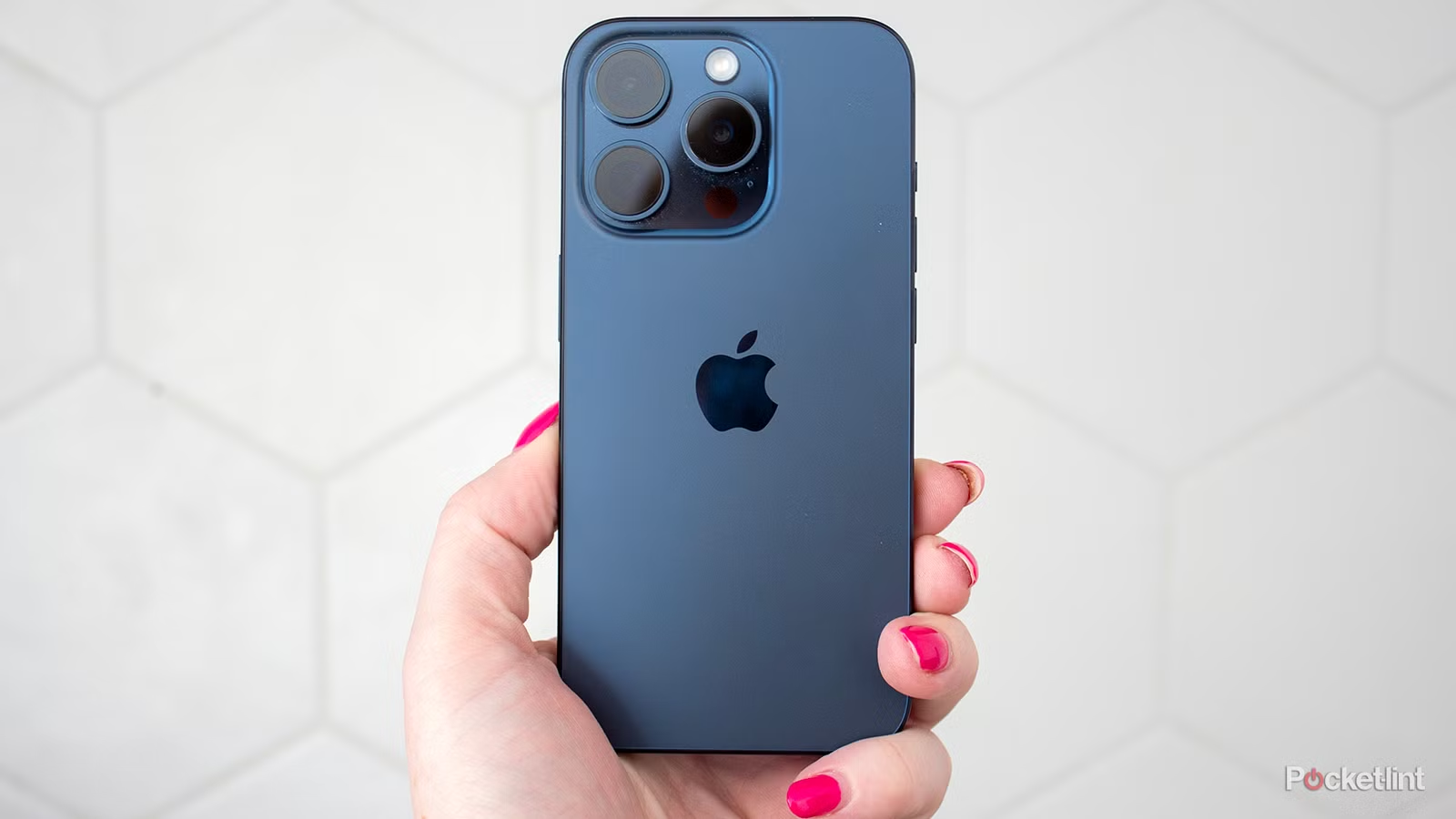
- Prototype Drop-Test Photos: The folder contains verified Quality Assurance (QA) photographs from early 2026 showing the iPhone 18 Pro undergoing robotic drop testing at a Tata facility. The images show a conventional, slab-shaped grey handset utilizing a triple-rear-camera module, suggesting the device will retain a familiar external industrial design while focusing on internal structural changes.
- The Silicon Footprint: Alongside native Apple documents, the database leaked files connected to major semiconductor partners TSMC and Qualcomm, alongside a 52-page quality inspection document outlining circuit board tolerances.
 [ World Leaks Ransomware Strike ] ──► Exfiltrates 630GB+ of secure data from Tata servers
                                                   │
         ┌─────────────────────────────────────────┴─────────────────────────────────────────┐
         ▼ (The Visual Evidence)                                                             ▼ (The Strategic Blueprints)
   [ 2026 Factory Photos ]                                                             [ Supply Chain Mapping ]
   • Shows grey slab prototype undergoing                                              • Exposes internal motherboard layers
     robotic facility drop-testing.                                                    • Pins exact components to specific vendors
   • Confirms triple-lens camera module.                                               • Reveals single-source vulnerabilities
2. Why the Supplier Mapping Cuts So Deep
While prototype photos generate consumer buzz, industry analysts emphasize that the component-to-supplier mapping is the most damaging element of the breach.
Apple goes to extraordinary lengths to hide its specific vendor alignments, keeping its public supplier list intentionally vague. The stolen archive features at least six comprehensive files that map hundreds of individual iPhone 18 Pro parts—including battery sub-assemblies, display drivers, and custom camera sensors—directly to the exact third-party companies manufacturing them.
The Leverage Threat: The documents explicitly reveal exactly where Apple multi-sources a part to create pricing competition, and crucially, where it relies on a single vendor. Exposing these structural single-source dependencies severely weakens Apple’s bargaining leverage right before it enters high-stakes component price negotiations with vendors.
3. The Geopolitical and Infrastructure Fallout
The timing of the breach is uniquely challenging for both companies. Apple has been aggressively executing a multi-year strategy to reduce its structural reliance on Chinese manufacturing hubs.
According to Counterpoint Research, India is on track to assemble 26% of the world’s iPhones by the end of 2026, up from just 6% four years ago. Tata Electronics is the absolute cornerstone of this sovereign shift, making its ability to guarantee total intellectual property isolation critical to maintaining Apple’s institutional trust.
| Compromised Entity | Immediate Containment Actions | Long-Term Strategic Impact |
| Tata Electronics | Restrained access to internal server networks and appointed a premier global consultancy to perform an end-to-end forensic audit. | Must rapidly prove its digital infrastructure is as secure as legacy Chinese hubs like Foxconn to avoid losing future premium assembly allocations. |
| Apple Inc. | Initiated a specialized threat intelligence investigation to track the proliferation of the dark web files. | Faces exposed supply chain vulnerabilities at a time when soaring global memory and storage costs are already compressing hardware margins. |
Moving forward, Apple’s immediate priority is ensuring that no unreleased user-interface software, cryptographic keys, or production firmware codes were swept up in the 200,000-file dump—all while attempting to scrub the blueprints from public channels before the flagship hardware hits mass assembly lines.