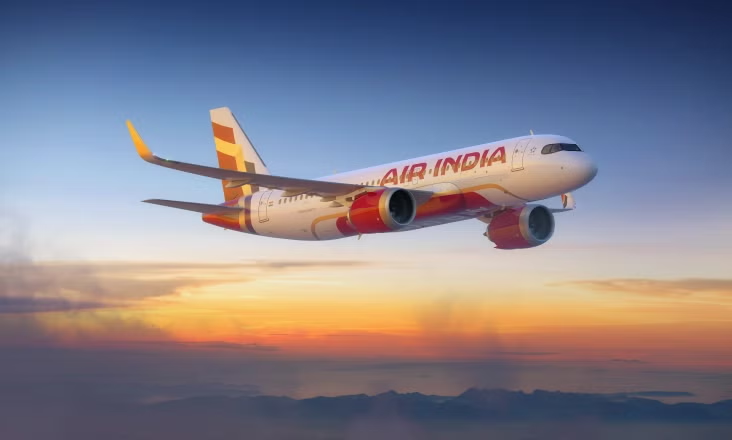
Air India is targeting a 30% share of India’s domestic aviation market within the next two years, accelerating its growth ambitions as the Tata Group-owned carrier expands its fleet, strengthens its route network, and integrates operations across the Air India Group. The goal comes as India’s aviation sector experiences rapid passenger growth, with airlines racing to add capacity and modernize fleets to capture rising demand.
The airline’s renewed domestic push follows the successful merger of Vistara into Air India and the continued expansion of Air India Express, creating a broader network spanning full-service and low-cost operations. Together, the group aims to challenge market leader IndiGo by increasing capacity on existing routes, launching new destinations, and improving service reliability.
Air India Targets 30% Domestic Market Share
Air India’s Chief Commercial Officer Nipun Aggarwal said the airline remains committed to its long-term expansion strategy despite near-term operational and financial challenges.
The carrier plans to:
- Increase capacity on key domestic routes.
- Launch services to new destinations.
- Expand both premium and economy offerings.
- Improve operational reliability and customer experience.
- Strengthen connectivity through the Air India Group network.
Air India’s Domestic Growth Strategy
| Focus Area | Strategy |
|---|---|
| Market share target | 30% domestic share within two years |
| Capacity | Increase flights on existing routes |
| Network | Add new domestic destinations |
| Customer experience | Improve reliability and service quality |
| Group integration | Leverage Air India and Air India Express networks |
Current Market Position
Air India is currently India’s second-largest airline, but it remains well behind IndiGo, which continues to dominate the domestic market.
Recent aviation data shows:
- IndiGo holds roughly 53% of domestic seat capacity.
- Air India accounts for around 12% of seat capacity as a standalone airline.
- The broader Air India Group, including Air India Express, commands a substantially larger share following recent integration efforts.
Fleet Expansion to Drive Growth
A key pillar of Air India’s strategy is its ongoing fleet modernization.
Since returning to Tata Group ownership, the airline has placed one of the aviation industry’s largest aircraft orders, covering hundreds of Airbus and Boeing aircraft. The additional aircraft will allow Air India to:
- Increase flight frequencies.
- Serve underserved domestic markets.
- Improve schedule connectivity.
- Replace older, less fuel-efficient aircraft.
- Support future international expansion.
Growth Drivers
| Driver | Expected Benefit |
|---|---|
| New aircraft deliveries | Higher capacity and efficiency |
| Network expansion | More domestic connectivity |
| Fleet modernization | Better reliability and lower operating costs |
| Premium product upgrades | Stronger appeal to business travelers |
Competition Remains Intense
Achieving a 30% domestic market share will require Air India to compete aggressively in one of the world’s fastest-growing aviation markets.
The airline faces competition from:
- IndiGo, which continues to lead the market with an extensive domestic network.
- Akasa Air, which is rapidly expanding its fleet and route network.
- SpiceJet and other regional carriers serving niche markets.
Industry growth, however, is expected to provide opportunities for multiple airlines as domestic passenger traffic continues to rise.
Challenges Ahead
Despite its ambitious plans, Air India continues to navigate several headwinds, including:
- Aircraft delivery delays affecting fleet expansion.
- Supply chain constraints across the aviation industry.
- Rising operating costs.
- Competitive pricing pressures.
- The need to integrate multiple airline brands and systems following recent mergers.
Opportunities vs Challenges
| Opportunities | Challenges |
|---|---|
| Strong growth in domestic air travel | Aircraft delivery delays |
| Fleet modernization | Rising operating costs |
| Tata Group investment | Intense competition |
| Expanded route network | Complex integration process |
Looking Ahead
Air India’s goal of securing a 30% domestic aviation market share within the next two years reflects the Tata Group’s determination to transform the airline into a stronger competitor in India’s rapidly expanding aviation sector. Backed by one of the industry’s largest aircraft orders, continued investment in customer experience, and the integration of Air India Express and former Vistara operations, the airline is positioning itself for sustained growth.
However, achieving this target will depend on timely aircraft deliveries, successful execution of its transformation strategy, and its ability to compete effectively against IndiGo’s dominant market position. As India’s air travel demand continues to rise, the next two years are likely to be pivotal in reshaping the country’s competitive aviation landscape.
Get the day’s top stories in your inbox
One concise email. No spam, unsubscribe anytime.