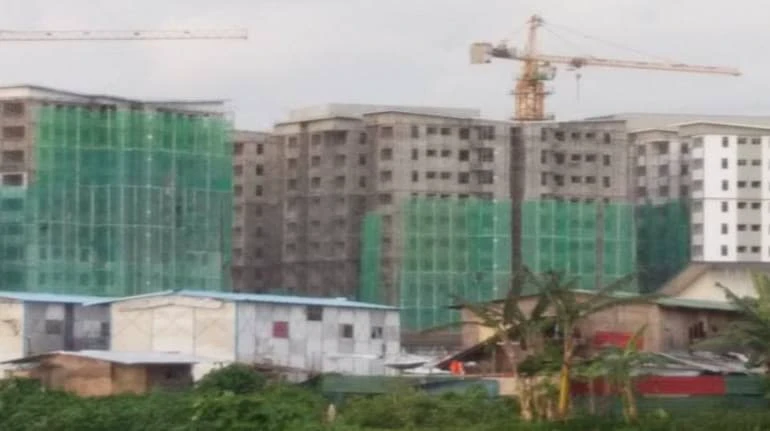
India’s residential real estate sector is staring at its toughest execution challenge in a decade. Just as the industry preps for a record-breaking year of residential handovers, a newly released report by property consultancy Anarock Research warns that a prolonged geopolitical conflict in West Asia puts 5,40,400 housing units across the top seven cities at risk of delivery delays.
The staggering pipeline—the highest annual volume of scheduled completions in the last 10 years—reflects the massive launch and sales momentum generated between 2021 and 2023. However, global trade frictions, volatile shipping corridors, and raw material shocks threaten to derail final-stage construction schedules.
Why a Distant Conflict Hits Indian Housing Sites
Unlike the unprecedented structural shutdowns of the 2020 pandemic, construction sites remain open and local labor availability is completely stable. Instead, the risk to the 2026 pipeline is entirely driven by distorted project economics and supply-chain logistics:
- Input Material Inflation: Modern residential completions rely heavily on metals and specialized components. The prolonged conflict has directly inflated global commodity prices, driving steep cost spikes for essential structural materials including steel, aluminium, copper, electrical equipment, and building systems.
- Logistics and Energy Squeezes: Maritime blockades and shipping route diversions around the Gulf region have sent ocean freight rates and crude oil prices ticking higher. These overlapping factors have increased the landed cost of finishes, specialized fittings, and imported luxury materials.
- The Finishing Line Vulnerability: Because a vast majority of these 5.4 lakh homes are in their absolute final phases of fit-outs and completion, developers are uniquely vulnerable to sudden, late-stage cost variations that squeeze working capital and delay regulatory RERA sign-offs.
Regional Impact: West and South India Bear the Brunt
The risk exposure is highly localized. Because the post-pandemic real estate boom was heavily concentrated in specific technological and financial hubs, just three major metropolitan markets shoulder roughly 70% of the entire national delivery burden.
| City / Region | Scheduled 2026 Completions | Share of National Pipeline (%) | Expected Risk Vulnerability |
| Mumbai Metropolitan Region (MMR) | 2,07,300 | 38.3% | Extreme (High luxury/imported finish reliance) |
| Pune | 1,00,300 | 18.6% | High (Squeezed mid-income margins) |
| Bengaluru | 69,000 | 12.8% | High (Tech corridor completion spikes) |
| Hyderabad | 63,700 | 11.8% | Moderate |
| Delhi-NCR | 39,000 | 7.2% | Low (Smaller historical 2026 pipeline) |
| Chennai | 35,600 | 6.6% | Low |
| Kolkata | 22,500 | 4.2% | Low |
Lessons From the Past: 2020 vs. 2026
Historically, highly ambitious housing completion targets have proven fragile when hitting global shocks. Real estate experts point to the pandemic-hit year of 2020 as a prime reminder of how fast pipelines can fracture:
The 2020 Precedent: In 2020, developers had an ambitious pipeline of 4.66 lakh homes scheduled for delivery across the top seven cities. However, systemic supply gridlocks and sudden labor migrations resulted in only 2.14 lakh units (a mere 46%) actually making it to buyers by the closing bell.
While the current corporate landscape is structurally healthier—backed by stronger developer balance sheets, lower leverage ratios, and robust end-user demand—the Confederation of Real Estate Developers’ Associations of India (CREDAI) has reportedly approached the Ministry of Housing and Urban Affairs (MoHUA). The industry body is seeking proactive directives that would allow state RERA authorities to grant conditional 3-to-6-month project timeline extensions if raw material supply chains remain volatile over the coming quarters.
The Developer Dilemma
For buyers and developers alike, the focus has abruptly inverted from driving sales to proving execution capability. Large, organized corporate developers with deep volume-purchasing power and localized material sourcing models are well-positioned to cushion the margin squeeze and protect their timelines.
Conversely, tier-2 and tier-3 standalone builders—who are bound by strict, time-sensitive RERA compensation clauses—may face severe operational gridlocks if they try to pause construction to wait out global commodity spikes, turning the final half of 2026 into a defining trial for the sector.