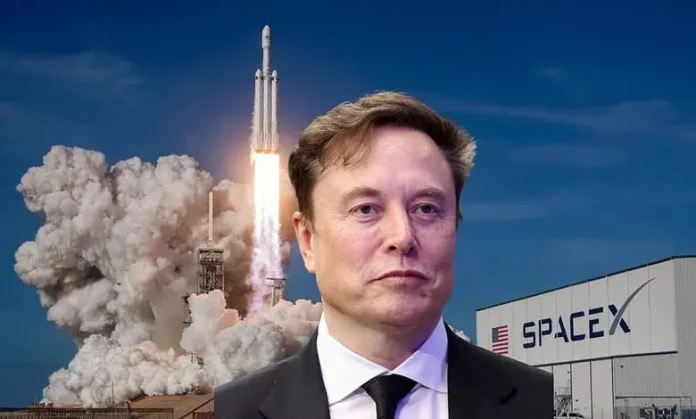


As the dust settles on SpaceX’s record-breaking initial public offering (IPO) on the Nasdaq exchange, institutional investors are analyzing the precise breakdown of the aerospace giant’s cap table. While regulatory filings confirm that CEO Elon Musk holds a 46.4% economic equity stake in the company, the true headline for Wall Street is his absolute, ironclad corporate governance.
Through a highly structured dual-class share architecture, Musk retains an estimated 82% to 84% of total voting control post-IPO, ensuring his vision for Mars exploration remains completely insulated from public shareholder pressure.
Equity vs. Control: The Dual-Class Structure
The massive disconnect between Musk’s economic ownership and his actual voting power is the single most important metric for market participants to understand.
Prior to the public float, SpaceX’s equity underwent a series of major rebalancings—including a massive corporate merger with artificial intelligence startup xAI. Despite the dilution of rolling out a historic $75 billion public capital raise, the company’s governance was carefully fortified:
- Class A Common Stock: The shares available to the public and institutional buyers on the open market (trading under the ticker SPCX) carry a standard 1 vote per share.
- Class B Super-Voting Stock: Musk personally holds roughly 5.5 billion Class B shares. These tightly controlled founder shares carry 10 votes per share, effectively rendering any public retail or institutional activist campaign mathematically impossible.
SpaceX Internal Cap Table: Post-Listing Metrics
Musk’s personal stake of 46.4% (amounting to over 6 billion total shares when factoring in vested executive options) is more than ten times larger than that of any other single shareholder.
| Shareholder / Entity | Estimated Equity Stake (%) | Approximate Shares Held | Primary Nature of Holding |
| Elon Musk | 46.4% | ~6.07 Billion | Founder / Class B Super-Voting |
| Valor Management | 3.8% | 503.4 Million | Venture Capital Affiliate |
| Public Float / Retail | 4.2% | 555.6 Million | IPO Class A Common Stock |
| Institutional Core | 3.5% | ~460.0 Million | Pre-IPO Backers (Baron, Fidelity, Alphabet) |
| Employees & Alumni | ~20.0% | ~2.60 Billion | Vested Stock Options & Restricted Units |
The Trillionaire Milestone
With SpaceX officially opening its public listing at a fixed price of $135 per share—anchoring a baseline valuation of $1.77 trillion—and surging over 11% to cross $150 on its opening trading day, the value of Musk’s personal equity has shattered global records.
The successful listing has officially minted Musk as the world’s first paper trillionaire. Analysts note that the bulk of his net worth is now formally tied up in SpaceX and its satellite internet subsidiary Starlink, comfortably eclipsing his remaining 10% equity stake in electric automaker Tesla.
“The dual-class structure was an absolute non-negotiable prerequisite for taking the company public,” noted an equity capital markets strategist. “Musk is positioning SpaceX not as a standard commercial defense contractor, but as a multi-decade project to build interplanetary infrastructure. He needed to ensure Wall Street couldn’t force quarterly cost-cutting measures at the expense of the Starship program.”
While corporate governance watchdogs and select European pension funds have expressed reservations regarding the extreme concentration of power, the sheer demand for the IPO—which closed over four times oversubscribed—proves that institutional asset managers are more than willing to accept Musk’s absolute control in exchange for a piece of the commercial space monopoly.