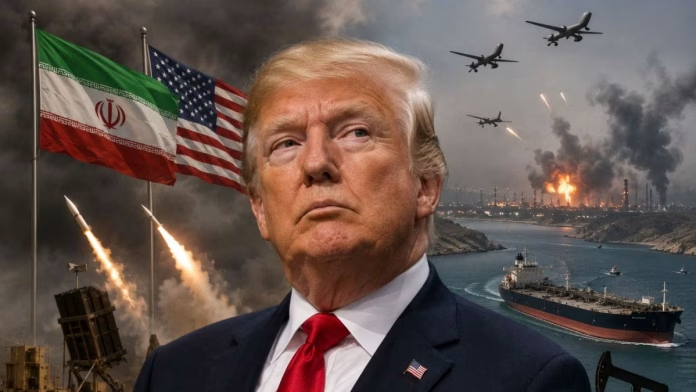


U.S. President Donald Trump has sparked a sharp diplomatic row after publicly accusing Iran of executing a drone attack against Indian-crewed commercial vessels near the Strait of Hormuz.
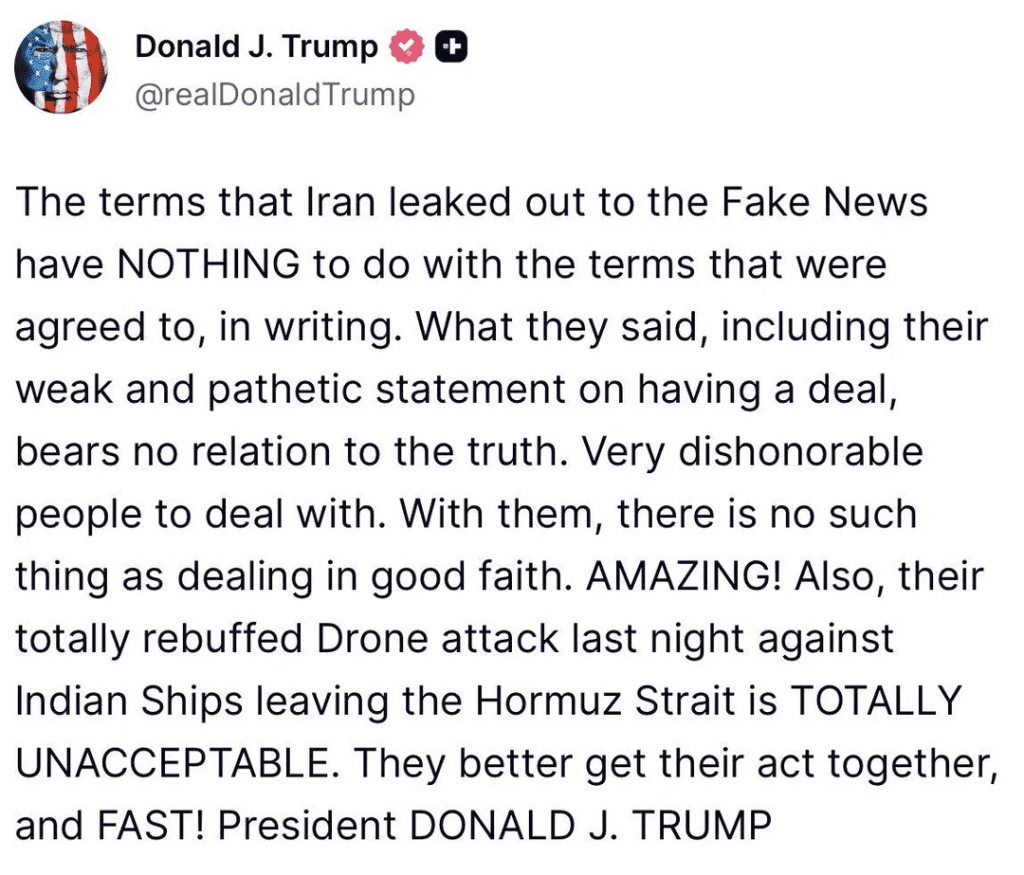
The accusation, which Trump delivered in a characteristically fiery post on Truth Social, explicitly called the alleged strike “totally unacceptable” and warned Tehran to “get their act together, and FAST!”
However, the claims have introduced a major point of confusion and friction, directly contradicting official statements from both the U.S. military and the targeted nations.
The Disconnect Between Trump and the Pentagon
While President Trump insisted that the maritime damage was the result of a “totally rebuffed drone attack” by Iran, his own military chain of command provided a completely different account of the week’s events.
- The CENTCOM Acknowledgement: U.S. Central Command (CENTCOM) explicitly acknowledged executing and disabling three separate merchant ships off the coast of Oman this week. The U.S. military even shared video footage of American Hellfire missiles striking the vessels, stating they were targeted during ongoing operations in the region.
- The Indian Crew Casualties: Three commercial tankers—the Marivex, the Settebello, and the Jalveer—were carrying dozens of Indian seafarers. Tragically, the U.S. military strike on the Settebello resulted in the deaths of three Indian sailors.
Geopolitical Fallout and Responses
The incident has triggered a complex triangle of diplomatic fury and damage control, unfolding just as the U.S. and Iran are reportedly trying to finalize a delicate 14-point peace framework mediated by Pakistan.
                  ┌────────────────────────────────────────┐
                  │          President Trump               │
                  │   Blames Iran for drone attacks        │
                  └───────────────┬────────────────────────┘
                                  │
      Contradicts Military        │        Denies Accusations
      & Kills 3 Indian Sailors    │        Labels it "State Piracy"
                                  ▼
    ┌───────────────────────────┐           ┌───────────────────────────┐
    │     U.S. CENTCOM          │           │          Iran             │
    │ Confirms U.S. Hellfire    │           │ Condemns U.S. strikes;    │
    │ missile strikes on ships  │           │ sends condolences to India│
    └─────────────┬─────────────┘           └─────────────┬─────────────┘
                  │                                       │
                  │ Summoned & Protested                  │ Strong Ties
                  ▼                                       ▼
            ┌───────────────────────────────────────────────────┐
            │                  Government of India              │
            │  Summons U.S. Diplomat; Issues safety advisory   │
            │  for 18,000 seafarers in the Gulf region          │
            └───────────────────────────────────────────────────┘
1. India Protests to Washington
New Delhi reacted with intense concern over the loss of its citizens to American fire. The Ministry of External Affairs (MEA) summoned U.S. Chargé d’Affaires Jason Meeks in New Delhi to lodge a strong protest, labeling the American military’s “lethal and deadly” strikes on civilian merchant vessels as entirely “unacceptable.” Simultaneously, India’s Directorate General of Shipping issued a critical safety advisory urging heightened vigilance for the roughly 18,000 Indian seafarers currently operating in the Gulf of Oman and the Strait of Hormuz.
2. Iran Denies Allegations, Hits Back at U.S.
Tehran completely dismissed Trump’s drone allegations as “baseless.” Iran’s Foreign Ministry spokesperson, Esmaeil Baqaei, extended formal condolences to the Indian government and the families of the slain sailors. Turning the focus back on Washington, Baqaei blasted the U.S. military actions as “clear evidence of America’s ongoing policy of armed robbery and State piracy,” arguing that U.S. operations are the true threat to the freedom of global navigation.
3. Souring Peace Talks
The blame game has cast a shadow over highly anticipated U.S.-Iran peace talks. In the very same breath that Trump accused Iran of the drone strikes, he lambasted Tehran for allegedly leaking inaccurate details of the draft agreement to the media, calling them “very dishonorable people to deal with.”