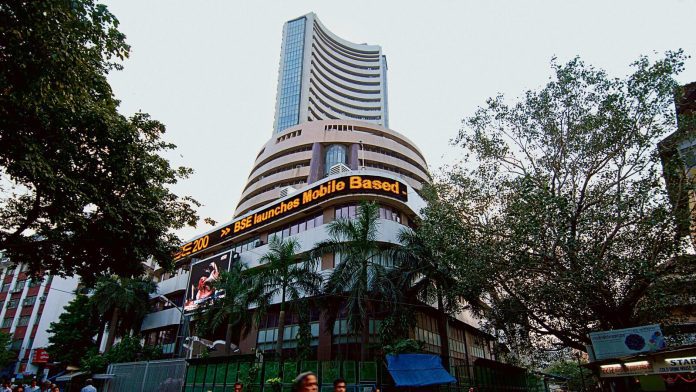


The relentless liquidation of Indian equities by overseas funds has dramatically intensified. Fresh repository data from the National Securities Depository Limited (NSDL) reveals that Foreign Portfolio Investors (FPIs) have offloaded a staggering net ₹62,853 crore ($6.57 billion) from the domestic equity market in June.
The heavy selling momentum has pushed cumulative FPI equity withdrawals for the calendar year to a historic high of ₹2.87 lakh crore. This completely eclipses the ₹1.66 lakh crore net outflows recorded across the entirety of 2025, signaling a deep, structural reallocation of global institutional liquidity away from emerging markets.
The Macro Factors: Why Foreign Money is Fleeing
According to institutional equities desks, the multi-billion-dollar exodus is not a reflection of localized corporate earnings failures inside India, but rather a response to powerful external macroeconomic pressures:
- The Global AI Trade Squeeze: International investment mandates are aggressively prioritizing the hardware artificial intelligence supply chain. Trillions of dollars are rotating heavily into mega-cap AI developments and semiconductor infrastructure hubs concentrated in the United States, Taiwan, and South Korea, stripping liquidity from broader emerging market allocations.
- The Rupee’s Currency Trap: For dollar-denominated funds, the Indian Rupee’s sharp depreciation to ₹95.72 per US Dollar has severely dented portfolio returns. Currency-adjusted conversion losses mean that even if an Indian asset gains nominal value in rupee terms, its ultimate repatriated dollar yield gets compressed, fueling a defensive selling loop.
- Stretched Valuation Premiums: India’s forward price-to-earnings (P/E) multiple continues to hover near 22x, representing a steep 70% premium over the broader MSCI Emerging Markets index which averages roughly 13x.
Monthly Trajectory: How the 2026 Selling Unfolded
Aside from a brief net-buying pause in February, foreign portfolio allocations have trended continuously lower, with June tracking to match the severe liquidation spikes seen at the end of Q1.
| Month | FPI Net Equity Flow (INR) | Core Market Sentiment / Trigger |
| February 2026 | +₹22,615 Crore | Brief monetary cooling hopes; largest inflow in 17 months |
| March 2026 | -₹1,17,000 Crore | Major geopolitical escalation in West Asia; global risk aversion |
| April 2026 | -₹60,847 Crore | Crude oil price shocks and inflation pass-through fears |
| May 2026 | -₹32,963 Crore | Currency hedging friction and pre-monsoon allocation shifts |
| June 2026 (To Date) | -₹62,853 Crore | Aclcerated capital rotation to tech/AI and SpaceX listings |
Sector-by-Sector Damage and the DII Cushion
A granular review of the liquidations shows the selling heavily concentrated in large-cap blocks. The Banking and Financial Services (BFSI) sector has absorbed the worst of the impact, accounting for nearly 52% of total FPI sales this month, followed by persistent trims across the Information Technology (IT) services segment.
Why the Market Hasn’t Crashed: Despite the historic scale of the foreign exit, India’s benchmark Nifty 50 and Sensex have managed to avoid a catastrophic breakdown. This structural stability is entirely driven by Domestic Institutional Investors (DIIs). Backed by highly resilient Systematic Investment Plan (SIP) inflows from retail savers, domestic mutual funds and insurance providers have aggressively counter-purchased the float, absorbing over ₹4.3 trillion in H1 2026 to effectively establish a floor beneath large-cap valuations.
Divergence in the Debt Market
Interestingly, while foreign funds are retreating from Indian equities, they are quietly maintaining their exposure to India’s sovereign debt framework. Concessional forex swaps introduced by the Reserve Bank of India (RBI) alongside tax exemptions on government securities have channeled over ₹17,230 crore of net FPI inflows into Indian bonds via the Fully Accessible Route (FAR) so far this year.
Market analysts suggest that a sustained revival of equity inflows will depend entirely on when the global, high-multiple AI trade begins to cool down, allowing international macro funds to look back toward long-term domestic capital expansion stories.