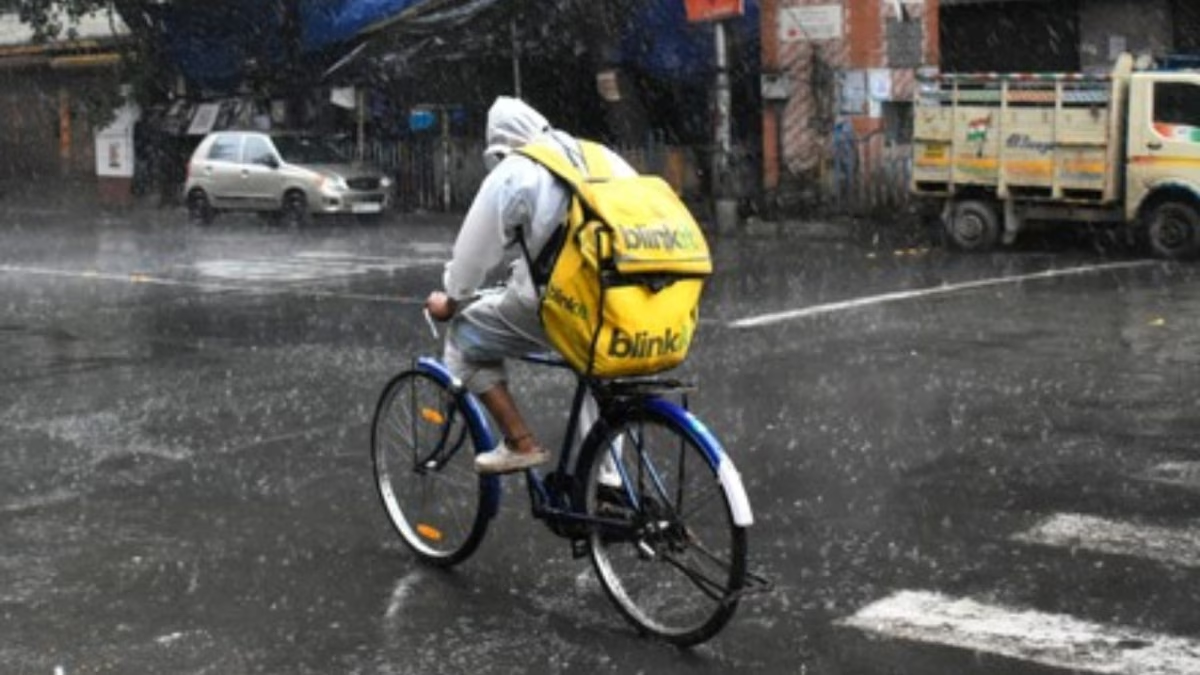
In a bold assertion of dominance over India’s hyper-local retail landscape, Zomato founder and Group CEO Deepinder Goyal stated that Blinkit has a structurally superior shot at winning the quick commerce race compared to global e-commerce titan Amazon.
Speaking in a comprehensive interview with the Financial Times published today, Goyal dismissed the notion that incoming corporate giants will easily disrupt the quick delivery ecosystem. He emphasized that while traditional e-commerce players possess sophisticated supply chains, they are fundamentally struggling to adapt to the hyper-local execution metrics required for under-10-minute delivery.
The Moat: Quality of Service vs. Sorted Assortment
The competitive tension between legacy e-commerce and quick commerce has intensified as platforms like Blinkit expand their dark stores into full horizontal marketplaces, stocking everything from groceries to high-end electronics and cosmetics.
Goyal explained that the competitive bottleneck has shifted from what a platform can source to how reliably it can fulfill the order.
“Our decision was to serve our existing customers in a deeper fashion, than add more,” Goyal stated, outlining Blinkit’s strategy to capture a higher share of the wallet rather than rushing into minor geographic markets. “Our assortment on offer is going up significantly. In Delhi’s national capital region, for example, our assortment now stretches to 80,000 items. Last year it was 35,000-40,000. Customers are getting more choice, and that increases our moat and long-term staying power with the likes of say Amazon—who have their assortment sorted but are still grappling with their quality of service.”
The Market Realities: “Profitability at 50% Share”
Addressing Wall Street and institutional investor concerns that the Indian quick commerce market is driven entirely by an unsustainable “burn-to-earn” cash dynamic, Goyal separated Blinkit’s financials from the broader industry narrative.
The Zomato-owned platform currently commands roughly 50% of the active quick commerce market share, capturing an estimated ₹18,000 crore ($180 billion INR) in quarterly Net Order Value (NOV).
According to Goyal, the structural health of the market splits into two highly distinct operating realities:
- The Competition’s Burn: The remainder of the quick commerce landscape—including independent players like Zepto and Swiggy Instamart—continues to navigate massive quarterly cash burns to protect volume, with burn figures across the competition touching up to $2 billion to support $5 billion to $6 billion in combined NOV.
- Blinkit’s Organic Baseline: By contrast, Goyal stated that Blinkit has achieved net profitability. The platform has intentionally abstained from aggressive customer acquisition subsidies, refuse to deep-discount inventory, and does not slash standard delivery fees down to zero simply to capture short-term transaction spikes.
Upgrading the Macro Outlook
Beyond quick commerce, the Zomato chief shared an incredibly bullish medium-term forecast for the group’s core Food Delivery segment.
While market analysts previously flagged structural anxieties that online food ordering in India was plateuing with growth dropping below 20% annually, Goyal indicated that Zomato’s operational indicators have reversed the post-pandemic slump.
Supported by the fact that the platform’s target demographic—India’s top 100 million urban consumers—still order only 4.5 to 5 meals per month compared to vastly higher frequencies in markets like China, Singapore, or the United States, Zomato is projecting its core delivery business to accelerate from its current 20% baseline up toward a 30% annual growth rate over the next two fiscal cycles.
Get the day’s top stories in your inbox
One concise email. No spam, unsubscribe anytime.