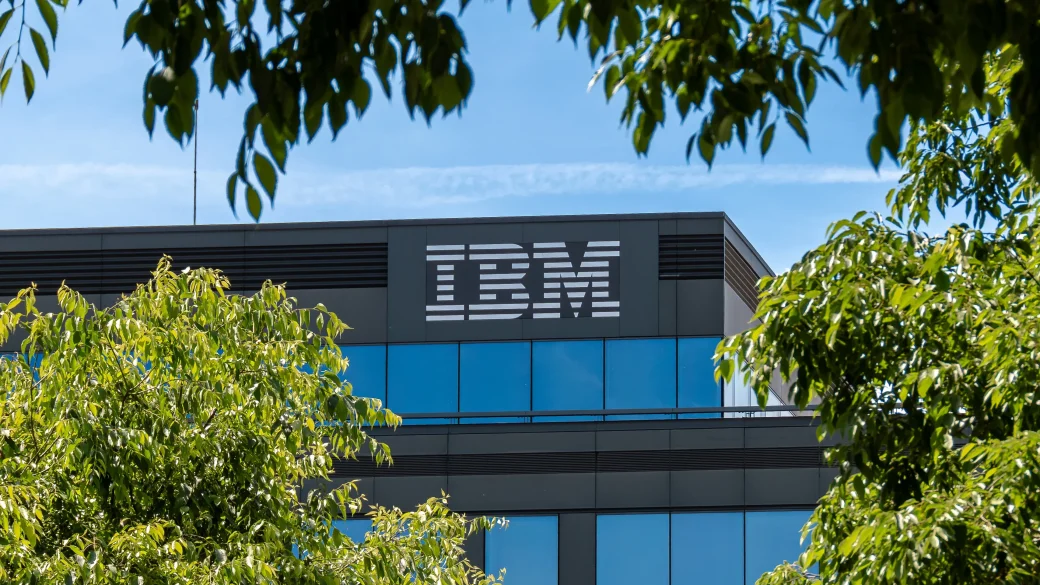
IBM lost more than $100 billion in market value after its shares suffered a sharp sell-off, as investors reacted to weaker-than-expected earnings and signs that enterprise customers are prioritizing spending on artificial intelligence (AI) infrastructure over traditional IT consulting and services. The decline marked one of the company’s biggest single-day market capitalization losses, reflecting growing concerns about the near-term outlook for its consulting business despite continued momentum in AI software and hybrid cloud offerings.
Management indicated that many enterprise clients are redirecting budgets toward building AI-ready data centers, purchasing accelerated computing hardware, and upgrading cloud infrastructure. While IBM continues to invest heavily in generative AI through its watsonx platform, the shift in customer spending has created headwinds for parts of its services business.
IBM Shares Plunge After Earnings
The company faced a sharp market reaction following its latest financial results.
| Key Highlights | Details |
|---|---|
| Company | IBM |
| Market value lost | Over $100 billion |
| Main concern | Weak consulting outlook |
| Industry trend | Rising enterprise AI infrastructure spending |
| AI platform | watsonx |
The sell-off reflected investor concerns about changing enterprise technology spending patterns.
Why Investors Reacted
Several factors contributed to the sharp decline.
Key reasons include:
- Consulting revenue fell short of expectations.
- Clients delayed discretionary IT projects.
- Enterprises prioritized AI infrastructure investments.
- Continued uncertainty in corporate technology budgets.
- Slower-than-expected consulting growth.
Investors viewed these trends as signs of changing enterprise spending priorities.
AI Infrastructure Takes Center Stage
Companies are increasingly allocating technology budgets toward foundational AI investments.
Areas seeing stronger demand include:
- AI-optimized data centers.
- GPU infrastructure.
- Cloud computing.
- AI networking equipment.
- Storage systems.
- Large language model deployment.
These investments are becoming prerequisites for large-scale enterprise AI adoption.
Why IBM Faces Pressure
| Growth Area | Current Trend |
|---|---|
| Consulting | Facing spending delays |
| Hybrid cloud | Continues to grow |
| AI software | Expanding |
| Infrastructure | Stable but competitive |
While IBM continues to benefit from demand for AI software and hybrid cloud solutions, consulting remains sensitive to broader enterprise spending cycles.
Enterprise AI Spending Is Changing
Businesses are increasingly investing in infrastructure before deploying AI applications.
Current priorities include:
- Building AI-ready computing environments.
- Upgrading cloud architecture.
- Deploying accelerated computing hardware.
- Modernizing enterprise data platforms.
- Preparing for generative AI adoption.
This shift is benefiting infrastructure providers while delaying some consulting engagements.
Competition Intensifies
IBM operates in an increasingly competitive AI landscape.
Major competitors include:
- Microsoft.
- Amazon Web Services.
- Google Cloud.
- NVIDIA.
- Oracle.
Technology companies continue to compete across AI infrastructure, cloud computing, enterprise software, and consulting.
Challenges Ahead
IBM faces several strategic challenges.
These include:
- Reviving consulting growth.
- Expanding enterprise AI adoption.
- Competing in the AI infrastructure market.
- Balancing software and services revenue.
- Managing evolving customer spending priorities.
Execution across both AI software and consulting will be critical in the coming quarters.
Outlook
IBM’s sharp decline in market value illustrates how rapidly enterprise technology spending is evolving during the AI era. While demand for artificial intelligence continues to grow, many organizations are initially directing capital toward the underlying infrastructure required to support AI workloads rather than immediately expanding consulting engagements.
Despite the market reaction, IBM remains well positioned through its hybrid cloud strategy and watsonx AI platform. The company’s long-term performance will likely depend on its ability to convert growing enterprise AI investments into software subscriptions, consulting projects, and recurring AI-driven services as organizations move from infrastructure deployment to full-scale implementation.
What It Means for the Technology Industry
The sell-off highlights a broader transition across enterprise technology markets. Companies are increasingly prioritizing investments in GPUs, cloud infrastructure, networking, and data platforms before accelerating spending on AI applications and consulting services.
For technology vendors, this shift underscores the importance of offering an integrated AI portfolio spanning infrastructure, software, and services. As enterprise AI adoption matures, companies capable of supporting customers throughout the entire AI lifecycle—from infrastructure deployment to application development and business transformation—are likely to be best positioned for long-term growth.
Get the day’s top stories in your inbox
One concise email. No spam, unsubscribe anytime.