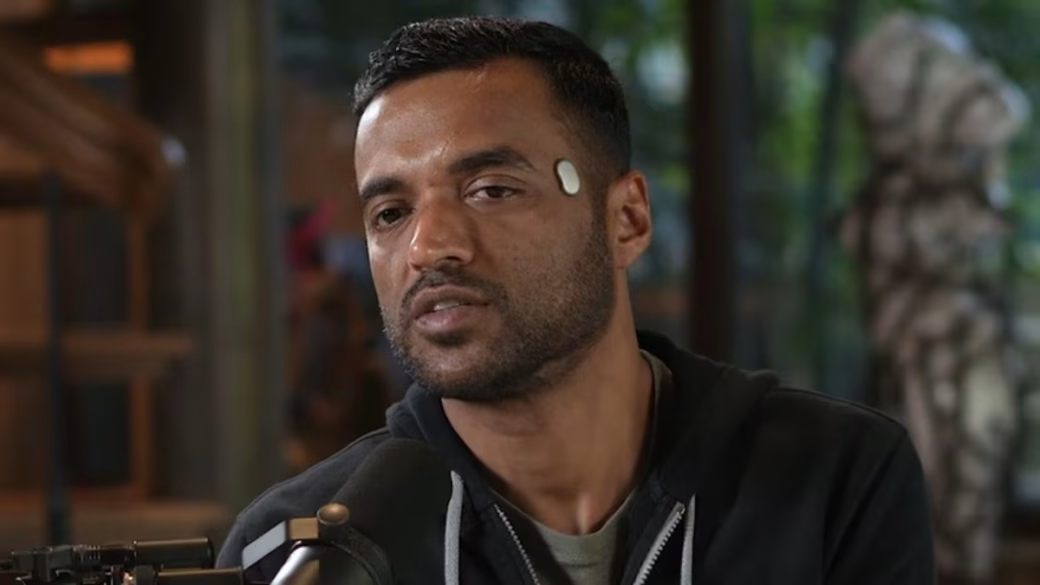
Deepinder Goyal, founder of Eternal (formerly Zomato), has shared new details about Temple, his health-tech startup developing a premium wearable designed to measure the body’s metabolic state in real time. According to Goyal, the device will launch initially as a wellness product backed by peer-reviewed scientific studies, with the long-term ambition of evolving into a regulated medical device after additional clinical validation.
The bean-shaped wearable is designed to be worn on the temple (side of the forehead) and introduces a proprietary metric called “Entropy”, which Temple claims reflects real-time metabolic activity more directly than heart rate. Goyal says the device is intended for high-performance users such as athletes, founders, and executives rather than the mass market, with an expected price of around $1,000. The scientific claims, however, are still awaiting broader independent validation despite Temple’s commitment to peer-reviewed research.
Temple Aims to Redefine Wearable Health Tracking
The startup is focusing on metabolic monitoring instead of conventional fitness metrics.
| Key Highlights | Details |
|---|---|
| Startup | Temple |
| Founder | Deepinder Goyal |
| Product | AI-powered forehead wearable |
| Primary focus | Real-time metabolic tracking |
| Initial positioning | Wellness product supported by peer-reviewed studies |
| Expected price | Around $1,000 (reported) |
Temple plans to launch the wearable within the next 6–12 months, although Goyal acknowledged the timeline could change.
What Makes Temple Different?
Unlike traditional smartwatches that primarily rely on heart rate, Temple aims to measure metabolism more directly.
The wearable is expected to offer insights into:
- Real-time metabolic state.
- Stress levels.
- Recovery.
- Sleep quality.
- Exercise intensity.
- Meditation performance.
- Overall physiological activity.
Introducing “Entropy”
Temple’s core innovation is a proprietary metric called Entropy.
According to the company, Entropy:
- Represents the body’s real-time metabolic activity.
- Updates continuously.
- Responds to sleep, exercise, stress, meals, and caffeine.
- Is measured from signals captured at the temple region.
- Is claimed to correlate more closely with metabolism than heart rate.
Scientific Validation Comes First
| Stage | Purpose |
|---|---|
| Initial launch | Wellness device |
| Supporting evidence | Peer-reviewed studies |
| Long-term goal | Potential medical-grade validation |
Goyal said Temple will initially enter the market as a wellness product while building scientific evidence through peer-reviewed research before pursuing broader medical applications.
Why Metabolic Tracking Matters
Metabolic activity influences many aspects of health and performance.
Potential applications include:
- Athletic performance optimization.
- Recovery monitoring.
- Personalized wellness.
- Lifestyle optimization.
- Preventive health insights.
- Continuous physiological monitoring.
The company believes measuring metabolism directly could provide more meaningful health insights than relying solely on heart rate.
Experts Urge Independent Validation
While Temple has announced plans for peer-reviewed studies, some researchers and clinicians have called for independent scientific validation of its claims regarding Entropy and the proposed biomarker before drawing conclusions about its clinical usefulness. The published evidence available so far remains limited, and broader peer review will be important in assessing the technology’s effectiveness.
Challenges Ahead
Temple faces several hurdles before broader adoption.
These include:
- Independent validation of its scientific claims.
- Publication of peer-reviewed research.
- Regulatory approvals for future medical use.
- Consumer acceptance of a forehead-worn device.
- Competition from established wearable makers.
Successfully addressing these challenges will be critical to moving beyond the wellness market.
Outlook
Temple represents Deepinder Goyal’s first major venture after stepping down from Eternal and reflects a growing interest in AI-powered preventive healthcare. By focusing on real-time metabolic monitoring rather than traditional fitness metrics, the startup is attempting to introduce a new category of wearable technology centered on physiology and longevity.
The company’s commitment to supporting the device with peer-reviewed studies is an important step, but its long-term success will depend on whether independent scientific research validates the performance of its proprietary “Entropy” metric. If those claims are substantiated, Temple could help expand the role of wearables from fitness tracking toward more comprehensive health monitoring.
What It Means for India’s Health-Tech Ecosystem
Temple highlights the increasing convergence of artificial intelligence, biosensors, and preventive healthcare within India’s startup ecosystem. Rather than competing directly on smartwatch features, startups are exploring specialized devices capable of generating deeper physiological insights for wellness and performance.
For the broader health-tech industry, the project illustrates both the opportunities and responsibilities of launching science-driven consumer products. Innovative health metrics can open new markets, but widespread adoption will depend on rigorous clinical evidence, transparent research, and regulatory credibility.
Get the day’s top stories in your inbox
One concise email. No spam, unsubscribe anytime.