Key takeaways
- Donald Trump said US Iran talks will keep going even though a ceasefire has ended.
- A ceasefire is a pause in fighting. It does not mean the bigger dispute is solved.
- The main question now is whether more talks can lower tension in the Middle East.
- Oil prices, shipping routes, and regional security could all be affected by what happens next.
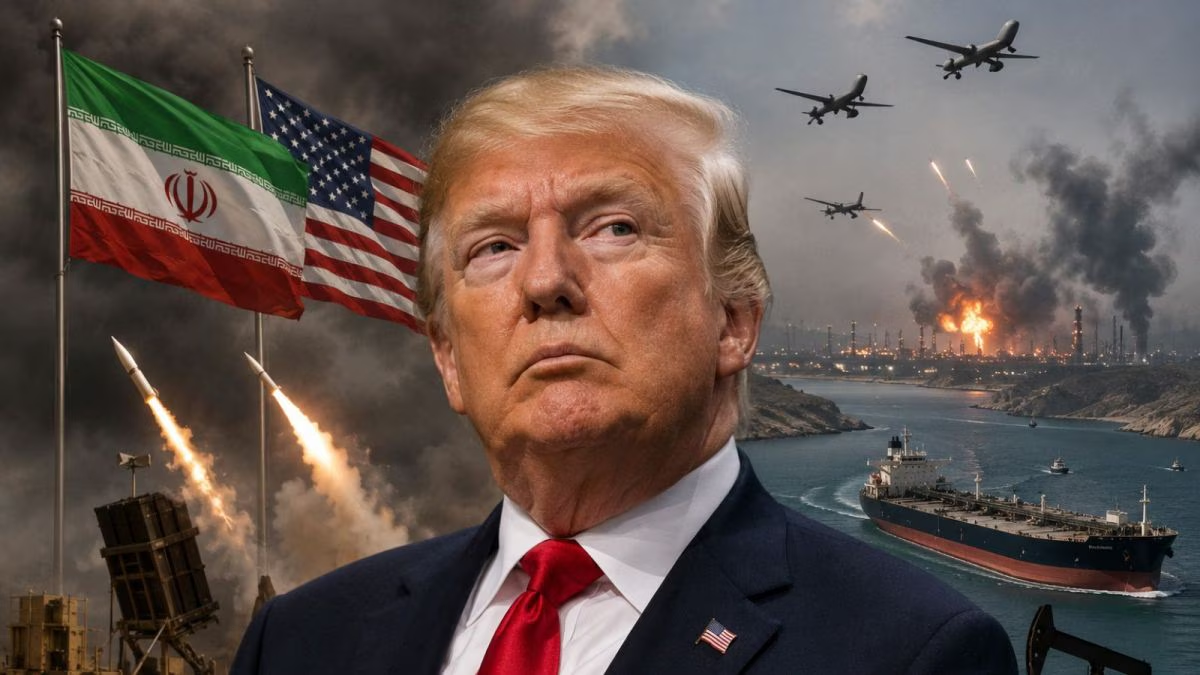
US Iran talks are meetings between the United States and Iran to discuss conflict, security, and possible next steps. Donald Trump said those talks will continue, even though a ceasefire has ended. A ceasefire is a temporary stop to fighting. So the news means the fighting pause is over, but the talking is not.
That may sound strange at first. But countries often keep talking during tense moments because talks can stop a crisis from getting worse. In this case, Trump said the two sides had agreed to continue discussions after the ceasefire ended. That matters because the United States and Iran have a long, bitter history.
Why do US Iran talks matter right now?
The short answer is simple. US Iran talks matter because trouble between these two countries can shake the whole Middle East. The Middle East is a region that includes countries like Iran, Iraq, Israel, and Saudi Arabia. It is also vital for global oil and shipping.
When tension rises there, fuel prices can jump fast. Big cargo ships may also face risk in key sea routes. For example, the Strait of Hormuz handles a large share of the world’s oil trade. If that route becomes unsafe, markets everywhere can feel it.
Trump’s statement suggests both sides still see some value in contact. That does not mean they trust each other. It means they may want to avoid a bigger clash. In fact, even basic contact can help prevent mistakes when tempers run high.
What did Trump say about US Iran talks?
Trump said the United States and Iran had agreed to continue talking, even though the ceasefire was over. The source report did not say that a full peace deal had been reached. A peace deal is a formal agreement to end conflict. So this is not that.
Instead, this looks more like a fragile diplomatic path. Diplomacy means countries try to solve problems by talking, bargaining, and making deals. It’s slower than war, but often safer. That’s why even a small opening can matter.
Here is the most quotable takeaway:
The ceasefire may be over, but the talks are not. That means the crisis is still alive, yet both sides may still want a way to stop it from growing.
That line sums up the moment well. The fighting pause has ended, but the door to discussion is still open. So watchers will now focus on whether these contacts lead to new steps, or fade away.
What is a ceasefire, and why is its end important?
A ceasefire is an agreement to stop shooting or bombing for a time. It can last hours, days, or longer. But it is usually not the same as peace. Peace needs a wider agreement on the bigger dispute.
When a ceasefire ends, danger returns quickly. Soldiers may move again. Missiles may fly again. Civilians can be caught in the middle, because homes, roads, and hospitals often sit near conflict zones.
That is why this update feels serious. The end of a ceasefire raises the risk level right away. But the fact that US Iran talks are still planned offers at least a small brake on a worse outcome.
Ceasefire vs talks statusCeasefire endedTalks continue01
The chart shows the basic split in one glance. One track has stopped. The other track is still moving. That’s often how tense diplomacy works in real life.
How could this affect oil, trade, and ordinary people?
The effects can spread far beyond the two countries. Oil traders watch every sign of risk in the region. Traders are people or firms that buy and sell goods like oil. If they fear supply trouble, prices can jump in hours.
Here are three real-world numbers that help explain why. The Strait of Hormuz is roughly 33 kilometers wide at its narrowest point. Around one-fifth of global oil consumption often passes through that area by sea. And even a $5 to $10 rise in crude oil prices can push fuel costs higher in many countries.
That matters to families. Higher oil prices can make petrol, flights, and shipping more costly. As a result, food and other daily goods may also become more expensive. So a faraway conflict can still touch your local shop.
| Issue | What it means | Why it matters |
|---|---|---|
| Ceasefire ended | Pause in fighting is over | Risk of fresh clashes rises |
| Talks continue | US and Iran still stay in contact | Chance of calming tension remains |
| Oil route risk | Shipping lanes may face pressure | Fuel and goods can cost more |
What is the bigger history behind US Iran talks?
US Iran talks are never just about one day. The two countries have argued for decades over security, nuclear work, sanctions, and regional influence. Sanctions are penalties meant to pressure a country. They can block trade, money flows, or access to goods.
One of the biggest disputes has been Iran’s nuclear program. A nuclear program is work related to atomic energy and, in some cases, weapons risk. The United States and its allies have long said they want limits and inspections. Inspections are official checks to see if rules are being followed.
That history is why fresh talks are hard. Each side doubts the other’s promises. But history also explains why US Iran talks still matter so much. There are few easy fixes when distrust runs this deep.
If you want more on how policy moves can shape tech and strategy, read our report on the government’s 40% AI chip subsidy plan. For a look at cross-border economic goals, see our story on India and New Zealand aiming to double trade.
What should readers watch next?
First, watch for who joins the next round of US Iran talks. A meeting with senior officials usually means a more serious effort. Lower-level meetings can still matter, but they often focus on testing ideas first.
Second, watch the ground situation. If violence grows, talks can collapse fast. But if both sides avoid new attacks, even quiet contacts can build into something larger. Meanwhile, outside countries may try to help, pressure, or mediate. Mediate means to help two sides talk and settle a dispute.
Third, watch markets. Oil prices often react before politicians do. If prices stay calm, traders may think the risk is still contained. You can track official US signals through the US State Department and broader diplomatic records through the United Nations.
For now, the clearest point is this: US Iran talks are still alive, even after the ceasefire ended. That’s not peace. But it’s also not silence, and silence can be more dangerous.
FAQs
What are US Iran talks?
US Iran talks are discussions between American and Iranian officials. They can cover conflict, security, sanctions, and nuclear issues.
Why does the end of a ceasefire matter?
It matters because a ceasefire is a pause in fighting. When it ends, the risk of fresh attacks and wider conflict goes up.
How could this affect people outside the region?
It could affect oil prices, shipping costs, and global markets. So people far away may still pay more for fuel and goods.
Get the day’s top stories in your inbox
One concise email. No spam, unsubscribe anytime.