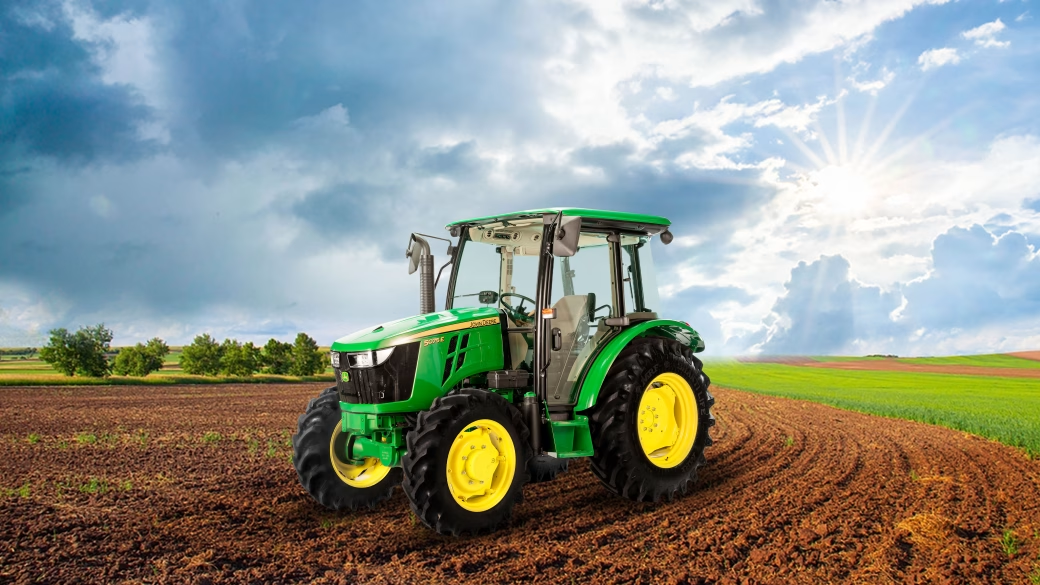
Tractor sales June jumped past 1 lakh units in India as farmers started kharif sowing. Tractor sales June means the number of tractors companies sold during June. The rise matters because it gives a quick clue about farm mood, rains, and rural demand.
Key takeaways
- India’s tractor makers sold more than 1 lakh units in June.
- Kharif sowing and better rain helped push demand higher.
- Farmers usually buy tractors before or during field work, so June is a key month.
- Good reservoir levels, crop prices, and finance access can shape sales next.
Why did tractor sales June rise so sharply?
The biggest reason was kharif sowing. Kharif is the main monsoon crop season. Farmers plant crops like rice, soybean, cotton, and maize during these months, so they need machines for ploughing, hauling, and other field work.
Rain also helped sentiment. When monsoon showers arrive on time, farmers feel more confident about spending. That matters a lot, because a tractor is a big purchase and often costs several lakh rupees.
Industry data showed June sales crossed the 100,000 mark. That’s a simple but important number. It tells us demand stayed strong in the countryside even while many urban sectors remained mixed.
Some buyers also moved early because field work cannot wait. If sowing starts, farmers need equipment right then. As a result, dealers often see a rush in June and July.
What is kharif sowing, and why does it affect tractor sales June?
Kharif sowing is the planting season that begins with the monsoon. It usually starts around June and runs into July. Since farms get busy fast, demand for tractors, harvest support machines, and trailers often rises at the same time.
A tractor is not just for ploughing. Farmers also use it to carry seeds, fertilizer, and crops. Fertilizer is plant food. So one machine can do many jobs across a farm day.
That is why tractor sales June works like a signal for the wider rural economy. If farmers are spending on equipment, they may also spend on pipes, tyres, fuel, and repairs. In fact, one strong farm season can lift many small businesses in nearby towns.
How big was the jump in numbers?
The headline figure was clear: sales moved past 1 lakh units in June. In plain words, that means more than 100,000 tractors were sold in one month. For a heavy machine, that is a very large volume.
June matters because it comes right at the start of major monsoon farm activity. Even a small change in rainfall can shift buying plans. So crossing 1 lakh units suggests demand was not weak or hesitant.
Here is a simple look at the key numbers:
| Metric | Figure | Why it matters |
|---|---|---|
| June tractor sales | 100,000+ units | Shows strong rural buying |
| Main trigger | Kharif sowing | Field work raises machine demand |
| Season start | June-July | Peak buying window for many farmers |
And here is a quick visual:
Tractor sales June crossed 1 lakh units050k100kJune100k+
What does tractor sales June tell us about rural India?
It points to stronger rural demand, at least for now. Rural demand means spending by people in villages and farm areas. Companies watch this closely because it affects sales of bikes, cement, pipes, and even consumer goods.
Strong tractor sales can signal that farmers expect a decent season. But one month does not decide the whole year. Rainfall spread, crop prices, and loan access will still shape what happens next.
Loans are a big factor here. Many tractor purchases use finance from banks or non-banking finance companies. A non-banking finance company, or NBFC, is a lender that is not a full bank. Easier loans can help sales move faster.
This also fits a wider pattern in agriculture-linked demand. For example, strong farm activity can support credit growth, much like rising gold-backed borrowing has lifted some lenders, as seen in our report on jewellery-backed loans surge 70%.
Could the momentum continue in the next few months?
It could, but the answer depends on rain and crop health. If monsoon coverage stays broad and steady, farm work should remain active. Then dealers may keep seeing healthy walk-ins through July and August.
Crop prices matter too. If farmers think they will earn better money after harvest, they are more willing to buy now. But if prices fall or rain turns patchy, some buyers may delay.
Another thing to watch is the rural cash cycle. Farmers spend at one point and earn later, after the crop is sold. So credit, subsidies, and farm income all link together.
The government has also been pushing production and technology in other sectors, including chip support and manufacturing incentives, as in our report on the 40% AI chip subsidy plan. That is a different industry, of course, but it shows how policy can shape buying and investment.
Which risks could slow tractor sales June momentum?
The first risk is uneven rain. A good start to monsoon helps, but weak rain later can still hurt crops. Farmers may then postpone big purchases.
The second risk is higher ownership cost. Fuel, spare parts, and interest rates all affect the final bill. Interest rate means the extra money paid on a loan. If that rises, monthly payments feel heavier.
A third risk is local crop stress. One state may get enough rain while another stays dry. So national sales can look strong even if some districts struggle.
That’s why monthly data needs context. One large number looks exciting, but the real story sits in fields, rainfall maps, and mandi prices. A mandi is a farm market where crops are bought and sold.
What are the best sources for tracking this story?
For crop progress, the clearest primary source is the agriculture ministry’s sowing updates. You can also track monsoon progress from the India Meteorological Department. It gives rainfall and weather data used across the country.
For broader farm and market data, readers can also check the Ministry of Agriculture and Farmers Welfare. Primary source means the original government or official data source. Those updates help explain whether tractor sales June strength can last.
Why this matters beyond tractors
Tractors may look like one product, but they connect to a much bigger chain. A sale helps dealers, lenders, mechanics, tyre makers, and fuel stations. So a rise in tractor sales June can ripple through local economies.
It also gives investors and policymakers a quick farm signal. If sowing is active and machinery demand is healthy, confidence often improves. Meanwhile, weak tractor demand can be an early warning sign.
Here is the simplest way to read it:
Tractor sales June crossed 1 lakh units because kharif sowing picked up with the monsoon. That makes tractor demand a useful early sign of how confident farmers feel at the start of the crop season.
We have seen other sectors react quickly to shifts in demand and regulation too, from transport rules in GIFT City vessel licensing to changing retail pressure in the CCI complaint against Flipkart. Farm equipment is different, but the lesson is the same: timing matters.
FAQs
What does tractor sales June mean?
It means the total number of tractors sold during June. People track it to judge farm demand and rural confidence.
Why did tractor sales June cross 1 lakh units?
Kharif sowing began, and farmers needed machines for field work. Better monsoon conditions also supported buying.
How does rain affect tractor demand?
Good rain lifts farm confidence and planting activity. That often pushes farmers to buy or upgrade tractors.
When will we know if this trend is lasting?
July and August data will tell us more. Monsoon spread, crop prices, and loan access will decide whether demand stays strong.
Get the day’s top stories in your inbox
One concise email. No spam, unsubscribe anytime.