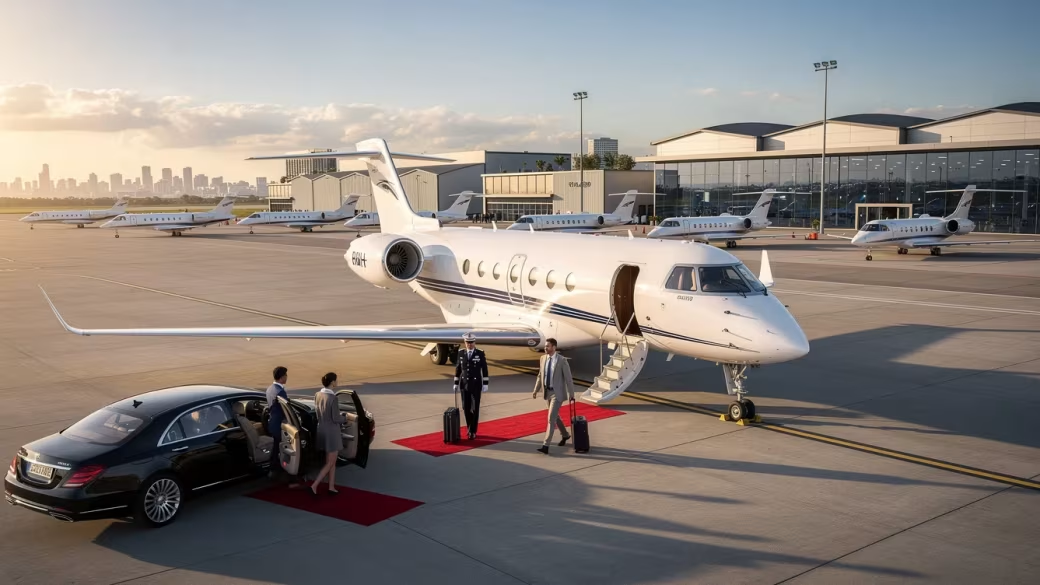
A surge in wealth created by SpaceX’s blockbuster IPO and the rapid rise of artificial intelligence startups is fueling a new boom in the private aviation industry, as newly wealthy founders, early employees, venture capitalists, and investors increasingly turn to private jets for business and leisure travel. Aviation companies, brokers, and aircraft financing firms say the influx of tech wealth has triggered one of the strongest waves of demand for private aviation since the dot-com era, with expectations that upcoming AI IPOs could further accelerate the trend.
Industry executives say the latest demand is being driven by a series of major “liquidity events” in the technology sector. SpaceX’s record-breaking IPO created substantial wealth for employees and early investors, while companies such as OpenAI and Anthropic are widely expected to pursue public listings in the future, creating another generation of high-net-worth individuals with the financial means to purchase or charter private aircraft.
Tech Wealth Is Reshaping Private Aviation
Private aviation has historically benefited from stock market booms, mergers, and large public offerings that create sudden wealth among entrepreneurs and executives. This time, the AI revolution appears to be playing a similar role.
Aviation lawyer Amanda Applegate said business at her firm has increased significantly as investors and technology executives rush to complete aircraft purchases following recent wealth-creation events. Companies involved in aircraft brokerage, charter services, and financing have also reported a noticeable increase in inquiries from clients connected to AI startups and SpaceX.
Unlike previous waves of wealthy buyers dominated by executives from finance or traditional industries, many of today’s customers are younger entrepreneurs, software engineers, venture capitalists, and startup founders who accumulated substantial wealth through equity ownership in fast-growing AI companies.
Private Jet Activity Continues to Rise
Data from aviation intelligence firm JetNet highlights the strength of the industry’s recovery.
| Private Aviation Trend | First Five Months of 2026 |
|---|---|
| Shared-ownership flights | +11.8% |
| Flights by private jet owners | +13.4% |
| Primary demand driver | AI and tech wealth, new liquidity events |
The increase reflects both higher usage among existing aircraft owners and a growing number of first-time buyers entering the market through jet cards, charter memberships, or fractional ownership programs before purchasing their own aircraft.
Why Tech Executives Are Buying Private Jets
For many newly wealthy technology professionals, private aviation is viewed less as a luxury purchase and more as a productivity tool.
Several aviation companies report that customers cite time savings, scheduling flexibility, and easier access to multiple business meetings as key reasons for flying privately. Startup founders and investors often travel frequently between technology hubs, investor meetings, manufacturing facilities, and international conferences, making commercial airline schedules less practical.
| Key Reason | Benefit |
|---|---|
| Flexible scheduling | Fly on demand without airline timetables |
| Time savings | Faster travel between multiple destinations |
| Business productivity | More efficient meetings and networking |
| Privacy | Greater confidentiality during travel |
| Convenience | Access to smaller regional airports |
Industry executives say many first-time customers initially choose charter services or shared ownership before upgrading to full aircraft ownership as their wealth grows.
Limited Aircraft Supply Adds Pressure
The surge in demand is occurring at a time when the supply of new business jets remains constrained.
Aircraft manufacturers continue to face production bottlenecks and long delivery timelines, leaving buyers competing for a limited number of available jets. Brokers say inventory for popular aircraft models remains tight, pushing some customers toward the pre-owned market while increasing prices for both new and used business aircraft.
The shortage has also benefited private jet charter operators and fractional ownership providers, as customers unwilling to wait years for aircraft deliveries seek immediate access through membership programs.
Tech Hubs See Growing Private Jet Traffic
The AI boom is also reshaping regional aviation activity.
Areas with large concentrations of technology companies, including San Francisco and Brownsville, Texas—home to SpaceX’s Starbase operations—have experienced noticeable increases in business jet traffic as investors, executives, and employees travel more frequently following recent liquidity events. Aviation companies say demand has been particularly strong in Texas, where interest in jet card programs and charter services has accelerated.
More AI IPOs Could Drive Another Wave of Demand
The current surge may represent only the beginning of a broader trend.
Several high-profile artificial intelligence companies remain privately held, with OpenAI and Anthropic among the firms widely viewed as potential IPO candidates over the next few years. If those listings materialize, industry executives expect another influx of newly wealthy founders, employees, and investors, creating additional demand for private aviation.
Historically, periods of rapid wealth creation have translated into higher business jet sales and increased charter activity, and aviation companies believe the AI sector could sustain that momentum for years.
What It Means for the Private Aviation Industry
The AI boom is quickly becoming one of the strongest growth drivers for private aviation. As wealth generated by SpaceX, AI startups, and future technology IPOs flows into luxury travel, aircraft manufacturers, charter operators, and aviation service providers are experiencing renewed demand from a younger generation of technology entrepreneurs.
While constrained aircraft supply may limit how quickly the market can expand, industry executives believe the combination of AI-driven wealth creation and an active IPO pipeline could support private aviation growth well beyond 2026. The trend also highlights how the AI revolution is influencing industries far beyond technology, reshaping sectors ranging from luxury travel to business aviation.
Get the day’s top stories in your inbox
One concise email. No spam, unsubscribe anytime.