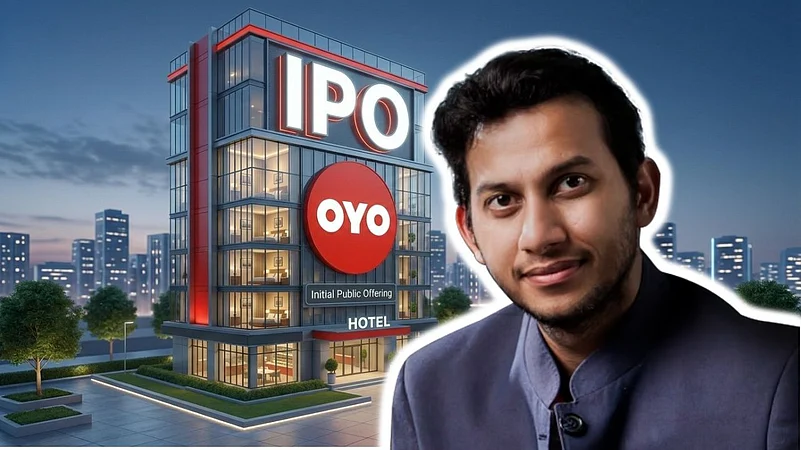
In a massive financial turnaround ahead of its highly anticipated stock market debut, Prism (formerly Oravel Stays), the parent company of OYO, has reported a net profit of ₹748 crore for the first nine months of FY26 (ended December 31, 2025).
The disclosure came via the company’s Updated Draft Red Herring Prospectus (UDRHP) filed with SEBI for a scaled-down ₹6,650 crore Initial Public Offering (IPO). The staggering profit print represents a massive 205% jump compared to the ₹245 crore profit recorded in the entire previous fiscal year (FY25), signaling that the hospitality aggregator has officially left its heavy loss-making days in the rear-view mirror.
1. The Fine Print: Deconstructing the Headline Profit
While the ₹748 crore figure is a milestone for Ritesh Agarwal’s firm, a deep dive into the prospectus reveals that accounting adjustments heavily cushioned the bottom line:
- The Deferred Tax Cushion: A major chunk of the reported net profit—₹559 crore—originated from a non-cash deferred tax credit. This entry is tied to the accounting treatments of historical accumulated losses against projected future taxable income.
- The Pre-Tax Reality: Stripping out this massive tax credit, Prism’s actual Profit Before Tax (PBT) stood at a more modest ₹245.2 crore for the 9-month window. While lower than the headline metric, this still marks a stable operational swing into the green compared to the core operational loss of ₹322 crore in FY25.
- Cash Flow Acceleration: Reassuring institutional investors, the underlying cash health of the firm remains strong. Prism generated ₹1,594 crore in pure cash from operations during the 9-month cycle, a steep escalation from just ₹321 crore pulled in over the course of all of FY25.
2. Global Pivot: The 84% International Footprint
The updated filing fundamentally shatters the perception that OYO is primarily an Indian budget hotel chain. Prism has aggressively evolved into a diversified global travel-tech juggernaut:
- International Revenues: A staggering 83.77% of OYO’s operating revenue was generated outside India during the period. Out of a total ₹6,941 crore revenue from operations, international storefronts contributed ₹5,814 crore, while India brought in the remaining ₹1,127 crore.
- The US Growth Engine: The company’s recent strategic acquisition of G6 Hospitality (the iconic parent of Motel 6 and Studio 6 across the US and Canada) has paid off massively. The North American segment contributed an overwhelming 52.39% of Prism’s global Gross Booking Value (GBV), generating ₹12,022 crore in booking volumes.
                  [ PRISM (OYO) REVENUE OUTLET MIX (9M-FY26) ]

  [ United States ] ──────────────────────────► 27% Operating Revenue ($12,022 Cr GBV)
                                                       │
  [ Europe ] ────────────────────────────────► 24% Operating Revenue (Vacation Rental Focus)
                                                       │
  [ India ] ─────────────────────────────────► 16% Operating Revenue (Expanding Premium Hubs)
                                                       │
  [ United Kingdom & Other Markets ] ────────► Remaining Global Split
3. The IPO Strategy: Debt Deleveraging Over Venture Exit
Unlike traditional startup public offerings where early-stage venture capitalists use the listing as a window to offload equity, Prism’s IPO structure focuses entirely on rebuilding its corporate balance sheet:
- 100% Fresh Issue: The ₹6,650 crore public issue consists entirely of primary fresh equity shares.
- The No-Exit Pact: Marquee initial backers—including SoftBank, Microsoft, Peak XV Partners, Lightspeed, and founder Ritesh Agarwal—are not selling a single share via an Offer for Sale (OFS), ensuring their ownership structures remain completely locked post-listing.
- The ₹5K Crore Debt Kill Switch: The company has explicitly earmarked 75% of the proceeds (₹4,987.5 crore) strictly to prepay or repay existing high-cost borrowings within its Singapore subsidiaries.
Financial Horizon
By utilizing the public markets to aggressively wipe out outstanding debt, Prism will systematically lower its heavy ₹1,089 crore finance cost footprint going into late 2026. Armed with a newly positive credit rating outlook from S&P Global and fresh structural momentum from the ITAT quashing a legacy ₹3,885 crore tax demand, the hospitality unicorn is looking to position itself as a highly granualized, high-margin asset when trading screens officially open on Dalal Street.