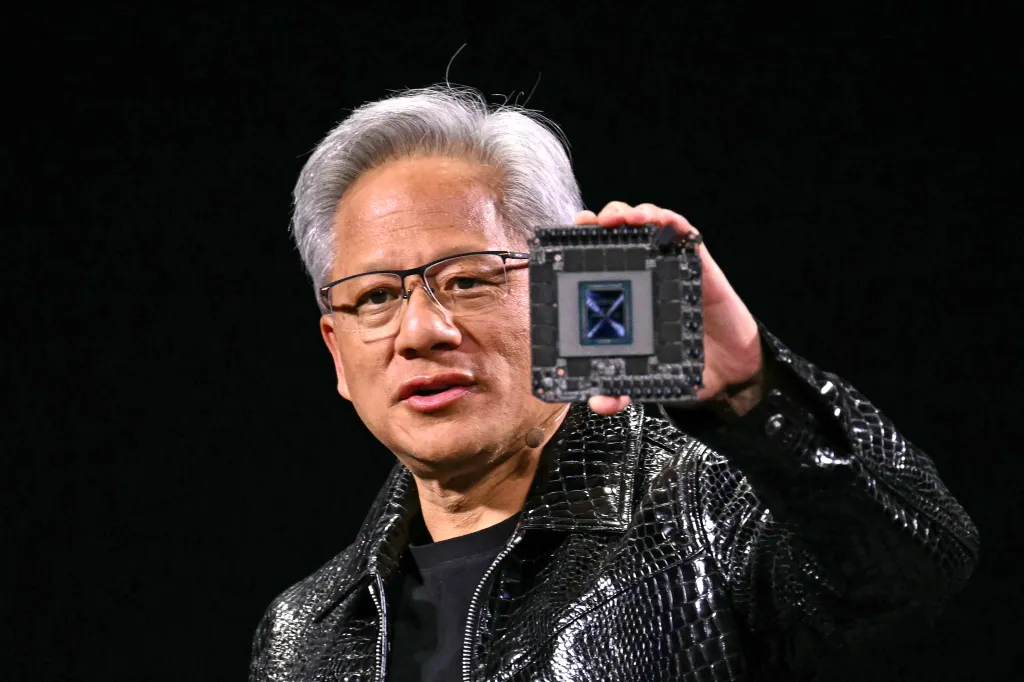
In what is shaping up to be one of the most disruptive hardware shifts in recent personal computing history, detailed internal specifications for Nvidia’s upcoming Arm-based client processor family—headlined by the flagship N1X—have fully leaked online.
The extensive documentation confirms that the “Green Team” is preparing a multi-tiered assault on the premium Windows-on-Arm laptop ecosystem. Developed in close technical collaboration with MediaTek, the N1/N1X family brings together high-efficiency Arm CPU designs with Nvidia’s flagship Blackwell graphics architecture into a singular, unified platform.
The leak directly follows a coordinated social media teaser by Microsoft and Nvidia, pointing to a joint “New Era of PC” announcement at the Computex trade show.
1. Dissecting the Flagship: The Core Layout of the N1X
The top-tier N1X processor is built to target premium mobile workstations and high-end consumer laptops, sharing a close architectural foundation with the enterprise-grade GB10 silicon housed inside Nvidia’s DGX Spark desktop AI minicomputer.
The leaked layout breaks down into two high-performance variants:
- The Max Configuration: Packs a 20-core Arm CPU arranged in a balanced 10+10 design—featuring ten high-performance Cortex-X925 cores and ten high-efficiency Cortex-A725 cores.
- The Secondary Variant: Trims the architecture slightly to an 18-core CPU layout configured in a 9+9 cluster arrangement.
- The Thermal Budget: Both premium N1X variants are engineered to operate within a combined scalable power envelope of 45W to 80W, managing both compute and graphics resources within a single piece of silicon.
2. Desktop-Class Graphics and Unified Memory
The main attraction of the N1X platform is its graphics and local machine learning compute capabilities. Unlike traditional thin-and-light laptop chips that rely on modest integrated graphics, Nvidia is embedding a massive Blackwell 2.0 graphics engine directly into the SoC.
The 20-core version of the N1X boasts 48 Streaming Multiprocessors (SMs) translating to a massive 6,144 CUDA cores—giving it the exact same shading core density as a standalone desktop GeForce RTX 5070 graphics card. The 18-core variant fields a scaled-back 40-SM configuration operating with 5,120 CUDA cores.
Crucially, the N1X bypasses the memory limits of standard PC architectures by utilizing a ultra-wide, 16-channel unified memory interface supporting up to 128GB of LPDDR5X RAM operating at speeds up to 8,533 MT/s. This unified layout allows the Blackwell GPU to directly access the massive system memory pool, transforming N1X-powered laptops into powerful local sandboxes for running massive Large Language Models (LLMs) and advanced developer tools entirely on-device.
3. The Mainstream Counterpart: The Standard N1 Series
For lighter, ultra-portable notebooks and hybrid 2-in-1 tablets, Nvidia is prepping a more conservative, power-conscious baseline called the standard N1 series. This segment also branches into two distinct operational setups:
- 12-Core Model (8+4): Combines eight performance cores with four efficiency cores, paired with a 20-SM Blackwell graphics engine delivering 2,560 CUDA cores.
- 10-Core Model (7+3): Steps down to seven performance cores and three efficiency cores, operating alongside a 16-SM graphics processing block holding 2,048 CUDA cores.
The standard N1 lineup scales back its memory support to a maximum cap of 64GB across an 8-channel bus, running within a tight, highly efficient 18W to 45W thermal window designed for fanless or thin-and-light designs.
4. Market Impact and the Windows-on-Arm Bottleneck
The entry of the N1X platform establishes a fierce multi-front war for laptop supremacy. Nvidia’s hardware layout is designed to challenge the AI processing power of Qualcomm’s Snapdragon X Elite series while competing directly with the unified architecture of Apple’s M5 Pro and Max chips.
However, industry experts note that the hardware’s ultimate success will hinge completely on the maturation of Microsoft’s software translation ecosystem.
Because the N1X is built on Arm architecture, legacy Windows applications and modern video games compiled for standard x86 systems must pass through an emulation layer. While local AI toolkits and applications built natively for CUDA will thrive out of the gate, gaming performance could face early speedbumps if Microsoft’s built-in Prism emulation layer isn’t optimized for Nvidia hardware.
With retail motherboard leaks already surfacing in secondary supply chains, major PC manufacturers like Dell and Lenovo are expected to roll out their first wave of commercial N1X-powered consumer hardware over the coming months.
Get the day’s top stories in your inbox
One concise email. No spam, unsubscribe anytime.