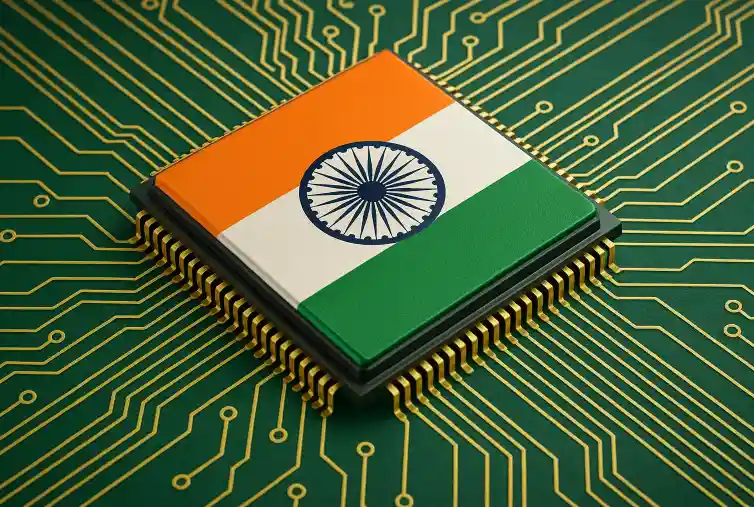
India Semiconductor Mission 2.0 is the government’s next big chip plan. It means India wants to spend more money to build a homegrown chip industry. Sources say the Finance Ministry has cleared a ₹1.25 lakh crore outlay. That is a huge budget, so it could shape factories, jobs, and supply chains for years.
Key takeaways
- India Semiconductor Mission 2.0 has reportedly got a ₹1.25 lakh crore budget clearance from the Finance Ministry.
- The plan is expected to support chip plants, chip packaging units, and the wider parts supply chain.
- India already has an earlier semiconductor scheme, but this new phase looks bigger and broader.
- If approved fully by the Union Cabinet, the move could speed up India’s push to reduce import dependence.
What is India Semiconductor Mission 2.0?
India Semiconductor Mission 2.0 is the likely second phase of India’s chip-making drive. A semiconductor is the tiny brain inside phones, cars, laptops, and data centers. Without it, modern machines stop working.
The first mission aimed to attract factories with government support. That support is called an incentive. It simply means the state helps companies with money so they build in India.
Now the reported ₹1.25 lakh crore outlay suggests a much larger push. An outlay is the total money set aside for a plan. At ₹1.25 lakh crore, the amount is ₹125,000 crore, or about ₹1.25 trillion.
Why is the government putting so much money into chips?
Because chips are now as basic as fuel or electricity. Phones need them. Cars need them. Even washing machines and hospital devices use them.
India imports most of these chips today, so any global shock can hurt local factories. We saw that during the pandemic, when chip shortages slowed car production across the world. As a result, governments everywhere began treating chips like a strategic industry.
That is also why the United States, Europe, China, Japan, and South Korea have all spent billions. India does not want to miss this race. It wants a place in the global electronics map, not just as a buyer but as a maker too.
What could the ₹1.25 lakh crore outlay pay for?
The reported plan may not be only about giant chip fabs. A fab is a fabrication plant. It is the factory where chips are made on silicon wafers.
It may also support packaging and testing. Packaging means sealing the chip so it can safely go into devices. Testing means checking if each chip works the right way.
That matters because packaging is often easier to start than full chip fabrication. It costs less, needs less time, and can still create many jobs. In fact, India has already moved in this area, with projects announced in Gujarat and Assam.
Here is a simple look at the headline number:
India Semiconductor Mission 2.0: reported outlay₹1.25 lakh croreFinance Ministry-cleared outlay, as reported by sources
A compact summary helps show the difference between parts of the chip business:
| Area | What it means | Why it matters |
|---|---|---|
| Fabrication | Making chips on wafers | High value, but very costly |
| Packaging | Assembling and sealing chips | Faster to build and scale |
| Testing | Checking chip quality | Needed before chips ship |
| Supply chain | Materials, gases, tools, logistics | Keeps factories running |
How does this fit with India’s older chip push?
India has been trying to build a semiconductor base for several years. The earlier plan offered support to chip and display makers. A display is the screen in a phone, tablet, or TV.
Since then, some projects have moved ahead, but progress has not always been smooth. Chip factories are expensive and complex. They need clean rooms, huge power supply, ultra-pure water, imported tools, and trained workers.
That is why many experts say India should build layer by layer. Start with packaging, testing, and specialty materials. Then move toward bigger fabrication plants over time.
This new budget signal fits that logic. It suggests the government still sees semiconductors as a long-term national project.
What does India Semiconductor Mission 2.0 mean for jobs and business?
If the plan turns into real approvals, it could help in several ways. First, it may bring direct factory jobs. Second, it may create support work in chemicals, gases, machine maintenance, transport, and design.
One fab can cost billions of dollars. One packaging plant can still employ thousands of workers. So even projects that are not full fabs can change a local economy.
It could also help India’s electronics exports. India wants to make more phones, servers, cars, and telecom gear at home. Those sectors work better when parts are available closer by.
For comparison, ₹1.25 lakh crore equals 125,000 crore rupees. That is larger than the annual budgets of many state-level programs. So the number tells companies that New Delhi is serious.
What still needs to happen next?
The reported Finance Ministry clearance is a major step, but it is not always the final one. Big spending plans usually need Cabinet approval. The Cabinet is the top group of ministers that signs off on major national decisions.
After that, the government would still need clear scheme rules. Companies usually want to know how much support they can get, what deadlines apply, and what production goals they must meet.
Meanwhile, states will compete for projects. They may offer land, power deals, tax relief, and faster permits. Gujarat, Tamil Nadu, Karnataka, and Assam are among the states trying to build electronics and chip ecosystems.
Readers should also watch for official details from the Ministry of Electronics and Information Technology and the Press Information Bureau. Those updates will show what is confirmed and what is still at the proposal stage.
How does this compare with other India tech and industry moves?
This chip push matches a wider trend. India is trying to build local strength in both hardware and software. For example, AI and devices are getting policy attention at the same time.
On the AI side, companies are racing to build new tools and platforms. You can see that in our coverage of Meta testing its own coding assistant MetaCode and Anthropic launching Claude Apps Gateway.
India is also looking at digital infrastructure risks and payments safety. That is why stories like NPCI testing AI to catch payment fraud in real time and Google security staff warning about search data scanning risks matter too.
Put simply, India Semiconductor Mission 2.0 is not just about one industry. It is part of a bigger plan to make India more capable in critical technology.
India Semiconductor Mission 2.0 means India is trying to spend big now so it can make more of the chips it uses later. If the money turns into real factories, India could move from mostly importing chips to building a stronger local supply chain.
FAQs
What is India Semiconductor Mission 2.0?
It is the reported second phase of India’s chip industry plan. The goal is to support factories, packaging, testing, and supply chains.
Why are semiconductors so important?
Semiconductors power phones, cars, medical tools, and data centers. Without them, many modern products cannot be made.
How much money is involved?
Sources say the outlay is ₹1.25 lakh crore. That equals ₹125,000 crore, which is a very large industrial budget.
When will the plan become final?
That depends on formal government approval and scheme details. Official announcements will confirm the next steps.