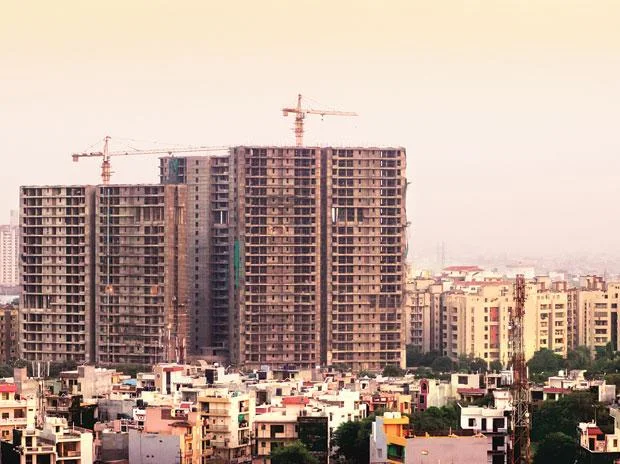
Key takeaways
- India real estate investment reached about $2.9 billion in the first half of the year.
- Big investors put most of their money into housing, offices and warehouses.
- Large deals came back, which suggests investors feel more sure about India.
- Foreign and domestic funds are both active, but they are choosing projects more carefully.
India real estate investment is the money that funds, companies and rich investors put into property projects. In the first half of the year, that total hit about $2.9 billion. That matters because big investors had been cautious, but now many are making large bets again.
Why is India real estate investment rising again?
The short answer is confidence. Investors seem more willing to write big cheques because India still has strong demand for homes, offices and logistics parks. Logistics parks are large storage and delivery hubs. They help goods move from factories to shoppers.
Moneycontrol reported that total inflows touched $2.9 billion in the first six months. That is a big pile of money, and it points to a stronger mood in the market. Inflows means fresh money coming in. It is a simple way to track investor interest.
Large investors often wait for clear signs before they act. They want stable rents, lower risk and a path to profit. So when big-ticket deals return, the market pays attention.
India also offers a scale many countries do not. Cities keep growing, more families want better homes, and companies still need quality office space. Meanwhile, online shopping keeps pushing demand for warehouses near big cities.
Which property bets are getting the most money?
India real estate investment is not flowing into every corner of the market equally. Investors are focusing on a few parts where demand looks easier to predict. That helps them avoid projects that may sit unsold or empty.
Housing is one of the top bets. Developers have seen demand hold up in many cities, especially for mid-range and premium homes. Premium means higher-priced homes with better features. These can include bigger rooms, clubhouses and better locations.
Office assets are also back in focus. Many firms still want modern buildings in top business areas, even while hybrid work continues. Hybrid work means people split time between home and office. Good buildings with strong tenants still attract capital.
Warehousing and logistics remain important too. E-commerce, retail supply chains and manufacturing all need storage space. Supply chain means the route goods take from maker to buyer. If that route grows, warehouses become more valuable.
India real estate investment: H1 snapshotTotalOfficeHomes/WH$2.9BTop betsRest
That broad mix matters. A market looks healthier when money goes into more than one segment. If all the cash chased only one idea, the risk would be higher.
What do the numbers tell us?
Here are the key figures in simple form. The headline number is $2.9 billion for the first half, or H1. H1 means the first six months of the year.
| Measure | Figure | What it means |
|---|---|---|
| Total H1 inflows | $2.9 billion | Fresh capital invested in Indian real estate |
| Time period | 6 months | First half of the year |
| Main sectors | Housing, offices, warehouses | Areas drawing the strongest investor interest |
$2.9 billion is roughly ₹24,000 crore if you use an exchange rate near ₹83 per dollar. That gives Indian readers a clearer picture. ₹24,000 crore is a huge sum, about enough to fund many large housing or office projects.
The first half has only 181 days. So the pace works out to around $16 million per day. That does not mean the money arrived evenly each day, but it shows the scale.
A deal market can turn fast. One quarter may look slow, then a few very large transactions lift the total. That is why investors watch both the headline number and the kind of assets being bought.
Why are big-ticket investors returning now?
Big-ticket investors are groups that can invest very large amounts at once. Think global private equity firms, pension funds and sovereign funds. Sovereign funds are pools of money owned by governments. They often invest for many years, not just quick profits.
These investors like assets that can produce rent over time. Offices with strong tenants fit that rule. Warehouses do too, because lease income can be steady if demand stays firm.
Housing attracts them in a different way. Instead of rent alone, they may back developers or platforms that can build and sell many homes. So the bet is on future demand from families, not only on monthly lease income.
India still looks attractive beside many other markets. Growth is faster than in several major economies, and urban demand keeps rising. Urban means city-based. More city jobs usually mean more need for homes, offices and transport-linked property.
India real estate investment is rising because large funds see demand in homes, offices and warehouses, and they believe quality projects can still earn stable returns.
What risks should readers keep in mind?
This is not a story of easy money everywhere. Investors are still picky, and weaker projects may struggle to get funding. Picky means they check location, builder record, tenant quality and sales speed very closely.
Interest rates still matter because they shape borrowing costs. Borrowing cost is the price of taking a loan. If loans stay expensive, developers and buyers both feel pressure.
Office demand can also shift if companies cut space or delay expansion. Warehousing depends on trade, manufacturing and shopping trends. So while the mood is better, the market is not risk-free.
Readers should also remember that investment totals do not always mean homes will become cheaper. In fact, strong investor demand can support prices in some places. That is good for some owners, but harder for first-time buyers.
How does this fit with other India business trends?
The property story links to wider economic moves. If companies keep growing, they need office space and logistics support. If households keep spending, housing demand can stay firm too.
We have already seen pressure and change in other sectors. For example, India services PMI slipped to a 17-month low in June, which showed some cooling in business activity. PMI is a survey-based business gauge. A lower reading can hint at slower growth.
Trade routes also matter for construction costs and supply chains. Our report on Malacca Strait pressure explained how shipping stress can raise risks for cargo movement. If imported materials slow down, project timelines can suffer.
Money conditions shape large deals as well. That is one reason the market watches central bank tools closely, such as in our piece on the RBI swap window and cheaper dollar funds. A swap is a financial exchange arrangement. It can help banks manage foreign currency funding.
For primary-source context, readers can track market data and policy updates from the Reserve Bank of India and housing policy material from the Ministry of Housing and Urban Affairs.
What should buyers, builders and investors watch next?
Watch whether these large deals continue in the second half. One strong half is useful, but a trend needs time. If more capital keeps coming, developers may launch more projects and land deals.
Keep an eye on leasing in top office cities too. If vacancy stays under control, investor interest should hold up better. Vacancy means empty space waiting for tenants.
Also watch housing sales, especially in big cities like Mumbai, Bengaluru and Delhi-NCR. NCR means the National Capital Region around Delhi. If sales slow sharply, investors may turn more cautious again.
For now, the signal is clear. India real estate investment has picked up because large investors are back, and they are choosing sectors with visible demand. That does not guarantee a boom, but it does show stronger faith in India property than many expected a few months ago.
FAQs
What is India real estate investment?
India real estate investment means money put into property projects in India, such as homes, office buildings and warehouses.
Why are investors choosing housing, offices and warehouses?
They see clearer demand there. Homes sell to families, offices earn rent from companies, and warehouses benefit from shopping and supply chains.
How much money came into the sector?
About $2.9 billion came in during the first half of the year. That is roughly ₹24,000 crore.
Who are the big-ticket investors?
They are large funds, including private equity firms, pension funds and sovereign investors. They can invest hundreds of millions of dollars at a time.