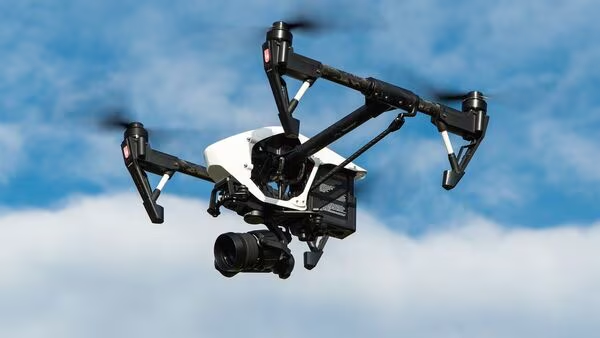
ideaForge QIP has raised ₹500 crore for the drone maker’s next stage of growth. ideaForge QIP is a qualified institutional placement, which means a company sells shares to big investors like mutual funds and insurers. The fresh cash should help ideaForge build more drone products, grow faster, and deepen its defence work.
Key takeaways
- ideaForge raised ₹500 crore through a share sale to institutional investors.
- The fundraise happened through a QIP, a fast way for listed firms to raise money.
- The company plans to use the money for growth, product work, and defence drone capacity.
- The move matters because India wants stronger local drone and defence technology.
What happened in the ideaForge QIP?
The company said it raised ₹500 crore from institutional investors. These are large professional investors, such as mutual funds and insurance firms. A QIP lets a listed company raise money without doing a long public issue, so it is often quicker than other routes.
ideaForge is one of India’s best-known drone makers. It has built drones for mapping, security, and defence use. This fundraise stands out because ₹500 crore is a large sum for a company in a young but fast-moving drone market.
The issue price matters too, because it decides how much investors pay for each new share. New shares also mean dilution. Dilution means old shareholders own a slightly smaller slice after fresh shares are issued.
Why does ideaForge QIP matter for the drone industry?
This matters because drones are no longer niche gadgets. They are now tools for the military, police, mining firms, and survey teams. In simple terms, a drone is a flying machine that can work without a pilot sitting inside it.
India has pushed hard for local defence production in recent years. That gives homegrown companies a chance to win orders and build deeper skills. So when a company like ideaForge adds ₹500 crore to its war chest, the whole sector pays attention.
Think of it like a school team getting better gear, more coaches, and more practice time. More money does not guarantee wins, but it can improve the odds. That is especially true in a field where research, testing, and manufacturing cost a lot.
ideaForge QIP: key numbers₹500 crore1 QIP routeFunds raisedFundraising method
What will the ₹500 crore likely be used for?
The company said the money will support growth and expand defence drone capabilities. Capabilities means what its drones and teams can actually do. That can include better hardware, smarter software, stronger testing, and higher production.
Part of the money could go into research and development. Research and development, or R&D, means spending on new products and improvements. In drones, that may include longer flight time, better cameras, stronger communication links, and safer systems.
Some funds may also support working capital. Working capital means money used for day-to-day business needs like parts, salaries, and operations. If order flow rises, companies often need more working capital to build and deliver on time.
Defence work usually demands long testing cycles and strict standards. That means companies need patience and cash. So the ideaForge QIP could give the company more room to plan beyond the next quarter.
How big is ₹500 crore in practical terms?
₹500 crore equals ₹5 billion. That is a huge amount for product building in India’s drone space. For a simple picture, ₹500 crore is 5,000 million rupees, which can fund teams, labs, inventory, and expansion across several years.
Numbers help tell the story. The fundraise is ₹500 crore. One crore equals 10 million rupees. So the issue brings in enough capital to make a real difference, especially in a sector where each upgrade can require deep testing and costly parts.
| Item | Figure | What it means |
|---|---|---|
| Total raised | ₹500 crore | Fresh money for growth plans |
| In rupees | ₹5,000,000,000 | ₹5 billion in total |
| Fundraising route | QIP | Share sale to large institutions |
| Main focus | Defence drones | Stronger products and capacity |
Why are institutional investors backing this company now?
Big investors usually look for sectors with room to grow. Drones fit that idea because they have military and civilian uses. They also like companies that already have a known brand, an operating business, and a place in a strategic industry.
Institutional investors can be picky, so their support sends a signal. It does not mean the stock will only rise. But it suggests professional investors see a path for ideaForge to expand in a market with long-term demand.
This comes at a time when investors are also watching other India stories tied to policy and capital flows. For example, our report on the IDBI Bank stake sale shows how big deals can hinge on investor appetite. Our coverage of net direct tax collections also points to the wider business backdrop.
What risks should readers keep in mind?
Fresh money helps, but it does not remove every risk. Defence buying can move slowly because government orders often take time. Supply chains can also be tricky. Supply chain means the network that gets parts from makers to factories.
Competition is another issue. More drone startups and larger firms now want a piece of this market. That means ideaForge must keep improving, while also controlling costs and meeting strict customer needs.
Shareholders should watch execution. Execution means whether a company actually turns plans into results. The real test is not raising ₹500 crore. The real test is using it well.
What does this mean for India’s defence and tech push?
The big picture is simple. India wants more local technology in sensitive sectors, and drones sit right in that zone. A better-funded domestic company can help reduce reliance on imports, while also building jobs and know-how at home.
That links with other strategic sectors too. For instance, minerals matter for electronics and batteries, as we explained in our piece on the rare earth dispute between Australia and China. Energy and transport costs matter as well, which is why our report on Iran oil exports shows how global events can shape business choices.
Here is the clearest way to say it: ideaForge QIP gives the company more fuel to build drones, chase orders, and strengthen its place in India’s defence technology race.
Readers who want the original company details can also check primary reporting and filings carried by CNBC-TV18 and company disclosures on the BSE.
FAQs
What is a QIP?
A QIP is a qualified institutional placement. It means a listed company sells shares to big investors instead of the general public.
Why did ideaForge raise ₹500 crore?
The company said it wants to fund growth and expand defence drone capabilities. That likely includes products, capacity, and operations.
Why does ideaForge QIP matter?
It matters because drones are becoming more important in defence and industry. More funding can help an Indian company compete better in that race.
Get the day’s top stories in your inbox
One concise email. No spam, unsubscribe anytime.