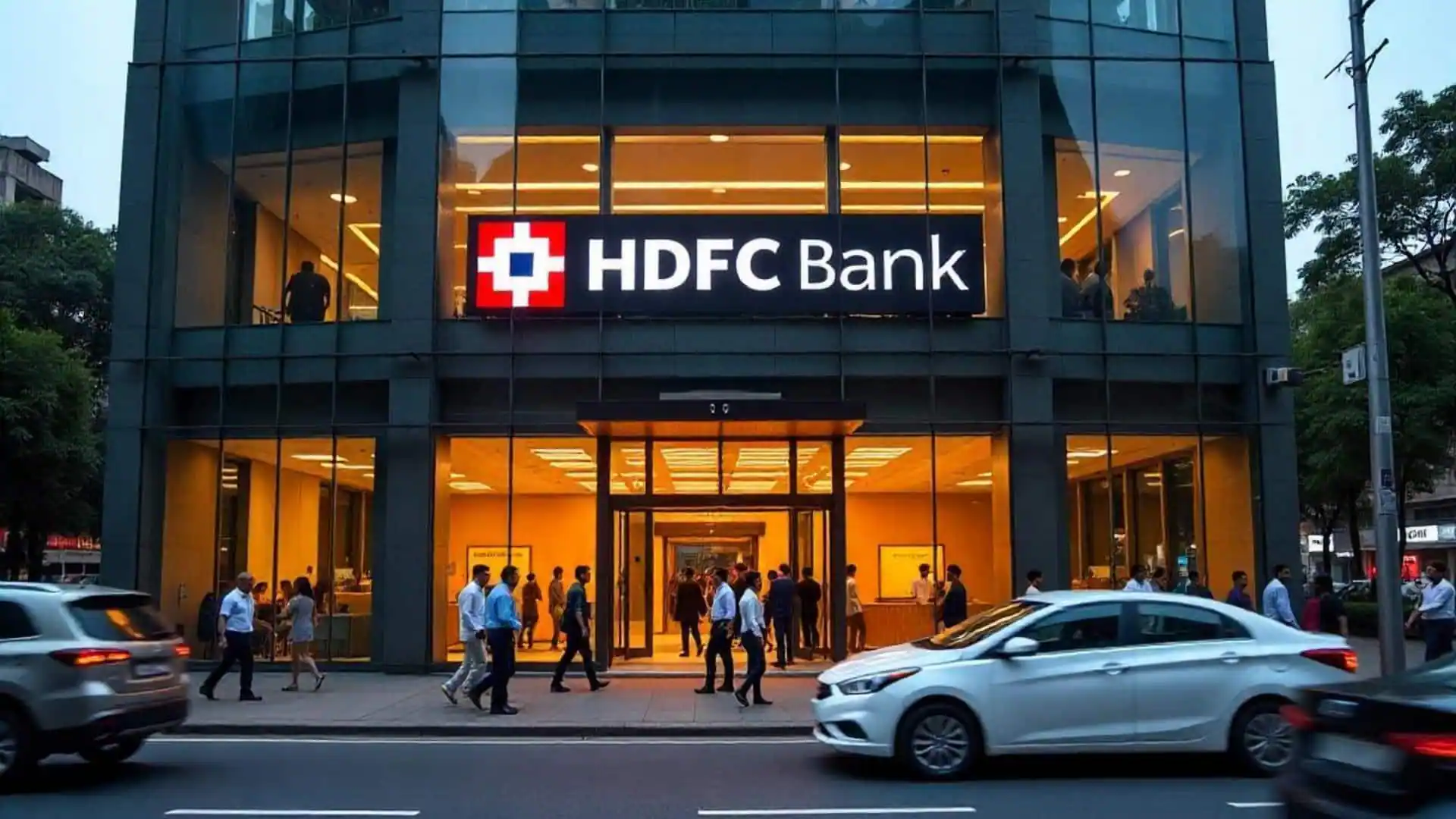
Shares of HDFC Bank fell more than 4% in early trading after the lender reported June quarter (Q1 FY27) earnings that came in below market expectations. The decline came despite several leading brokerages reiterating ‘Buy’ or ‘Overweight’ ratings, arguing that the bank’s long-term growth story remains intact even as near-term profitability faces pressure from lower margins and elevated provisions.
The market reaction underscores investors’ high expectations for India’s largest private sector bank. While HDFC Bank continued to deliver healthy loan growth and stable asset quality, weaker-than-expected earnings and margin compression weighed on sentiment, triggering a sharp sell-off in the stock.
HDFC Bank Shares Slide After Q1 Earnings Miss
HDFC Bank’s shares dropped over 4% during Monday’s trading session after its quarterly results fell short of analyst estimates.
Investors were disappointed by:
- Lower-than-expected profit growth.
- Pressure on net interest margins (NIMs).
- Higher provisioning expenses.
- Continued impact of post-merger balance sheet normalization.
Market Reaction
| Item | Details |
|---|---|
| Share price movement | Down more than 4% |
| Trigger | Q1 FY27 earnings below expectations |
| Investor concern | Margin pressure and slower earnings growth |
| Overall sentiment | Short-term weakness despite positive long-term outlook |
What Disappointed Investors?
Although HDFC Bank posted steady business growth, the earnings failed to meet elevated market expectations.
Key factors behind the disappointment included:
- Standalone net profit increased by about 5% year-on-year, below what many analysts had anticipated.
- Net interest margins remained under pressure as the bank continued to optimize its funding mix following the HDFC Ltd merger.
- Higher provisions and slower earnings momentum affected profitability.
Key Q1 Takeaways
| Metric | Trend |
|---|---|
| Net profit | Positive growth but below expectations |
| Loan growth | Healthy double-digit expansion |
| Deposits | Continued steady growth |
| Net interest margins | Under pressure |
| Asset quality | Largely stable |
Brokerages Remain Bullish
Despite the sharp decline in the share price, most major brokerages retained their positive recommendations on HDFC Bank.
Analysts cited:
- Strong retail and corporate franchise.
- Healthy credit growth.
- Stable asset quality.
- Improving operating leverage over the medium term.
- Attractive valuation after the stock correction.
Several brokerage firms maintained Buy, Overweight, or equivalent ratings while largely keeping their target prices unchanged, indicating confidence that earnings growth should improve as margin pressures gradually ease.
Brokerage View
| Positive Factors | Near-Term Challenges |
|---|---|
| Strong loan growth | Margin compression |
| High-quality loan book | Elevated provisions |
| Market leadership | Softer quarterly earnings |
| Long-term earnings potential | Integration-related normalization |
Why the Long-Term Story Remains Intact
Analysts believe the current weakness reflects cyclical factors rather than structural issues.
Key positives include:
- Continued expansion in advances and deposits.
- Strong capital position.
- Industry-leading retail banking franchise.
- Ability to benefit from future improvement in lending spreads.
- Cross-selling opportunities following the HDFC Ltd merger.
Many analysts expect HDFC Bank’s profitability to recover as funding costs stabilize and the benefits of merger integration become more visible over the coming quarters.
What Investors Will Watch Next
Going forward, investors are expected to focus on several key metrics:
- Recovery in net interest margins.
- Deposit mobilization.
- Credit growth.
- Asset quality trends.
- Management commentary on earnings normalization.
- Progress in realizing merger synergies.
Key Monitorables
| Focus Area | Why It Matters |
|---|---|
| Net interest margin | Major driver of profitability |
| Deposit growth | Supports future lending |
| Credit growth | Revenue expansion |
| Asset quality | Risk management |
| Merger synergies | Long-term earnings improvement |
Looking Ahead
HDFC Bank’s more than 4% share price decline reflects investor disappointment with a quarter that fell short of lofty expectations rather than a deterioration in the bank’s core franchise. While weaker earnings growth, margin pressure, and higher provisions weighed on sentiment, the lender continues to deliver healthy loan and deposit growth and maintains stable asset quality.
The broadly positive response from brokerages suggests that the market views the current weakness as a near-term earnings issue rather than a structural concern. As funding costs stabilize and merger-related normalization progresses, investors will be closely watching whether HDFC Bank can restore stronger profitability and justify the bullish long-term outlook maintained by analysts.
Get the day’s top stories in your inbox
One concise email. No spam, unsubscribe anytime.