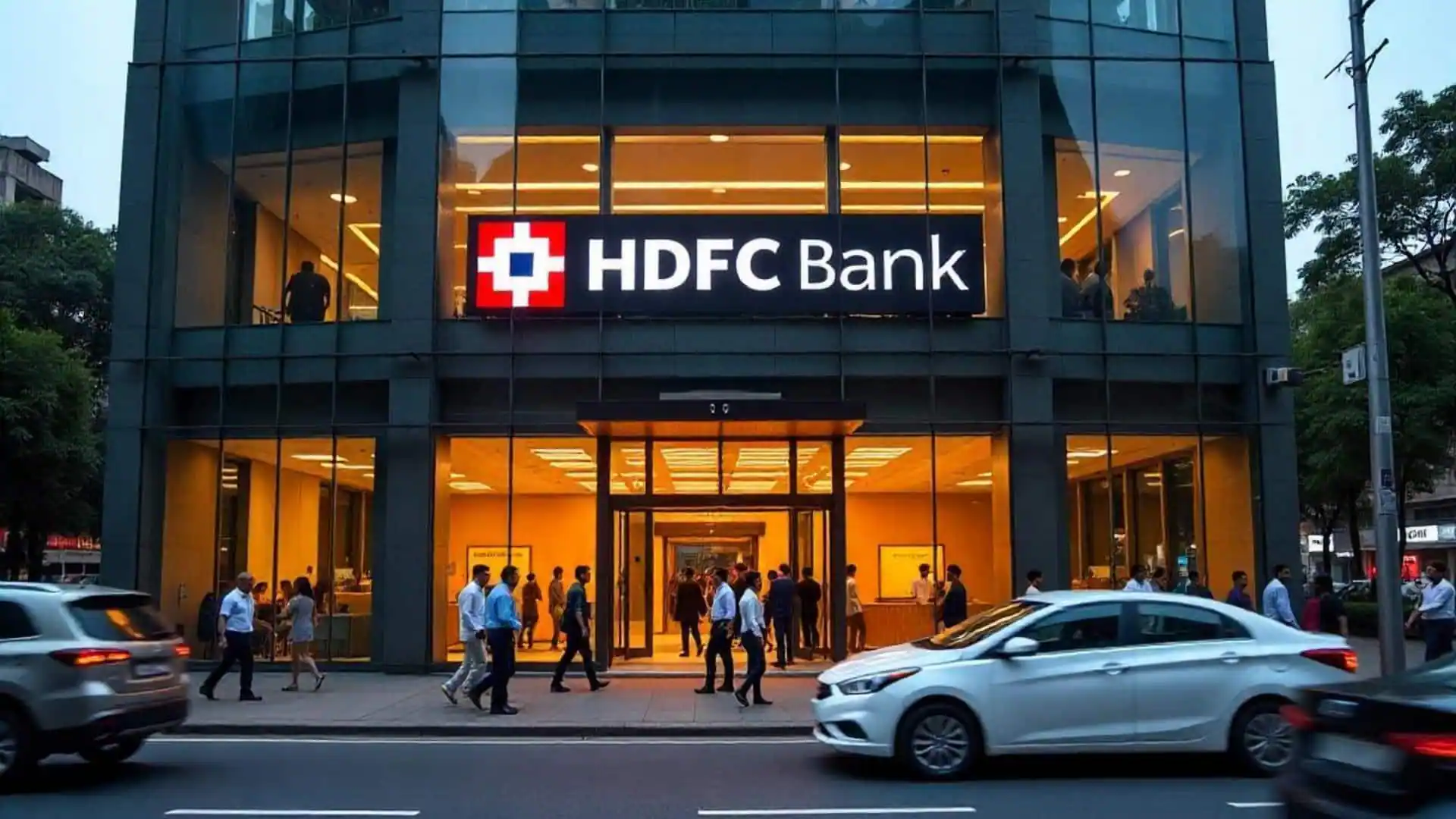
India’s largest private sector lender, HDFC Bank, has found itself under an intense regulatory and investor spotlight following an explosive internal vigilance report. The investigation reveals that the bank allegedly funneled nearly ₹45 crore through its marketing budget to pay an unauthorized, higher interest rate to a state government corporation to secure its massive deposit pool.
The revelation triggered an immediate reaction on Dalal Street, with HDFC Bank shares dropping over 2% to an intraday low of ₹761.25 on the BSE as investors weighed the corporate governance and compliance risks.
The Core Arrangement: Chasing a ₹25,000 Crore Mandate
The issue dates back to 2021, when HDFC Bank aggressively courted the Maharashtra State Road Development Corporation (MSRDC)—a state-run infrastructure agency handling massive land acquisition funds.
While HDFC Bank’s standard savings interest rate hovered around 3.5%, MSRDC requested a yield of at least 6.01% to match competing offers, hinting that a deposit pipeline potentially worth up to ₹25,000 crore hung in the balance.
To bridge the gap, the bank’s Asset Liability Committee initially introduced a special 4.5% rate window for large institutional deposits. However, when the inflows from MSRDC fell significantly short of expectations (crossing ₹3,000 crore for only a brief period), the bank shut down the 4.5% window in April 2022.
The Loophole: Routing “Interest” via Road Safety Corporate Sponsorships
Because the bank could no longer offer the promised 6.01% returns through standard, regulated banking channels, senior leadership allegedly devised an alternative mechanism to cover the 2.51 percentage point differential without alerting regulators.
According to internal bank records and testimonies leaked to The Indian Express:
- The Intermediary: The bank’s marketing department was used to “facilitator-camouflage” the excess interest reimbursement.
- The Cover Story: The ₹45 crore payout was spread across a series of transactions from 2023 through 2025 and booked as corporate sponsorship contributions toward a “road safety awareness campaign” run by MSRDC.
- Vendor Red Flags: The funds were paid out through four local marketing vendors. The audit exposed glaring compliance failures, including instances where a single verification photograph was duplicated and attached to multiple vendor invoices totaling nearly ₹9 crore to give the transactions a veneer of legitimacy.
In a testimony recorded during the internal inquiry, HDFC Bank Chief Marketing Officer Ravi Santhanam reportedly acknowledged that the marketing unit acted as a pipeline to mask the interest equalization setup on instructions from the business team.
Top Executive Scrutiny and the Atanu Chakraborty Exit
The internal vigilance probe has reached the highest levels of the bank’s leadership hierarchy. Testimonies from multiple senior officials indicate that Managing Director & CEO Sashidhar Jagdishan and CFO Srinivasan Vaidyanathan were present during high-level verbal discussions where the custom compensation architecture was approved as a “one-off arrangement.”
The timing of the probe directly connects to recent shockwaves in the bank’s boardroom. The Audit Committee of the Board (ACB) quietly ordered the formal vigilance probe on March 12, 2026. Just six days later, on March 18, HDFC Bank’s part-time chairman Atanu Chakraborty abruptly resigned, citing “certain happenings and practices” within the institution that conflicted with his ethical boundaries.
Strict Regulatory Violations
The investigation report concludes that the arrangement exposes HDFC Bank to severe regulatory, operational, and reputational liabilities, outlining two distinct breaches:
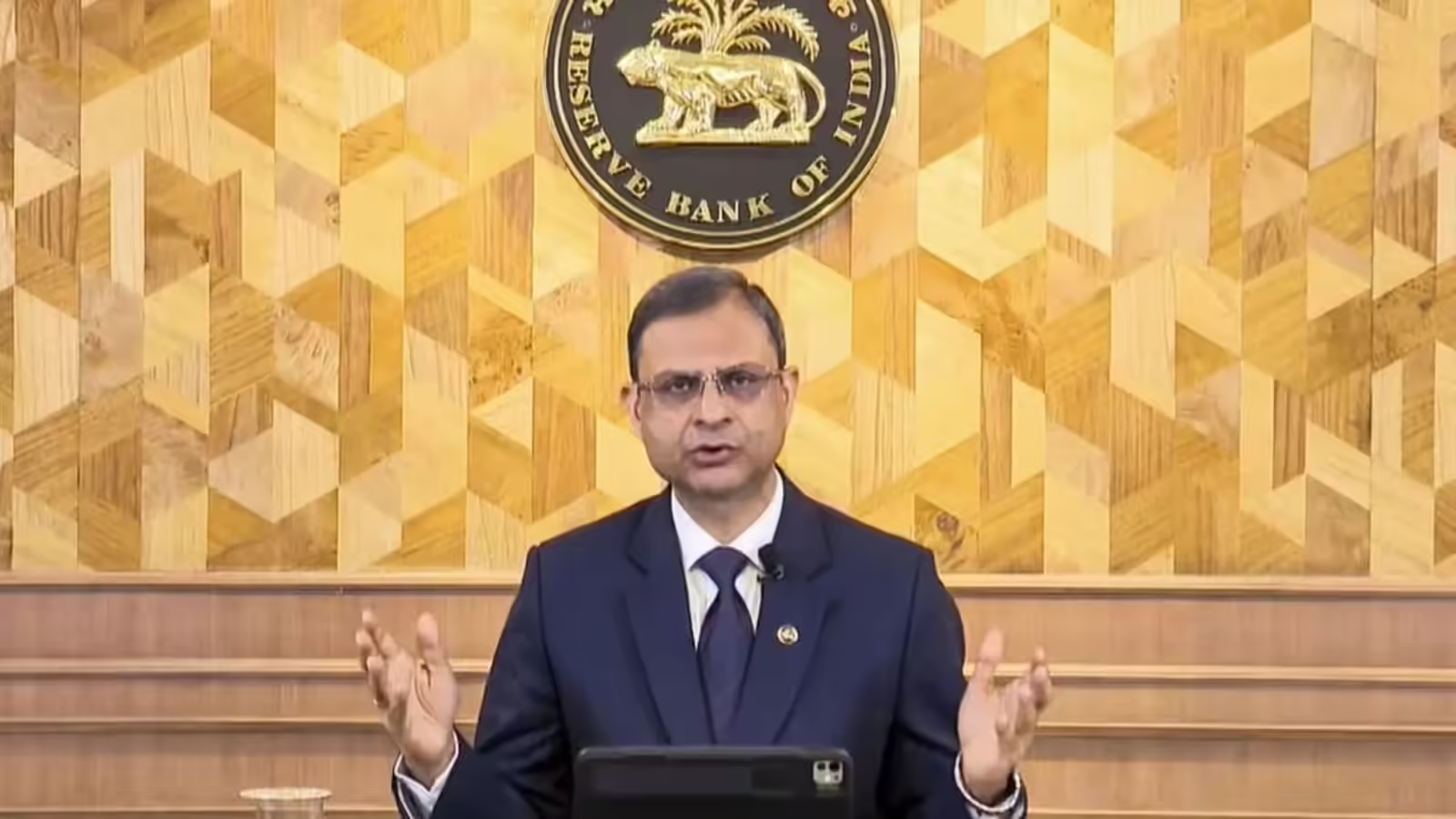
- RBI Master Directions Infraction: The Reserve Bank of India explicitly prohibits commercial banks from offering custom, negotiated, or un-advertised interest returns to individual retail or corporate depositors to prevent anti-competitive bidding.
- Anti-Bribery and Corruption (ABC) Policy: The bank’s internal guidelines strictly bar any payment structuring that can be interpreted as an “improper inducement” to secure a corporate or commercial client relationship.
HDFC Bank’s Official Counter-Response
In response to the intensifying media coverage, HDFC Bank issued a strong denial on Wednesday, rejecting assumptions of systemic or criminal wrongdoing. The bank maintained that its internal compliance, audit, and operational oversight systems remain robust and fully capable of addressing transaction anomalies without risking systemic governance collapses.
The central bank has reportedly taken note of the internal audit ratings, which marked the marketing department’s control infrastructure as “unsatisfactory.” Market analysts expect heightened volatility for the banking stock as investors await the final findings of independent legal firms and potential punitive enforcement orders from the RBI.
Get the day’s top stories in your inbox
One concise email. No spam, unsubscribe anytime.