In a bid to rescue India’s stress-strapped textile and garment value chain, the Union Government has entered “advanced stages of consultation” to entirely remove or sharply reduce the 11% customs duty on raw cotton imports.
The inter-ministerial deliberations—involving the Ministries of Finance, Textiles, and Agriculture—follow an intense, coordinated lobbying effort by top apparel export councils and state leaders, including Tamil Nadu Chief Minister C. Joseph Vijay, who formally petitioned the Prime Minister to intervene.
1. The Core Variable: The 45-Lakh-Bale Supply Shortage
The urgent push to dismantle the tariff wall stems from a severe demand-supply gap in the domestic market, compounded by climate-induced crop shortfalls and global supply bottlenecks.
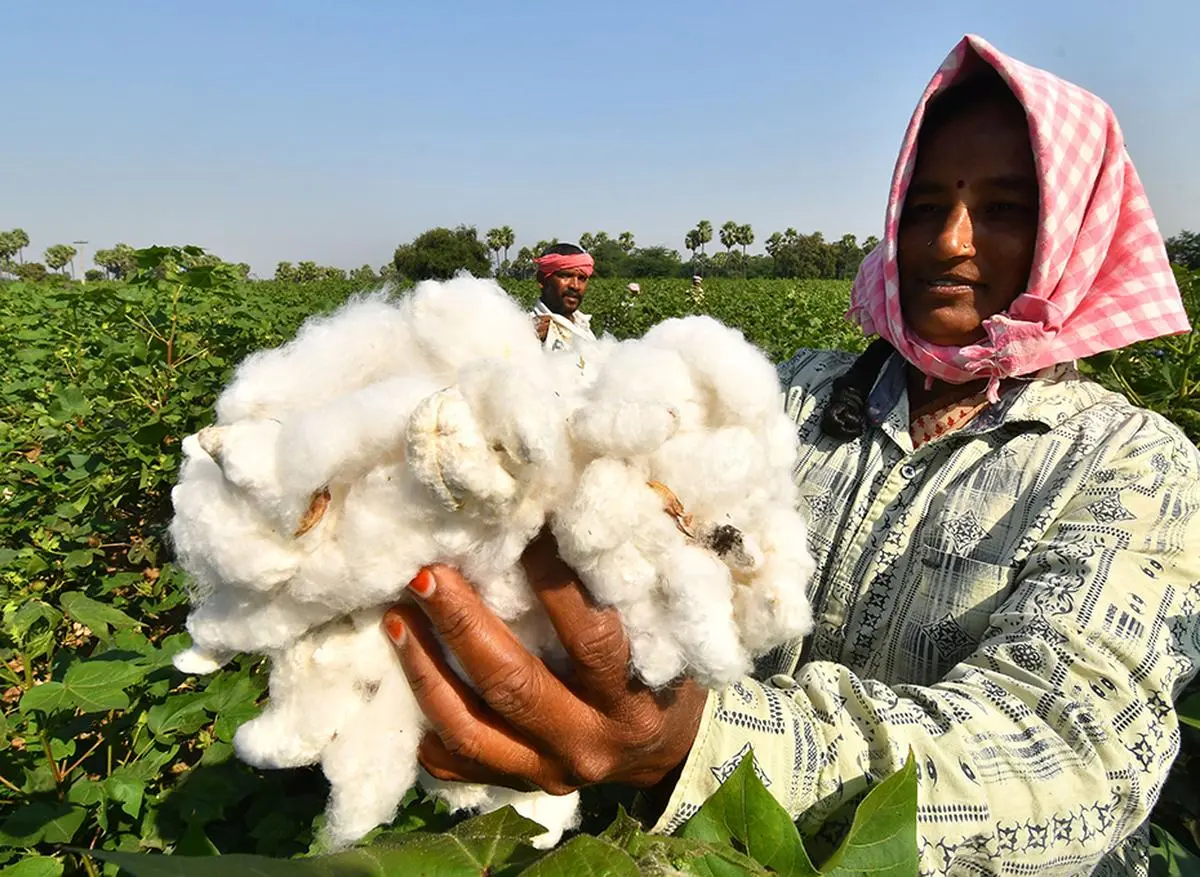
- The Deficit Math: Industry projections estimate the domestic textile sector’s cotton requirement for the current fiscal year at 337 lakh bales (1 bale = 170 kg). However, domestic cotton arrivals for the 2025–26 season are stalling at just 292.15 lakh bales—leaving a massive deficit of nearly 45 lakh bales.
- The Price Explosion: This shortage has triggered heavy trading activity and local hoarding. Domestic raw cotton prices have surged 25% in the last two months alone, skyrocketing from ₹54,700 to ₹67,700 per candy. Consequently, cotton yarn prices have climbed from ₹301 to ₹330 per kg, crushing the operating margins of spinning mills.
2. Slicing Open the Proposed Policy Pivot
To protect industrial output without alienating the domestic farming lobby, policymakers are leaning toward a temporary, seasonal tariff suspension rather than a permanent structural elimination.
| Proposed Policy Mechanism | Target Execution Window | Operational & Strategic Rationale |
| Lean-Season Exemption | July to October 2026 (4-Month Window) | Suspending the 11% levy during these exact four months allows mills to import high-quality foreign lint during the domestic lean phase, avoiding any price suppression for local farmers before the fresh Kharif autumn harvest arrives. |
| The Yield Cushion | Immediate Implementation | Permitting duty-free inputs will allow downstream apparel exporters to fulfill international summer and winter line delivery commitments without breaching cost boundaries. |
| Secondary Duty Slashing | Under Active Review | The Ministry of Textiles has additionally written to the Department of Revenue seeking the complete removal of the 2.5% customs duty on rayon-grade wood pulp to ease input pressure across the synthetic viscose chain. |
3. Industry Split: Competitive Edge vs. Dollar Outflow
While downstream garment manufacturers view the duty removal as a life-saving measure, macroeconomists and certain trading lobbies have raised red flags regarding the country’s balance of payments:
The Capital Drain Warning: Trade data analysts note that past windows of absolute duty-free cotton imports triggered sudden, heavy foreign exchange outflows ranging between $1.1 billion and $1.2 billion. Given that India’s merchandise trade deficit recently widened to a six-month high of $28.38 billion, a sudden multi-billion dollar spike in non-essential commodity imports could pile incremental near-term pressure on the rupee.
However, textile associations argue that the net foreign exchange return from higher-value ready-made garment (RMG) exports will vastly outweigh the initial raw materials bill. Furthermore, because the textile ecosystem is India’s second-largest employer after agriculture—supporting millions of rural and semi-urban women—the government is widely expected to prioritize industrial employment security and finalize the duty rollback ahead of the monsoon season.
Get the day’s top stories in your inbox
One concise email. No spam, unsubscribe anytime.