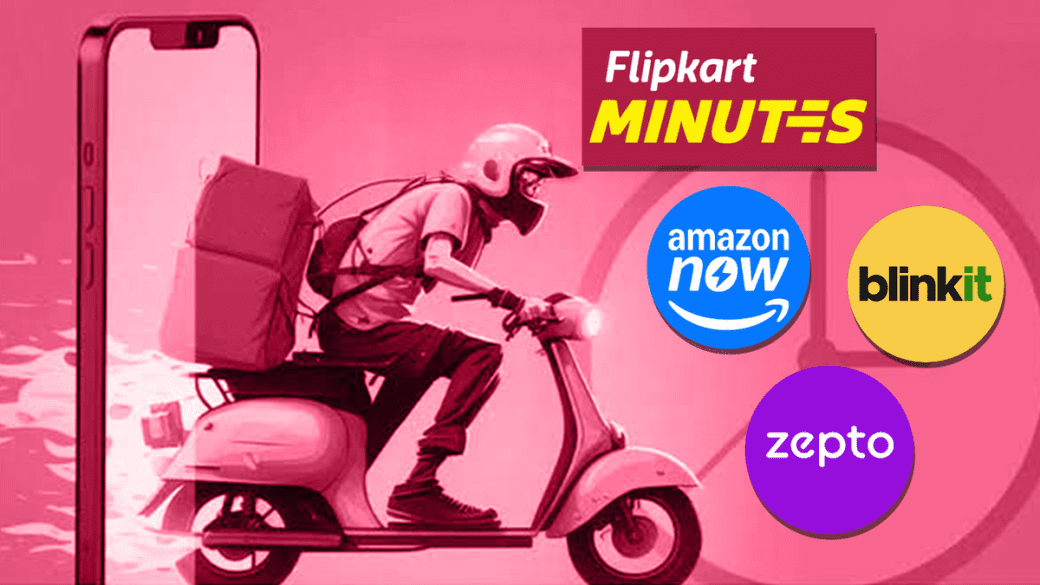
Walmart-owned e-commerce giant Flipkart has officially scaled its quick commerce arm, Flipkart Minutes, to 1,000 micro-fulfillment centers (dark stores) across 130 cities.
Remarkably, the platform reached this milestone in less than two years since its launch in August 2024, far outpacing the typical three-year industry horizon. Backed by the parent company’s deferred IPO plans, the company is now adding roughly 100 new dark stores a month with a target to reach 1,500 stores in 180+ cities by the end of 2026.
1. Dissecting the “Bharat” & Gen Z Growth Engine
Flipkart Minutes is using a fundamentally different playbook compared to its quick-commerce peers, choosing to lean heavily into smaller markets rather than relying solely on high-income urban metros:
- The Tier-2 & Tier-3 Surge: Out of the 130 operational cities, nearly 90 are smaller regional markets (including Ambala, Arrah, Bokaro, Darbhanga, Jorhat, Ongole, and Tenali). This geographical expansion triggered an astronomical 42-fold (42X) increase in scale across smaller towns compared to last year.
- The Basket Builder Behavior: While metros treat instant apps as emergency or impulse grocery top-ups, Flipkart executives note that Tier-2 and Tier-3 consumers are showing a “basket-builder” behavior, spending with a significantly higher Average Order Value (AOV) of roughly ₹700.
- The Gen Z Factor: Digital-native younger consumers have emerged as the fastest-growing demographic on the platform, accounting for more than 40% of the total customer base and actively ordering well beyond groceries.
                           ┌──► Geographical Scope: 1,000 dark stores across 130 cities (90 in Tier-2/3)
                           │
[Flipkart Minutes Stack] ──┼──► Order Volume Momentum: 5X overall growth; 42X volume scaling in smaller towns
                           │
                           └──► Demographics: Gen Z accounts for 40%+ of the user base, driving non-grocery orders
2. Category Diversification: Beyond the Grocery Bag
To support its high average order value, Flipkart is leveraging dark stores spanning 3,000 to 5,000 square feet, capable of stocking up to 20,000 individual items (SKUs). This allows the platform to seamlessly transition users into high-margin, high-frequency lifestyle brackets:
- The Perimeter Expansion: The platform has successfully introduced more than 120 new categories, including fresh produce, hot bakery items, beauty products, wellness supplements, and consumer electronics.
- The Big Billion Days Hybrid Strategy: Management plans to deploy Minutes as an additional high-velocity fulfillment channel for smartphones and small appliances during flagship festive sales, bridging the gap between traditional deferred delivery and 10-minute gratification.
- Sourcing Ecosystem: To fuel this fresh pipeline, Minutes has integrated nearly 500 D2C brands and linked over 3,000 farmers directly into its farm-to-door fulfillment networks via its Samarth Krishi program.
3. The Quick Commerce Capital & Density War
Despite its blistering growth rate, Flipkart Minutes is playing catch-up against deeply entrenched rivals who are expanding their infrastructure at an equal, if not faster, clip:
| Platform | Operational Dark Store Count | Daily Order Metrics | Core Expansion Strategy |
| Blinkit (Zomato) | 2,243 | ~3.00 Million | Premium city density; targeting 3,000 stores by 2027. |
| Swiggy Instamart | 1,143 | ~1.25 Million | Hyperlocal tier-1 saturation ahead of active public listing. |
| Zepto | 1,139 | — | Scaling up micro-fulfillment footprints while preparing for IPO. |
| Flipkart Minutes | 1,000 | ~0.82 Million | Value grocery disruption; capturing Tier-2/3 market share. |
| Amazon Now | ~500 | — | Deploying 2 dark stores daily; leveraging existing Prime user base. |
The Capital Efficiency Play: Setting up a standard dark store requires a capital expenditure layout of ₹45 lakh to ₹60 lakh, demanding a steady baseline of 1,400 to 1,500 daily orders to achieve operational break-even. To minimize the immense real estate risk of scaling 100 dark stores a month, Flipkart is utilizing a hybrid model—partnering with third-party local logistics enablers to share the initial capital expenditure and storage load in select regional pin codes.