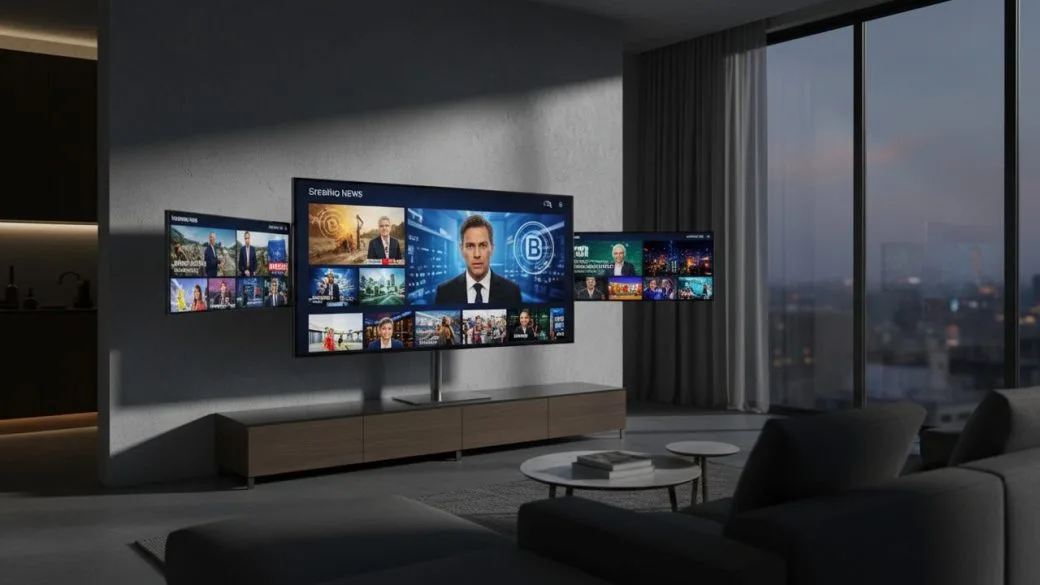
Connected TV reach in India has grown to about 160 million viewers. Connected TV reach means the number of people who watch TV through the internet on smart TVs or streaming devices. That matters because brands now follow viewers to these bigger screens. It also shows how home viewing habits are changing fast.
Key takeaways
- India’s Connected TV reach is now around 160 million viewers.
- Viewers use smart TVs and streaming sticks to watch internet video on a TV screen.
- Advertisers like these screens because they mix TV-style impact with digital targeting.
- Growth is rising with cheaper broadband, more smart TVs, and stronger OTT apps.
- The next big fight will be for ad money, not just viewer time.
What is Connected TV reach and why is it growing?
Connected TV reach is the count of people who watch online video on a television set. That includes smart TVs and devices like Fire TV sticks. It’s different from regular cable or satellite TV, because the video comes through the internet.
The new 160 million figure is a big sign of scale. India has moved from early adoption to mass use. For families, this often means one screen in the living room serves both TV channels and apps like YouTube or OTT platforms. OTT means online video services such as streaming apps.
Three things are pushing this jump. First, smart TVs have become cheaper. Second, home internet is faster in many cities. Third, streaming apps now carry sports, films, kids’ shows, and even free ad-supported content.
That mix matters because people don’t want to switch screens all day. They can watch a cricket match on a TV, then open a movie app in seconds. As a result, the TV screen is no longer just for broadcast channels.
How big is 160 million viewers, really?
It sounds huge, and it is. India has more than 1.4 billion people, so 160 million viewers is more than the population of many countries. It’s also larger than the entire population of Japan, which is around 124 million.
Think of it this way. If 160 million people stood in one line, it would wrap around the Earth many times. That simple picture helps explain why media companies and advertisers care so much.
Even more useful is what this number says about homes. Viewership usually comes in clusters, because people watch together in living rooms. So one connected TV can influence a whole family, not just one person with one phone.
Connected TV reach in IndiaKey number: about 160 million viewers160m viewersExample comparison: 1 TV screen, many viewersSource-based news reporting; figures rounded for readability.
Why do advertisers care about Connected TV reach?
Advertisers love big screens because they grab attention. A 30-second video ad on a living room TV can feel stronger than one on a small phone. But connected TV also gives digital-style data, so brands can measure who watched and what happened next.
That is a powerful mix. Traditional TV gives scale, which means lots of people at once. Digital ads give targeting, which means showing ads to selected groups. Connected TV sits in the middle, and that’s why ad budgets are shifting.
For example, a sports brand can show one ad during a match and track response by city or device type. A car maker can run a glossy video on a large screen, then retarget viewers on mobile later. Retarget means showing another ad to someone who already saw the first one.
This is also why media buyers are watching the space closely. Media buyers are people who decide where companies spend ad money. They want proof that viewers are real, engaged, and worth the price.
What does this mean for TV channels and streaming apps?
It means the battle is changing. TV channels still matter, especially for news and live sports. But streaming apps now compete for the same evening hours on the same family screen.
That can help both sides. Broadcasters can launch apps and sell ad bundles across TV and streaming. Streaming firms can use big-screen viewing to look more like premium TV, which often brings higher ad rates.
Still, the fight will get tougher. If too many services ask for subscriptions, families may cut back. So free and low-cost options could grow faster, especially ad-supported ones.
We’ve seen similar shifts across tech and media before. Our coverage of quick commerce food retail in India showed how users change habits when speed and ease improve. The same idea applies here: once watching becomes simple, people don’t go back.
What are the numbers telling us?
The headline number is 160 million viewers. That is the clearest signal. But the deeper story is about momentum, because viewership tends to rise as device prices fall and broadband spreads.
Many smart TVs now sell in price bands that middle-class families can manage. Entry models often sit well below premium phones. Meanwhile, one broadband connection can serve school work, gaming, and streaming at the same time.
| Metric | Figure | Why it matters |
|---|---|---|
| Connected TV viewers in India | 160 million | Shows mass adoption |
| Type of screen | TV | Bigger impact than phones |
| Common use | OTT, YouTube, sports | Mix of family and personal viewing |
| Main business effect | More ad interest | Brands follow attention |
Another useful point is how this affects ad planning. A media plan is the map for where ad money goes. If connected TV keeps growing, companies may move more money from regular TV and mobile video into this bucket.
That trend also fits wider digital shifts. For example, ad tech and AI tools are changing how companies track audiences, much like in our story on AI text detectors and how models mimic human writing. Different sector, same lesson: digital tools are reshaping old systems.
What could slow Connected TV reach from here?
Not every home has fast, stable internet. That is still a real barrier, especially outside big cities. Video buffering can ruin the experience, so some families may stick with cable for now.
There is also a content problem. If a popular show or match sits behind too many paywalls, viewers get frustrated. A paywall means you must pay before you can watch. Too many of them can push people away.
Measurement is another issue. The industry still needs trusted standards for view counts and ad results. Trusted standards are shared rules everyone accepts. Without them, brands may spend carefully instead of spending big.
For primary context on digital media and market trends, readers can also check industry updates from IBEF and audience data discussions from BARC India.
What happens next for Connected TV reach in India?
Connected TV reach will likely keep rising, but not in a straight line. Big sports events, festival sales, and cheap devices can speed things up. Weak internet or too many paid apps can slow it down.
The larger shift seems clear. India’s TV is becoming a hybrid screen. Hybrid means one thing doing two jobs. It plays regular channels, but it also works like a giant internet video device.
That is why Connected TV reach matters beyond media headlines. It changes how families watch, how creators distribute shows, and how brands spend money. In plain terms, the television in the corner is turning into a smarter, busier, more valuable screen.
We’ve already seen how digital pipes affect other sectors too, from payments to devices. For a related tech supply angle, see our report on Samsung increasing production of its new foldables. More connected devices usually means more streaming time as well.
FAQs
What is Connected TV reach?
Connected TV reach is the number of people who watch internet video on a TV screen. That includes smart TVs and TV streaming devices.
Why are brands watching Connected TV reach?
Brands care because connected TV combines a large screen with digital tracking. So they can get attention and better data at the same time.
How is connected TV different from normal TV?
Normal TV usually comes through cable, satellite, or broadcast signals. Connected TV uses the internet to stream video apps on a television set.
Who benefits most from this growth?
Streaming apps, smart TV makers, and advertisers all benefit. Viewers can benefit too, because they get more choice on one screen.
Get the day’s top stories in your inbox
One concise email. No spam, unsubscribe anytime.