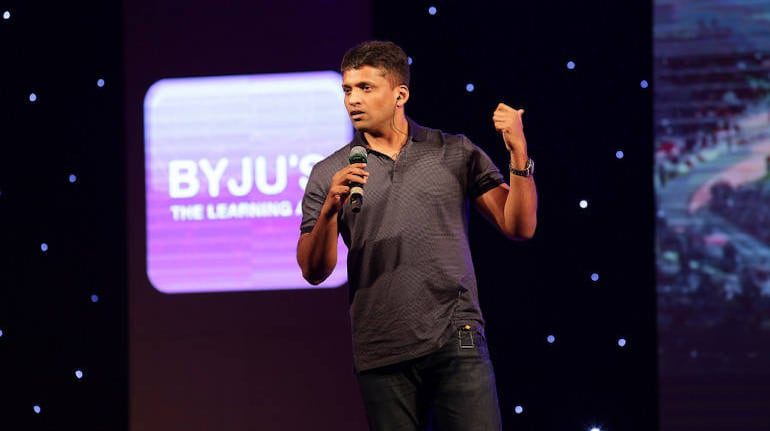
The multi-year, multi-billion-dollar war between Byju’s and its overseas creditors may finally be reaching an end. In an advanced bid to clear the slate, Byju’s global lenders are in talks to acquire a roughly 30% equity stake in Aakash Educational Services, the prized brick-and-mortar test preparatory arm of the embattled edtech empire.
In exchange for this piece of the business, the lenders have agreed to unconditionally drop all legal battles, asset-freezing claims, and fraud allegations against Byju’s founder, Byju Raveendran.
1. The Crown Jewel Exit Strategy
While the core online learning business of Byju’s Think & Learn parent entity imploded entirely—with Raveendran famously declaring in 2024 that the company’s internal valuation had hit “zero”—Aakash has remained structurally insulated from the wreckage.
- The Valuation Floor: The proposed settlement talks value Aakash Educational Services at roughly $2 billion. The 30% equity slice would hand the creditor block an immediate, tangible asset value of roughly $600 million to recoup a heavy chunk of their unpaid capital.
- A Healthy Offline Cash Cow: Unlike the online courses that boomed and busted after the pandemic, Aakash operates a steady, revenue-generating brick-and-mortar network of over 300 physical coaching centers across India, supported by a faculty of 5,000 experts. The coaching giant last recorded an annual revenue baseline of around $254 million (₹2,100+ crore) from medical and engineering entrance exam preparation.
 [ The $1.2B Loan Default ] ──► Years of Multi-Country Lawsuits (US, India, Singapore)
                                            │
                                            ▼ (June 2026 Advanced Settlement Talks)
 [ The Proposed Slate Clear ] ──► Lenders Drop All Allegations Against Byju Raveendran
                              ──► Lenders Absorb a 30% Stake in Aakash ($600M Equivalent Value)
2. Resolving the $1.2 Billion “Alpha” Dispute
The negotiation is a direct off-ramp from the legal war that kicked off in early 2023. U.S.-based GLAS Trust, acting as the administrative trustee for a consortium of institutional Term Loan B lenders, had sued Byju’s after the startup defaulted on a massive $1.2 billion international loan.
The battle turned toxic when lenders accused Raveendran of corporate mismanagement and hiding $533 million in cash through a hidden U.S. shell subsidiary, Byju’s Alpha. The dispute pushed the Indian parent firm straight into insolvency court in 2024. By migrating the debt settlement into Aakash equity, lenders bypass months of grueling, unpredictable bankruptcy court distribution queues across U.S., Singapore, and Indian benches.
3. The Complex Shareholding Table
If the settlement is successfully executed, it will require navigating a highly complex, re-anchored ownership structure inside Aakash. Byju’s originally acquired Aakash in 2021 for a blockbuster $1 billion, but its parent holdings have since been heavily diluted down to a minority position.
The current corporate hierarchy layout underlines the existing corporate factions:
| Shareholder Entity Block | Current Ownership Footprint Status | Post-Settlement Structural Dynamics |
| Manipal Education & Medical Group | ~60% Controlling Stake | Billionaire Ranjan Pai’s Manipal Group remains the undisputed single largest shareholder, having aggressively converted past emergency funding into core equity. |
| The Global Creditor Consortium (Via GLAS Trust) | 0% | Will absorb the freshly negotiated 30% equity chunk directly out of the Byju / Raveendran residual family holding allocation. |
| Byju Raveendran & Parent Affiliates | Residual minority positioning | Will see their remaining baseline equity heavily drawn down to zero or a minimal fractional holding to fully satisfy the debt exit. |
The Bengaluru bench of the National Company Law Tribunal (NCLT) has already been formally informed by both legal teams that a unified settlement framework is being aggressively hammered out in private. The tribunal has deferred the ongoing insolvency proceedings to July 16, 2026, giving all signing parties—including Manipal, GLAS Trust, and Raveendran—a clean three-week window to finalize the formal paperwork, secure final approvals, and officially close the book on India’s most dramatic startup collapse.