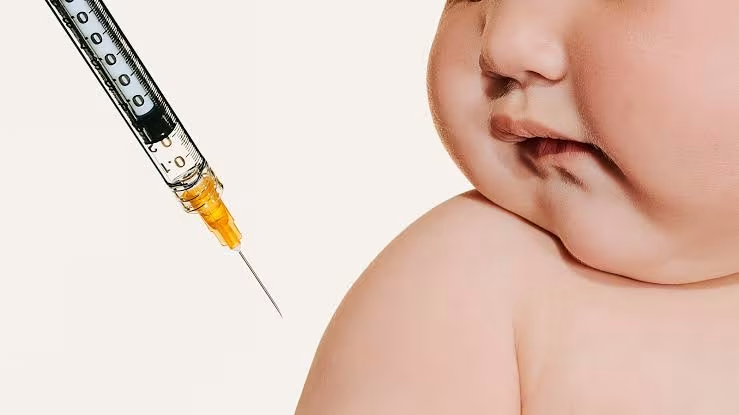
Anti-vaccine changes could leave more toddlers open to dangerous diseases. Anti-vaccine changes means rules or advice that make it harder, slower, or less likely for children to get routine shots. A new study says those shifts may hit the youngest kids hardest. That matters because toddlers have small bodies and fewer defenses.
Key takeaways
- Researchers say anti-vaccine changes may reduce routine shots for toddlers.
- Even small drops in vaccination can raise the risk of outbreaks.
- Measles spreads very easily, so delays can quickly matter.
- Children with weak immune systems face the biggest danger.
- Public health experts warn trust can fall when guidance gets muddled.
Why are anti-vaccine changes worrying doctors?
Doctors worry because vaccine schedules work best when families follow them on time. A vaccine schedule is the plan for when each shot should happen. If that plan gets delayed, a child may spend months without protection.
The new paper looked at what may happen if anti-vaccine changes weaken childhood immunization. Immunization means building protection against disease, usually through shots. The researchers found the biggest harm could fall on very young children, especially toddlers under age 2.
That risk is not abstract. Measles can spread to 9 out of 10 unprotected people nearby, according to the US Centers for Disease Control and Prevention, or CDC. You can read the CDC’s measles guidance here: https://www.cdc.gov/measles/.
Some children cannot get certain shots right away because they are too young or medically fragile. Fragile means their bodies may not fight infection well. So they rely on the people around them being vaccinated.
What did the study find about anti-vaccine changes?
The study said policy and messaging shifts can cut vaccine coverage, which means the share of people who got a shot. When coverage slips, diseases find more room to spread. That is especially true for measles, which is one of the most contagious viruses on Earth.
Researchers modeled what could happen if childhood vaccination rates fall by small amounts. A model is a math-based forecast, not a promise of the future. But it helps show how a small drop now can become a bigger outbreak later.
For example, if coverage falls by just a few percentage points, the number of exposed children can climb fast. A percentage point is the gap between 95% and 94%, or 90% and 89%. In public health, that small-looking change can mean thousands more children without protection.
Measles risk rises as coverage falls95% coverage93% coverage90% coveragelower riskhigherhighestoutbreak risk
Here is a simple way to picture it. Think of a school bus with 40 seats. If nearly every seat is filled with protected children, a virus struggles to move. But if 4 or 5 more seats suddenly open up, it gets much easier for the virus to find a path.
Which children face the biggest danger?
The biggest danger falls on children who are too young for full protection. It also falls on kids with cancer, organ transplants, or immune disorders. An immune disorder means the body has trouble fighting germs.
These children depend on community protection. Some people call that herd immunity. Herd immunity means enough people are protected that a disease has trouble spreading.
For measles, experts often say coverage needs to stay around 95% to prevent outbreaks. That is a very high bar. So even a drop to 93% can matter more than many parents expect.
| Issue | Why it matters |
|---|---|
| Toddlers under 2 | Many are still getting early doses and remain vulnerable. |
| Medically fragile children | Some cannot safely receive certain live vaccines. |
| Lower vaccine coverage | Diseases like measles spread more easily. |
| Mixed public messaging | Parents may delay shots because they feel unsure. |
Why does mixed vaccine messaging cause problems?
Public health advice works best when it is clear and steady. If leaders cast doubt on vaccine safety without strong evidence, some families pause. That pause can last weeks, months, or longer.
And routine shots already slipped in some places during the pandemic years. That created gaps many health systems still have not fully closed. The World Health Organization, or WHO, has warned that missed childhood doses helped measles come back in several regions. Its vaccine pages are here: https://www.who.int/health-topics/vaccines-and-immunization.
This is why researchers focus on trust as much as science. A vaccine can work very well, but only if people get it. So anti-vaccine changes can hurt twice: first by slowing shots, then by spreading confusion.
How does this fit into the bigger health picture?
This debate is about more than one disease. Routine childhood vaccines protect against measles, mumps, rubella, polio, and whooping cough. Whooping cough is a serious infection that can make babies gasp for air.
In the United States, the standard measles vaccine comes in two doses. The first dose is usually given at 12 to 15 months. The second usually comes at 4 to 6 years, so timing matters a lot in the toddler stage.
Health policy changes can ripple outward. Policy means government rules and official decisions. One change in advice can affect doctors, schools, insurers, and millions of families at once.
We have seen the power of policy in other areas too. For example, our report on India’s curbs on high-alcohol medicines sold over the counter shows how rules can quickly shape public behavior. And our story on SEBI action against research analysts shows how trust depends on clear standards.
What should parents take from this now?
The clearest takeaway is simple. Check your child’s vaccine record and ask your doctor what is due. If a child missed a shot, doctors can often use a catch-up schedule. A catch-up schedule is a safe plan to get back on track.
Parents should also be careful about where they get health advice. Social posts can travel fast, but speed is not proof. Trusted sources include your pediatrician, the CDC, national health agencies, and major children’s hospitals.
One quotable bottom line stands out from this debate: when vaccination rates fall, the first children hit are often the ones least able to protect themselves. That’s why experts say anti-vaccine changes are not just political. They are a real health risk for toddlers.
If you follow health and policy stories, you may also want to read our coverage of how policy shifts can change forecasts and public planning. Different field, same lesson: clear signals matter.
FAQs
What are anti-vaccine changes?
Anti-vaccine changes are policy, advice, or public messages that make vaccination harder, slower, or less trusted.
Why are toddlers most at risk?
Toddlers are still building protection. Some have not yet received all recommended doses, so delays leave a bigger gap.
How can parents respond?
Parents can check shot records, ask for a catch-up plan, and use trusted medical sources instead of rumor-heavy social feeds.
Get the day’s top stories in your inbox
One concise email. No spam, unsubscribe anytime.