Vietnam manufacturing shift is the idea that brands move factory work from China to Vietnam. It sounds simple, but it often changes only the last step. Many companies still buy key parts from China, so the supply chain stays tied to China in a big way.
Key takeaways
- Vietnam manufacturing shift often moves assembly, not the full supply chain.
- Many factories in Vietnam still import parts, machines, and materials from China.
- That means trade risk, shipping delays, and cost shocks do not fully disappear.
- Companies need backup suppliers, not just a new factory address.
Why doesn’t moving to Vietnam fully solve the China problem?
Because factories are more than one building. A phone, shoe, or toy needs dozens or even hundreds of parts. If those parts still come from China, the final product still depends on China.
That is the heart of the Vietnam manufacturing shift story. Companies may move assembly to Vietnam. Assembly means putting parts together. But they often leave chemicals, chips, fabric, metal parts, and machine tools in China.
So the label on the box may change, but the map of the supply chain may not. That matters when tariffs hit. Tariffs are taxes on imports. It also matters when ports clog, ships run late, or politics get tense.
What makes China so hard to replace?
China built a giant factory system over many years. It has ports, roads, power, tool makers, and huge clusters of suppliers. A cluster is a group of related businesses in one place. That setup helps factories get parts fast and at lower cost.
Vietnam has grown fast, and that growth is real. The country has become a major export base for electronics, clothes, and furniture. But scale still matters, because a company can move one plant faster than it can rebuild an entire supplier network.
Think of it like baking a cake in a new kitchen. You can carry the oven recipe with you. But if flour, sugar, and eggs still come from the same old store, you still depend on that store.
Trade data shows why this matters. Vietnam imported goods worth hundreds of billions of dollars last year, and China was one of its biggest suppliers. In many sectors, Chinese inputs feed Vietnamese exports.
Where dependence often staysChina partsChina toolsVietnam assemblyIllustration: parts and tools can remain China-linked even after assembly moves.This is a supply-chain sketch, not a sector-wide exact measure.
How does the Vietnam manufacturing shift work in real life?
Many brands use a “China plus one” plan. That means they keep operations in China while adding another country. It is not a clean exit. It is more like building a second lane on the same road.
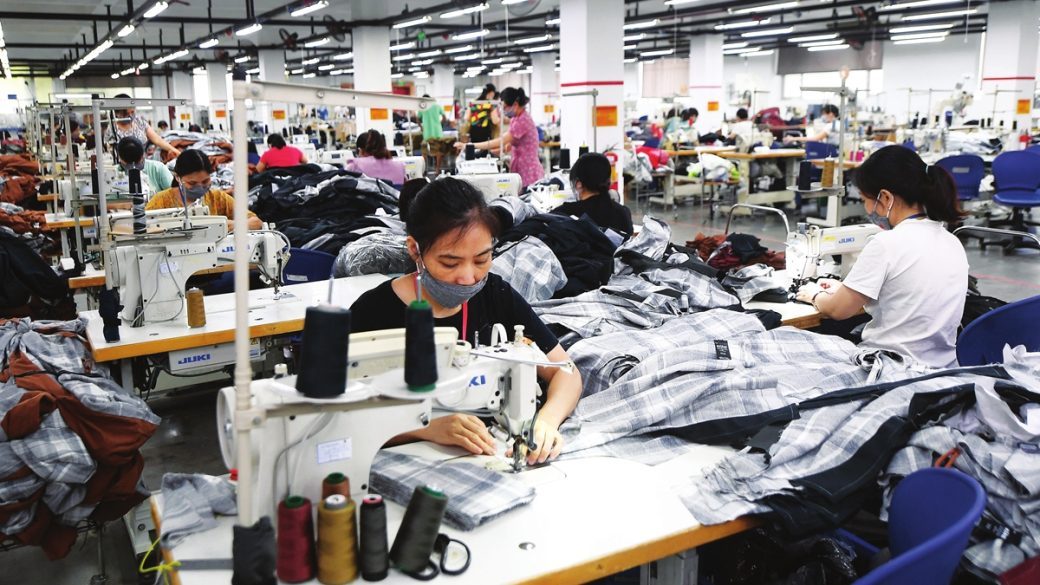
For example, a company may cut and stitch garments in Vietnam. But it may still buy fabric, zippers, dyes, and machines from Chinese firms. An electronics maker may do final assembly in Vietnam, while batteries, screens, and circuit boards come from across the border.
That can still help. It spreads some risk. It also may lower tariff exposure for certain products. But it does not end dependence if the most important inputs stay in one place.
What do the numbers say?
Vietnam has become a major trade hub in Asia. Its exports and imports both sit in the hundreds of billions of dollars. China remains a top source of imported machinery, components, and industrial materials, according to official trade data.
Here is a simple way to see the issue. If a factory moves 100% of final assembly but keeps 60% to 80% of its parts sourcing in China, then the risk only drops partway. The exact share changes by industry, but the pattern shows up again and again.
In electronics, the link can be even tighter because components are specialised. Specialised means made for a narrow job. In apparel, the links can be looser, but fabric and trims still matter a lot.
| Supply chain step | Often moved to Vietnam? | Often still China-linked? |
|---|---|---|
| Final assembly | Yes | Sometimes |
| Components and parts | Less often | Often |
| Industrial machines | Rarely | Often |
| Raw materials | Mixed | Often |
Why does this matter to shoppers and investors?
It matters because supply chains shape prices. If Chinese parts get costlier, the final product can also get costlier. Even if the box says “Made in Vietnam,” the hidden inputs may still carry the same old risk.
Investors also need to look past headlines. A company that says it diversified may have moved only one layer of production. Diversified means spread out across more than one source. That is useful, but it is not the same as true independence.
This also explains why trade policy can have messy results. Governments may target one country with tariffs, so companies shift assembly elsewhere. But the value chain can still run through the targeted country in quieter ways.
Moving assembly to Vietnam can reduce some risk, but it does not break China dependence if the key parts, machines, and materials still come from China.
Can companies reduce China dependence more deeply?
Yes, but it takes time and money. Firms need to build supplier bases in more than one country. They also need better logistics. Logistics means the system that moves goods from place to place.
That process is slow because suppliers do not appear overnight. A factory also needs trained workers, stable power, good roads, customs support, and trusted local partners. So a true shift can take years, not months.
Some companies are trying a wider mix that includes India, Mexico, Thailand, and Indonesia. You can see the same logic in other sectors too, from battery materials expansion plans to global solar project growth. Businesses want options because single-country dependence can hurt when shocks hit.
For India, this story matters as well. It shows why factory policy must go beyond one big plant. A country also needs local suppliers, ports, finance, and skilled workers. That is part of the bigger lesson behind India’s own manufacturing push and even stories like rising R&D spending in EVs and AI and stronger industrial production.
Where can readers check the data?
Readers can track Vietnam trade data through the General Statistics Office of Vietnam. Global trade and development data is also available from the UNCTAD statistics portal. These are primary sources, which means the data comes from official or original records.
The broad picture is clear. The Vietnam manufacturing shift is real, but it is not magic. It changes where products are put together, while China often keeps a strong grip on the parts, tools, and materials inside them.
FAQs
What is the Vietnam manufacturing shift?
It is when companies move factory work from China to Vietnam. In many cases, they move assembly first.
Why does China still matter?
China still supplies many parts, machines, and raw materials. So factories in Vietnam often rely on Chinese inputs.
How can a company cut this dependence?
It needs more suppliers in more countries. That takes years of investment, hiring, training, and transport planning.