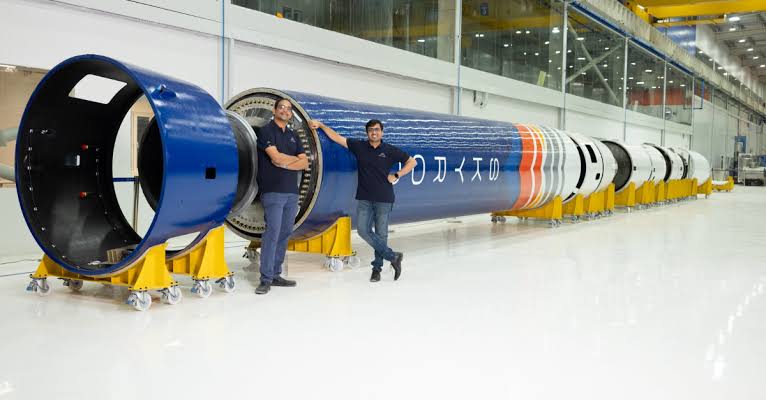
Indian private space startup Skyroot Aerospace is aiming to launch one Vikram rocket every month starting in 2027, a major step toward building a high-frequency commercial launch business. The ambitious target follows the successful orbital debut of Vikram-1, India’s first privately developed rocket to reach orbit, and reflects the company’s plans to rapidly scale manufacturing and launch operations to serve the growing global small satellite market.
Skyroot’s co-founder and CEO Pawan Kumar Chandana said the company plans to gradually increase its launch cadence, beginning with one launch every three months before transitioning to monthly launches in 2027. Achieving that pace would place Skyroot among a select group of commercial launch providers capable of offering regular, dedicated access to space.
Skyroot Plans Monthly Rocket Launches From 2027
Following Vikram-1’s successful mission, Skyroot is focused on scaling production and launch capabilities.
The roadmap includes:
- One launch every three months initially.
- Scaling to one launch every month in 2027.
- Expanding commercial launch services.
- Increasing manufacturing capacity.
- Serving a larger global customer base.
Launch Roadmap
| Timeline | Planned Launch Cadence |
|---|---|
| Post Vikram-1 | One launch every three months |
| 2027 target | One Vikram launch every month |
| Primary market | Small satellite launches |
| Long-term objective | High-frequency commercial launch services |
Vikram-1 Marks a Historic Milestone
The company’s expansion plans come after Vikram-1 successfully completed its maiden orbital mission, making Skyroot the first Indian private company to place a rocket into orbit.
The mission demonstrated:
- Indigenous rocket development capabilities.
- Commercial launch readiness.
- Private sector participation in India’s space ecosystem.
- The viability of India’s growing space startup ecosystem.
Vikram-1 Mission Highlights
| Feature | Details |
|---|---|
| Mission | Vikram-1 maiden orbital flight |
| Achievement | First privately built Indian rocket to reach orbit |
| Company | Skyroot Aerospace |
| Significance | Major milestone for India’s private space industry |
Scaling Manufacturing Is the Next Challenge
Launching rockets every month requires a dramatic increase in manufacturing, testing, and integration capacity.
According to Chandana, producing a single launch vehicle currently takes several months, making industrial-scale production the company’s next priority.
Key focus areas include:
- Streamlining rocket manufacturing.
- Expanding production infrastructure.
- Improving supply chain efficiency.
- Increasing launch readiness.
- Standardizing operations for repeat missions.
Operational Priorities
| Area | Objective |
|---|---|
| Manufacturing | Faster rocket production |
| Supply chain | Reliable component availability |
| Testing | Shorter turnaround times |
| Launch operations | Higher mission frequency |
Riding the Global Small Satellite Boom
Skyroot is targeting the rapidly expanding small satellite launch market, where demand is increasing from commercial companies, governments, and research organizations deploying constellations for communications, Earth observation, navigation, and scientific missions.
Dedicated launch providers offer customers:
- Greater scheduling flexibility.
- Faster deployment.
- Tailored orbital insertion.
- Reduced dependence on rideshare missions.
Higher launch frequency is expected to improve Skyroot’s competitiveness in this growing segment.
Growth Opportunities
| Market Driver | Opportunity |
|---|---|
| Small satellite constellations | Higher launch demand |
| Commercial space industry | More private launch contracts |
| Earth observation | Dedicated satellite missions |
| Global customers | International launch services |
Boosting India’s Commercial Space Ambitions
Skyroot’s planned expansion aligns with India’s broader efforts to strengthen its commercial space ecosystem following reforms that opened the sector to private participation.
Frequent commercial launches could:
- Increase India’s share of the global launch market.
- Support domestic satellite manufacturers.
- Attract international customers.
- Encourage further private investment in space technology.
- Strengthen India’s position as a competitive launch destination.
Industry Impact
| Impact Area | Potential Benefit |
|---|---|
| Indian space industry | Faster commercialization |
| Satellite customers | More launch availability |
| Space startups | Stronger ecosystem growth |
| Global competitiveness | Increased market presence |
Looking Ahead
Skyroot Aerospace’s goal of conducting one Vikram rocket launch every month from 2027 represents an ambitious next phase for India’s private space industry. Building on the success of Vikram-1, the company is now shifting its focus from proving launch capability to scaling manufacturing, operations, and commercial execution.
If Skyroot achieves its planned launch cadence, it would become one of the few private launch providers globally capable of offering regular monthly missions. Beyond expanding the company’s commercial opportunities, such a milestone would reinforce India’s emergence as a significant player in the rapidly growing global space economy and highlight the increasing role of private enterprise in the country’s space ambitions.
Get the day’s top stories in your inbox
One concise email. No spam, unsubscribe anytime.