Key takeaways
- The Russia sanctions bill is a US Senate plan to punish countries that help Russia.
- Donald Trump said he wants Iran added, so the bill could grow wider.
- Sanctions are penalties. Governments use them to squeeze trade, money, or business ties.
- The bill matters because it could hit buyers of Russian oil and pressure more countries at once.
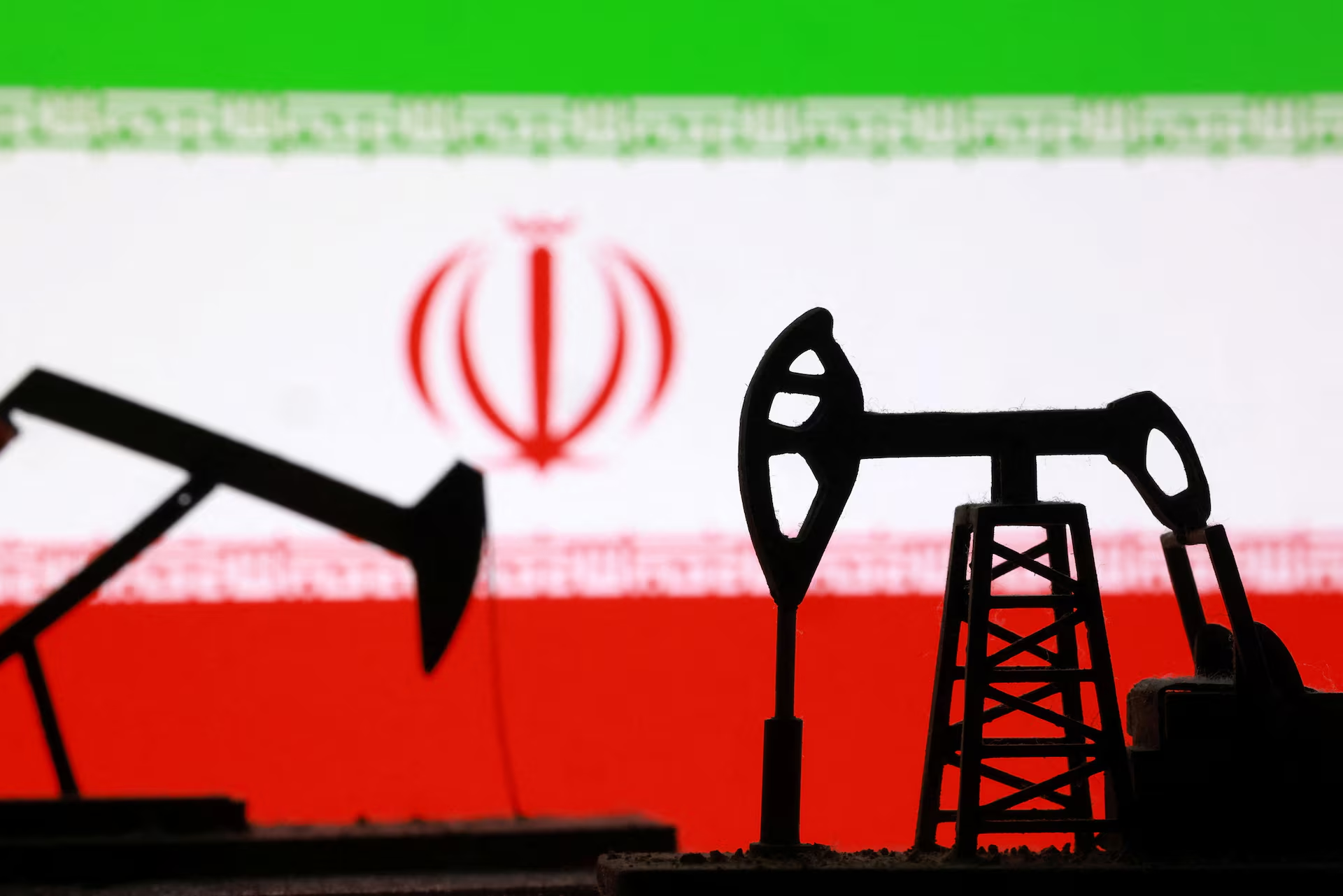
The Russia sanctions bill is a US plan to punish countries and firms that support Russia. Sanctions means penalties, often on trade or money. Now Donald Trump says he wants Iran included too, so the idea could turn into a broader pressure campaign during a tense moment in global politics.
That matters far beyond Washington. Oil prices, shipping routes, and big trade deals can all shift if the US threatens tougher penalties. For families, that can mean pricier fuel and goods. For governments, it can mean hard choices about who to buy energy from and who to stand with.
What is the Russia sanctions bill?
The Russia sanctions bill is tied to Senator Lindsey Graham and other lawmakers pushing harsher steps against Russia. The basic idea is simple. If a country keeps helping Russia, especially by buying key exports like oil, it could face steep US penalties.
One proposal that has drawn attention is a 500% tariff on goods from countries that buy Russian energy. A tariff is a tax on imports. A 500% tariff is huge, and it would make many products far more expensive if it ever took full effect.
The bill is still a proposal, not a final law. Congress writes and votes on bills. The president can then sign them, so Trump’s view matters even before any final text lands on his desk.
Why does Trump want Iran in the Russia sanctions bill?
Trump’s push seems to reflect the wider conflict in the Middle East and Washington’s effort to pressure Iran as well as Russia. He wants the bill to do more than one job. That could help him show a tougher line on two rivals at once.
Iran already faces many US sanctions, but adding it to the Russia sanctions bill would send a fresh signal. It could also give lawmakers a single tool for two separate crises. Still, that may make the bill harder to pass because some senators may prefer a narrower plan.
This is where politics gets messy. Some lawmakers want strong action now. Others worry a very broad bill could hurt trade partners, push up prices, or limit the White House’s room to negotiate later.
How could the Russia sanctions bill affect oil and trade?
Energy is the big pressure point. Russia is one of the world’s largest oil exporters, and Iran is also a major producer. If the Russia sanctions bill expands, traders may fear supply shocks, so oil prices can jump even before any rule changes.
We’ve seen how sensitive markets are. Brent crude has already traded above $90 a barrel in recent tensions, as we explained in our report on the Brent oil price jump past $90. Even a few dollars more per barrel can raise fuel bills, airline costs, and shipping prices.
India, China, and other large energy buyers watch this closely because they buy discounted crude when it makes sense. A discount means a lower price than the market norm. If US penalties rise, those discounts may come with bigger risks.
Key numbers around the sanctions debateBrent $90100 senators500% tariff$90100500
Here is the simple picture. The Senate has 100 members. Brent crude around $90 is already uncomfortable for importers, and a proposed 500% tariff is so large that it would act more like a trade wall than a small penalty.
Could this hurt countries outside the US?
Yes, and that is why the Russia sanctions bill is getting global attention. Secondary sanctions can hit third countries, not just the original target. Secondary sanctions means the US punishes others for doing business with a sanctioned country.
That can create a chain reaction. A refinery may rethink oil purchases. A shipping company may avoid certain cargoes. A bank may refuse to handle payments, because it does not want trouble with US regulators.
For India, energy security is always part of the story. We recently wrote about that balancing act in our piece on India’s energy security. A bigger sanctions net could make cheap oil harder to buy, even if demand at home stays strong.
What are lawmakers and markets likely to watch next?
First, they will watch the exact wording. Small changes in a bill can matter a lot. For example, lawmakers may add waivers, which are special exceptions, so the president can spare some countries or sectors.
Second, they will watch Trump’s next comments. If he pushes hard for Iran’s inclusion, Republican support could firm up. But if senators think the bill goes too far, they may try to trim it back before any vote.
Third, markets will watch the conflict itself. If fighting grows, traders may expect disruption and lift oil prices fast. As a result, even before the Russia sanctions bill becomes law, its political momentum can move markets.
| Issue | What it means | Why it matters |
|---|---|---|
| Russia focus | Targets support for Russia | Could curb oil trade and financing |
| Iran addition | Expands pressure to another rival | May widen market fear and political debate |
| 500% tariff idea | Very high import tax | Could sharply raise trade costs |
| Oil near $90 | Energy market already tense | Higher risk of fuel inflation |
Why this story matters now
The clearest answer is this: the Russia sanctions bill is no longer just about Russia if Iran gets added. That would turn one sanctions fight into a wider economic threat. It could affect oil, trade, diplomacy, and the cost of everyday goods in many countries.
It also shows how modern sanctions work. They are not just about one border or one battle. They reach into banks, ships, fuel deals, and supply chains, so a debate in Washington can ripple across the world within hours.
If you want to track the original policy debate, the US Congress bill system at Congress.gov is the main source. For oil prices and market data, many traders follow benchmarks published by sources such as the US Energy Information Administration.
FAQs
What is a sanctions bill?
A sanctions bill is a proposed law that sets penalties on countries, firms, or people. Those penalties often limit trade, banking, or travel.
Why would Iran be added?
Trump appears to want one stronger package against two US rivals. That could raise pressure, but it could also make the politics harder.
How could this affect regular people?
If oil prices rise, fuel and transport can cost more. Then food and other daily goods may also get more expensive.
When would the bill take effect?
Only after Congress passes it and the president signs it. Even so, markets may react much sooner to speeches, draft text, and vote plans.
Get the day’s top stories in your inbox
One concise email. No spam, unsubscribe anytime.