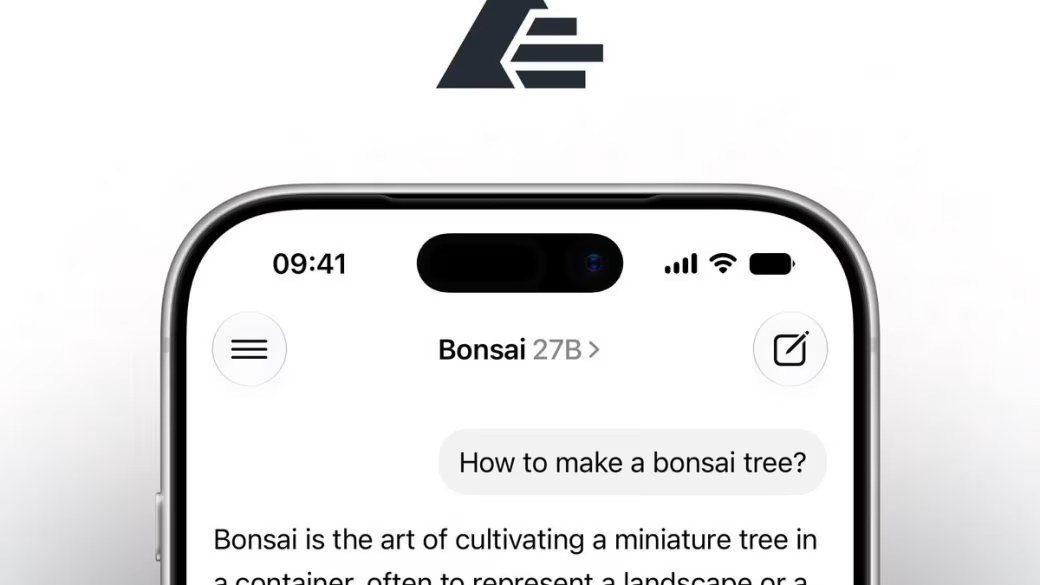
PrismML has unveiled Bonsai 27B, describing it as the first 27-billion-parameter (27B) AI model designed to run directly on smartphones. The launch represents a significant milestone in on-device artificial intelligence, enabling large language model (LLM) capabilities without relying entirely on cloud infrastructure. By optimizing the model for mobile hardware, PrismML aims to deliver advanced AI performance while improving privacy, reducing latency, and enabling offline functionality.
The announcement comes as the AI industry increasingly shifts toward edge AI, where powerful models run locally on consumer devices instead of remote data centers. Smartphone manufacturers and AI developers are investing heavily in on-device AI to deliver faster, more secure, and energy-efficient user experiences.
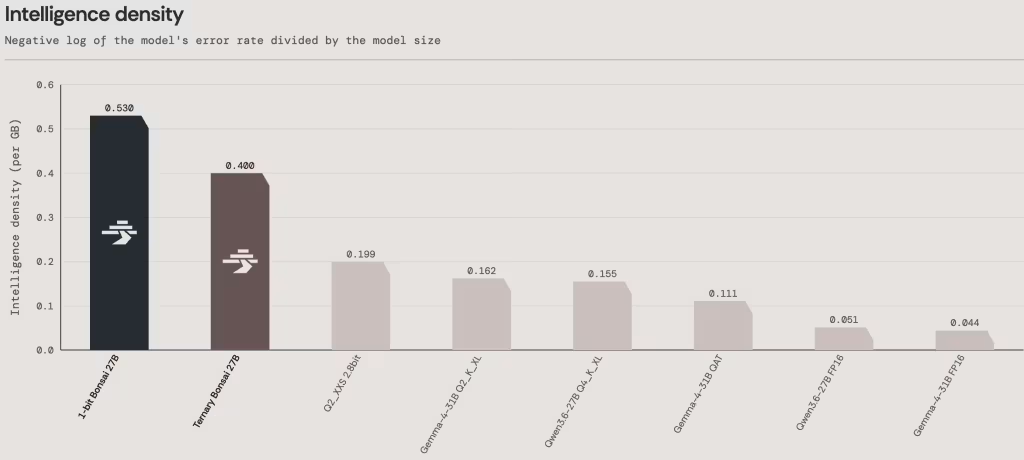
PrismML Launches Bonsai 27B
The company claims Bonsai 27B is the first AI model in its class optimized for smartphones.
| Model Overview | Details |
|---|---|
| Company | PrismML |
| AI Model | Bonsai 27B |
| Model size | 27 billion parameters |
| Deployment | On-device smartphones |
| Key focus | Mobile AI and edge computing |
The model is designed to deliver advanced AI capabilities while minimizing dependence on cloud-based processing.
What Makes Bonsai 27B Different?
PrismML has optimized the model to operate efficiently on mobile hardware.
Key features include:
- On-device AI inference.
- Reduced cloud dependency.
- Faster response times.
- Offline AI capabilities.
- Improved user privacy.
- Lower latency for AI interactions.
Running AI directly on a smartphone can significantly enhance responsiveness and reduce internet connectivity requirements.
Why On-Device AI Matters
Moving AI processing from the cloud to smartphones offers several advantages.
| Benefit | Impact |
|---|---|
| Privacy | User data stays on the device |
| Speed | Faster AI responses |
| Offline support | AI works without internet access |
| Lower latency | Real-time interactions |
| Reduced cloud costs | Less dependence on remote servers |
These benefits are becoming increasingly important as AI features expand across consumer devices.
Potential Use Cases
Bonsai 27B could power a wide range of mobile AI applications.
Possible applications include:
- AI assistants.
- Real-time translation.
- Text generation.
- Document summarization.
- Coding assistance.
- Image understanding.
- Voice interactions.
Developers may integrate the model into smartphones, enterprise applications, and productivity tools.
Growing Competition in Mobile AI
Several technology companies are investing in compact AI models.
Industry trends include:
- AI-powered smartphones.
- On-device language models.
- Edge computing.
- AI chips for mobile devices.
- Privacy-focused AI.
- Offline generative AI.
The race to bring increasingly capable AI models onto consumer hardware is accelerating across the industry.
Technical Challenges
Running a 27B-parameter model on smartphones requires significant optimization.
Key challenges include:
- Memory efficiency.
- Power consumption.
- Thermal management.
- Model compression.
- Hardware compatibility.
- Battery life optimization.
Advances in mobile AI accelerators and model optimization techniques are making larger models increasingly practical on edge devices.
Why This Is Significant
The launch demonstrates the rapid evolution of mobile AI.
Potential implications include:
- More powerful AI smartphones.
- Reduced reliance on cloud infrastructure.
- Improved privacy protections.
- Lower AI operating costs.
- Expansion of offline AI applications.
As mobile processors become more capable, on-device AI is expected to become a standard feature across premium smartphones.
Outlook
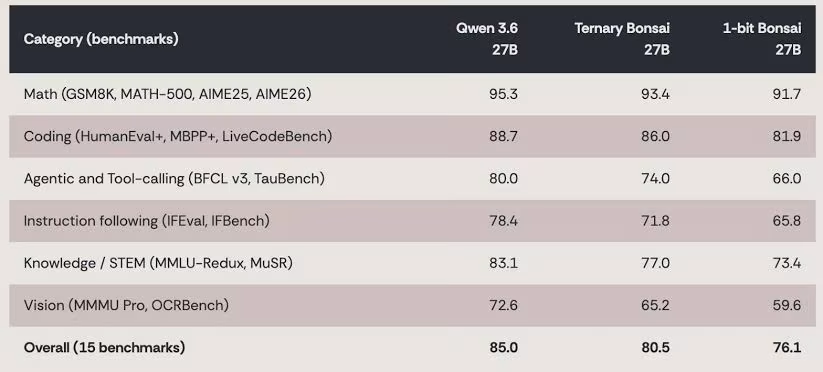
PrismML’s introduction of Bonsai 27B highlights the growing momentum behind edge AI and the industry’s push to bring increasingly capable language models directly onto consumer devices. If the company’s performance claims are validated, the model could represent a major step toward making advanced generative AI available without constant cloud connectivity.
As smartphone hardware, AI accelerators, and model optimization techniques continue to improve, on-device AI is expected to play an increasingly important role in mobile computing. Future generations of AI-powered devices are likely to offer faster responses, stronger privacy protections, and richer offline experiences, fundamentally changing how users interact with intelligent software.
What It Means for the AI Industry
The release of Bonsai 27B reflects a broader shift in artificial intelligence from centralized cloud computing to distributed edge computing. Rather than sending every request to remote servers, AI models are increasingly being designed to run locally on personal devices, offering significant advantages in speed, security, and operational efficiency.
For the broader AI ecosystem, this trend could reduce infrastructure costs, improve user privacy, and expand AI accessibility in regions with limited internet connectivity. As competition intensifies, companies capable of delivering powerful yet highly optimized on-device models are likely to play a central role in shaping the next generation of AI-enabled smartphones and consumer electronics.
Get the day’s top stories in your inbox
One concise email. No spam, unsubscribe anytime.