iD Fresh Foods expansion is the company’s plan to build 10 manufacturing hubs in India and overseas. That means more local factories closer to buyers. The goal is simple. Make fresh batter, parathas, and coffee move faster, stay fresh longer, and cost less to deliver.
Key takeaways
- iD Fresh Foods plans 10 manufacturing hubs as it grows in India and abroad.
- Local hubs can cut travel time, which matters for fresh food with short shelf life.
- The company already sells items like idli-dosa batter, parotas, paneer, and filter coffee.
- The strategy could help it enter more cities without shipping everything from one place.
What is happening in iD Fresh Foods expansion?
iD Fresh Foods is pushing ahead with a bigger factory network. The brand wants 10 manufacturing hubs across key markets. These hubs are production centers. A production center is a place where the company makes, packs, and sends out its food.
This matters because iD sells fresh products, not long-life canned food. Fresh batter does not sit on a shelf for months. So the company needs factories close to stores and homes. As a result, shorter trips can help keep food fresher and reduce waste.
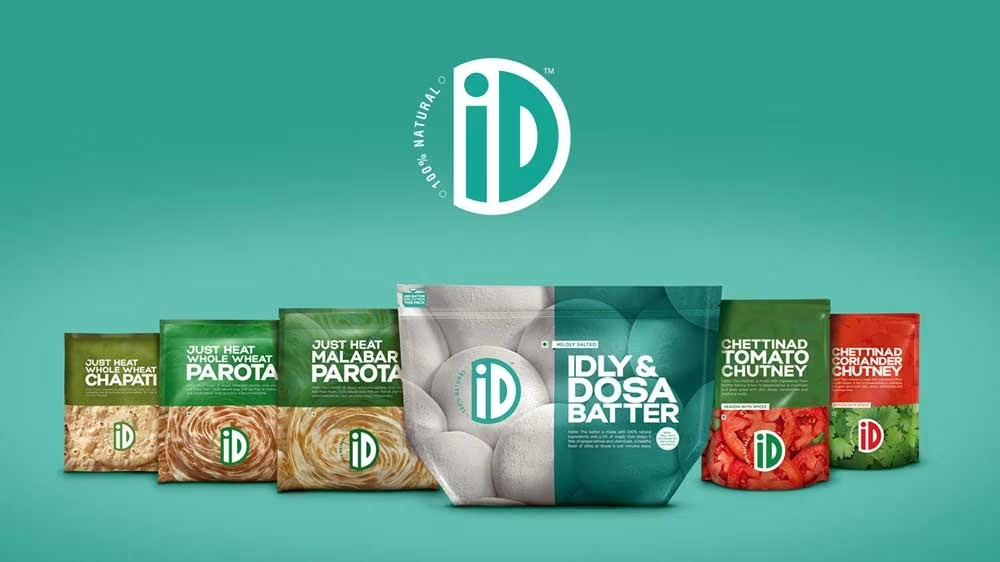
The company’s products are already familiar in many homes. It sells idli and dosa batter, parotas, chapatis, paneer, curd, and filter coffee. That mix gives it a wider base, because one buyer may start with batter and then try other items too.
Why does iD Fresh Foods expansion need more hubs?
The short answer is time. Fresh food loses value if it spends too long in trucks and warehouses. A warehouse is a storage building. So local manufacturing hubs can help the company restock stores faster and handle demand spikes during weekends and holidays.
There is also a cost angle. Sending chilled food over long distances needs more packaging, more fuel, and tighter temperature control. Temperature control means keeping food cold and safe. If iD makes products nearer to buyers, it may save money on logistics, which is the movement of goods.
That could matter a lot in a price-sensitive market like India. Many families compare small price gaps before buying. If transport costs fall even a little, a company gets more room to price well or invest more in growth.
How big could the network become?
The headline number is 10 hubs. That is large for a fresh-food company, because each hub needs machines, cold-chain support, staff, and local supply links. A cold chain is a refrigerated supply system. It keeps food chilled from factory to store.
While the company has not publicly listed every final location in one place, the direction is clear. It wants a spread across India and selected overseas markets. That way, iD Fresh Foods expansion is not just about selling in more places. It is also about making in more places.
Here is a simple look at the plan:
iD Fresh Foods hub planNowTarget510
The chart shows the basic idea in numbers. The target is 10 hubs. That means roughly doubling from 5 to 10 if the network reaches that mark. Even a jump of 5 hubs is a major build-out, because each site must run every day with strict food checks.
What does this mean for shoppers?
For shoppers, this could mean better stock on shelves. If one city runs out of batter on Friday night, a nearby hub can refill stores sooner. That sounds small, but fresh food buyers notice empty shelves fast.
It could also mean products made for local taste. For example, people in one region may prefer a different parota style or coffee blend. Local factories can test and adjust faster than one giant plant far away.
Another likely result is a wider product mix. Once a hub is set up, it can often add nearby items using similar cold storage and delivery routes. So iD Fresh Foods expansion may help the company sell more than just batter in each market.
How does this fit the bigger food business story?
India’s packaged food market is changing quickly. More families now want fast meal options, but they still want food that feels fresh. That is why ready-to-cook brands have grown. Ready-to-cook means food that needs little work before eating.
Urban life is part of the reason. People work long hours, commute, and often have less kitchen time. So products like dosa batter and ready parathas fit into busy evenings. At the same time, buyers still care about taste and trust.
That is where factory networks become a real edge. The closer a factory sits to the customer, the easier it is to manage freshness. In fact, many food brands now build regional plants instead of one huge national base.
| What the hub model can do | Why it matters |
|---|---|
| Shorter delivery distance | Fresher products and lower fuel use |
| Local production | Faster restocking in each city |
| Regional product tweaks | Better fit for local tastes |
| Cold-chain control | Safer handling for fresh food |
Are there risks in iD Fresh Foods expansion?
Yes, and they are real. Building factories costs money, and fresh-food operations are hard to run. A company must manage milk, grains, packaging, trucks, hygiene, and power backup. If one link fails, the whole chain can slow down.
There is also the challenge of keeping the same taste everywhere. A dosa batter pack in Bengaluru should feel like a dosa batter pack in Dubai or Mumbai. Consistency means the product stays the same each time. That is harder with more plants.
Food rules differ by country too. Companies must follow local safety and labeling laws. Labeling laws are rules about what the pack must say. For background on business regulation shifts in India, readers can also see our pieces on the Delhivery NBFC licence and the IDBI Bank stake sale decision.
Why investors and rivals will watch this closely
Even if iD Fresh Foods is known mainly as a consumer brand, its factory plan says something bigger. It shows confidence in demand for fresh convenience food. Convenience food means food that saves time. That could push rivals to invest more in regional plants too.
The plan also hints at a long game. A company does not build 10 hubs for a quick splash. It does that because it expects demand to rise over years, not weeks. You can read more about India’s consumer cost backdrop in our story on why prices can stay under pressure, though that report is from a different sector.
For primary details on corporate filings and company information, readers should track official updates from iD Fresh Food and regulatory disclosures on the Ministry of Corporate Affairs website. Those sources matter because expansion plans can change as projects move ahead.
What is the big takeaway from iD Fresh Foods expansion?
Here is the clearest way to say it: iD Fresh Foods expansion is a bet that fresh, ready-to-cook food sells best when it is made near the customer. That is the heart of the strategy. More hubs can mean faster delivery, less spoilage, and a better shot at growing in many cities at once.
If the company executes well, 10 hubs could give it a strong edge in both India and overseas markets. If it stumbles, the cost and complexity will show up fast. Either way, iD Fresh Foods expansion is more than a factory story. It is a map of how modern fresh-food brands try to scale.
FAQs
What is iD Fresh Foods expansion?
It is the company’s plan to build 10 manufacturing hubs across key markets. The idea is to make fresh food closer to buyers.
Why do manufacturing hubs matter?
They cut delivery time and can keep fresh products in better condition. They may also lower transport and cooling costs.
How could shoppers notice the change?
Stores may get faster restocking and a wider range of products. In some places, buyers may also see items tuned to local tastes.
Who benefits if the plan works?
Shoppers get fresher products, and the company gets a better supply network. Retail stores may also face fewer stock-outs.
Get the day’s top stories in your inbox
One concise email. No spam, unsubscribe anytime.