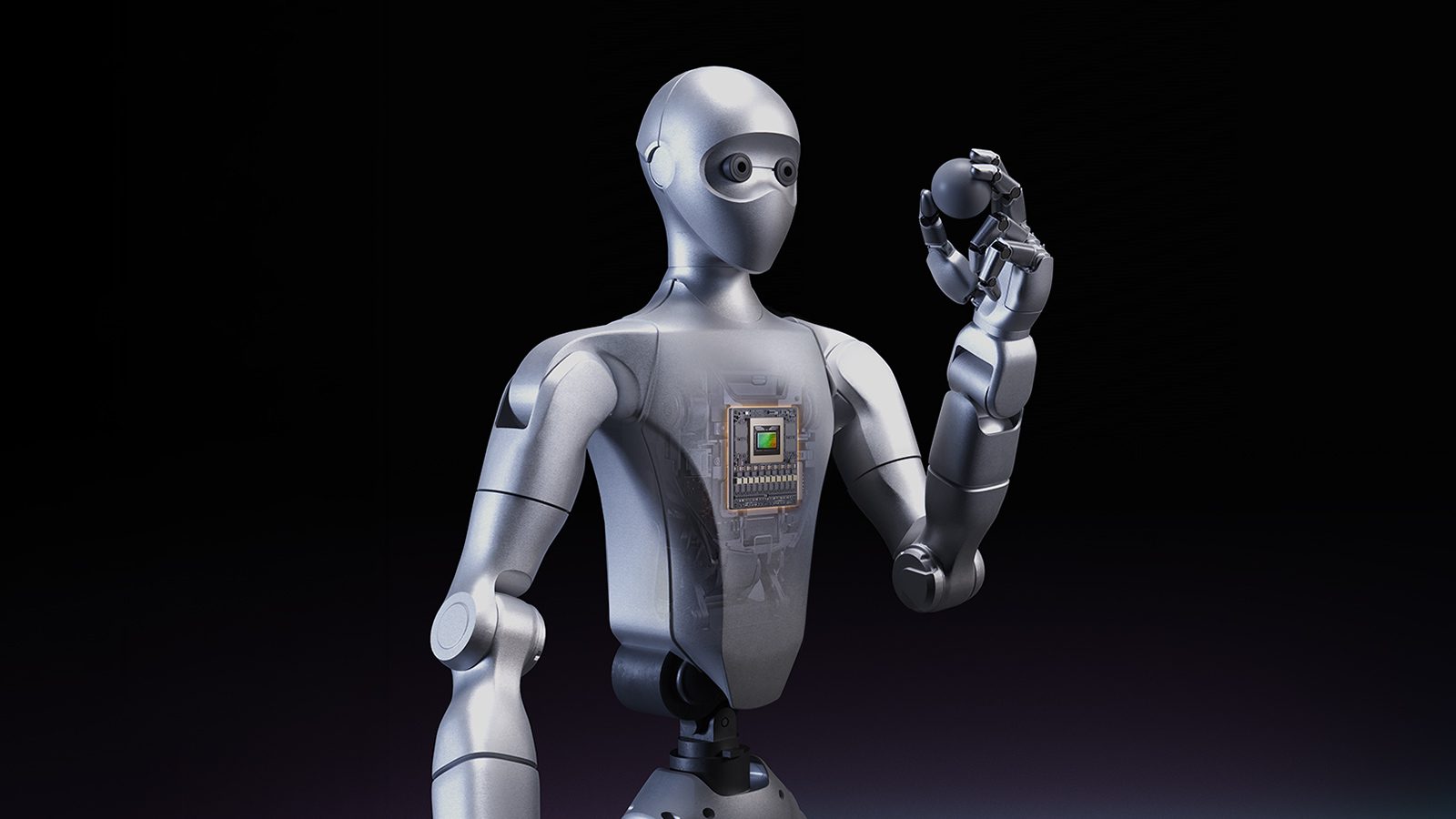
Nvidia has announced new partnerships with several Japanese robotics companies to accelerate the development of next-generation artificial intelligence-powered robots, strengthening its presence in one of the world’s largest industrial robotics markets. The collaborations aim to combine Nvidia’s AI computing platforms with Japan’s expertise in robotics, manufacturing, and automation to build more capable autonomous systems for factories, logistics, healthcare, and service industries.
The partnerships reflect Nvidia’s broader strategy of expanding beyond AI chips into robotics software, simulation, and physical AI, while helping Japanese manufacturers address labor shortages and improve industrial productivity through intelligent automation.
Nvidia Expands AI Robotics Partnerships in Japan
The collaborations focus on developing AI-driven robotic systems.
| Key Highlights | Details |
|---|---|
| Company | Nvidia |
| Region | Japan |
| Partners | Japanese robotics firms |
| Focus | AI-powered robotics and automation |
| Target sectors | Manufacturing, logistics, healthcare, service robotics |
The initiative combines Nvidia’s AI infrastructure with Japan’s long-standing leadership in robotics.
What the Partnership Includes
The companies will work together on several AI technologies.
Key areas include:
- Physical AI for autonomous robots.
- AI-powered perception and vision systems.
- Robot simulation and digital twins.
- Autonomous navigation.
- Industrial automation.
- Foundation models for robotics.
Developers are expected to leverage Nvidia’s AI computing platforms to train and deploy increasingly intelligent robots.
Why Japan Is an Important Robotics Market
Japan remains one of the global leaders in industrial robotics.
Key drivers include:
- Aging population.
- Labor shortages.
- Advanced manufacturing sector.
- High adoption of factory automation.
- Strong robotics research ecosystem.
These factors make AI-powered robotics a strategic priority for both Japanese companies and technology providers.
Nvidia’s Growing Robotics Strategy
| Technology | Purpose |
|---|---|
| AI GPUs | Train robotics AI models |
| Omniverse | Simulation and digital twins |
| Isaac platform | Robotics development framework |
| Physical AI | Autonomous decision-making |
| Edge AI computing | Real-time robot operations |
The company has increasingly positioned robotics as one of the next major growth opportunities beyond generative AI.
Potential Applications
The new partnerships could accelerate deployment across multiple industries.
Examples include:
- Smart factories.
- Warehouse automation.
- Healthcare assistants.
- Elder-care robots.
- Autonomous inspection systems.
- Retail and hospitality robots.
Many of these applications are expected to benefit from advances in multimodal AI and real-time reasoning.
Why This Matters
The announcement highlights the convergence of:
- Artificial intelligence.
- Robotics.
- Industrial automation.
- Digital twin technology.
- Edge computing.
As AI models become more capable of understanding and interacting with the physical world, robotics is expected to become one of the fastest-growing AI markets.
Challenges Ahead
Despite rapid progress, several challenges remain.
These include:
- High deployment costs.
- Safety certification.
- Energy efficiency.
- Real-world reliability.
- Regulatory compliance.
- Workforce integration.
Successful commercialization will depend on balancing technological capability with affordability and operational safety.
Outlook
Nvidia’s latest partnerships reinforce its ambition to become the foundational technology provider for the emerging era of physical AI. By combining advanced AI computing, robotics software, and simulation platforms with Japan’s deep expertise in industrial automation, the collaborations could accelerate the deployment of intelligent robots across manufacturing, logistics, healthcare, and service industries.
As countries increasingly invest in automation to address labor shortages and improve productivity, AI-powered robotics is expected to become a major driver of future economic growth. Nvidia’s expanding ecosystem of partnerships positions the company to play a central role in this transformation, extending its influence well beyond traditional semiconductor hardware.
What It Means for the AI Industry
The collaborations illustrate how the next phase of AI growth is shifting from digital applications to physical systems capable of operating in real-world environments. Robotics is emerging as one of the largest long-term opportunities for AI companies, alongside cloud computing and autonomous vehicles.
For Japan, integrating advanced AI with its globally competitive robotics industry could strengthen its leadership in industrial automation while helping address demographic challenges. For Nvidia, the partnerships deepen its presence in a strategically important market and further diversify its AI business beyond data centers and generative AI.
Get the day’s top stories in your inbox
One concise email. No spam, unsubscribe anytime.