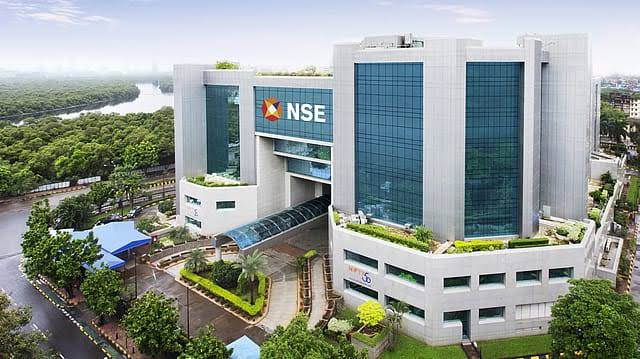
The long-awaited initial public offering (IPO) of the National Stock Exchange of India (NSE) is finally charging ahead. Following its formal filing of the Draft Red Herring Prospectus (DRHP) with SEBI on June 17, 2026, the exchange is now targeting a September 2026 listing and is set to kick off global roadshows and formal marketing as early as next week.
Valued at an astronomical ₹5.25 lakh crore ($63 billion+) in the unlisted grey market, this issue is positioned to easily become the largest corporate listing in Indian history, eclipsing the record ₹27,859-crore debut set by Hyundai Motor India.
1. Deal Mechanics & Structure
Because market infrastructure regulations prohibit a stock exchange from listing on its own platform, the entire mega-issue will debut exclusively on the mainboard of the Bombay Stock Exchange (BSE).
Plaintext
[ THE NSE IPO ARCHITECTURE ]

Expected Issue Size:  ₹25,000 to ₹30,000 Crore ($3 Billion)
Structure Type:       100% Offer for Sale (OFS)
Equity Dilution:      ~148.9 Million Shares (Approx. 6% of the company)
Proceeds Route:       100% to selling shareholders (NSE receives ₹0)
Major Institutional Sellers
Since the issue is entirely a secondary share sale, the capital raised will go straight to the offloading institutional backers. Major selling entities include:
- State Bank of India (SBI): Diluting 24.75 million shares
- MS Strategic Mauritius (Morgan Stanley): Diluting 16 million shares
- Other substantial offloaders include Temasek, Canada Pension Plan Investment Board (CPPIB), Bank of Baroda, and domestic insurance heavyweights.
2. Global Marketing & Underwriting Consortium
To drum up book-building momentum for an issue of this scale, the NSE has hired a massive consortium of approximately 20 investment banks led by Kotak Mahindra Capital, JM Financial, Morgan Stanley, HSBC, and Citigroup.
Formal institutional marketing tracks are slated to begin next week, targeting investor meetings across major international financial hubs:
Targeted Markets: New York, London, Singapore, Hong Kong, the Middle East, and key domestic institutional centers in India.
3. High-Margin Financial Profile
The stock enters the public arena backed by an incredibly deep structural monopoly over India’s capital markets:
- Dominant Market Share: The exchange controls 92.99% of India’s cash equity market, 99.79% of equity futures, and over 74% of equity options premium turnover. Globally, it ranks #1 in total equity derivatives contracts traded.
- Massive Profitability: For the financial year ended March 2026 (FY26), NSE reported a consolidated Profit After Tax (PAT) of ₹10,302 crore on an overall income of ₹18,713 crore.
- Best-in-Class Margins: Its 55% net profit margin and ~45% Return on Equity (RoE) rank among the highest globally for any listed market operator, providing massive cash flow scalability.
4. Key Implementation Risks to Watch
While the IPO is highly anticipated, institutional investors are carefully evaluating structural tailwinds against regulatory headwinds:
- Derivatives Volatility: Over 80% of the exchange’s transaction revenue remains tied to options trading. Ongoing tightening of derivatives trading norms by SEBI could cause temporary volume corrections.
- Competitive Pressures: The BSE has successfully grabbed meaningful market share in specific options segments over the past year, fracturing the NSE’s total historical monopoly.
- Systemic Architecture: Processing a peak of 21.89 billion order messages per day with nanosecond-level latency leaves zero margin for technical or glitch-related downtime, meaning operational stability remains its biggest ongoing challenge.
Get the day’s top stories in your inbox
One concise email. No spam, unsubscribe anytime.