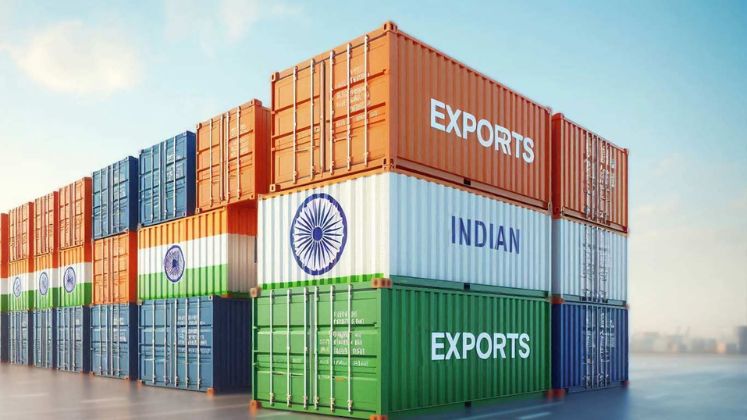
In a major trade confrontation, New Delhi is mounting an aggressive defense against a proposal by the Office of the United States Trade Representative (USTR) to slap an additional 12.5% tariff on Indian exports.
The planned tariffs are part of a sweeping Section 301 investigation under the U.S. Trade Act of 1974. The USTR alleges that India—along with dozens of other trading partners—lacks adequate enforcement to block goods produced with forced labor from entering global supply chains.
India’s Ministry of Commerce and Industry has rejected the findings as “legally flawed” and lacking sufficient material evidence. A high-level Indian delegation comprising ministry officials and top industry bodies is scheduled to formally contest the move at a USTR public hearing in Washington on July 8–9, 2026.
1. The Core of the Dispute: Compliance vs. Imbalance
This tariff proposal marks a significant philosophical shift in U.S. trade pressure. Historically, Washington’s economic friction with New Delhi focused on reciprocal tariffs, market access, and industrial overcapacity.
This time, the conflict is about supply-chain compliance. The U.S. argues that if goods tainted by forced labor leak into global commerce, they lower manufacturing costs unfairly, creating an unequal playing field for American businesses.
Total U.S. Imports from India: ~$103.8 Billion
Proposed Additional Duty: 12.5% (Section 301)
Potential Broad Exposure: ~$13 Billion in raw tariff burdens
HIGHEST RISK SECTORS:
├── Textiles & Apparel (Abundant labor-intensive pool)
├── Automotive Components (Highly integrated tier-1/2 lines)
├── Agricultural Products (Rice and spice supply chains)
└── Assembly Electronics (Rapidly scaling export corridor)
2. India’s Techno-Legal Defense Strategy
India’s formal counter-arguments, submitted in written briefs by the Confederation of Indian Industry (CII) and the Federation of Indian Chambers of Commerce and Industry (FICCI), rely on a two-pronged defense: proving structural legality and highlighting factual errors in the USTR’s report.
- Robust Statutory Framework: India argues its domestic regime does not qualify as “unreasonable” or “discriminatory” under Section 301(b). The defense showcases constitutional protections, strict statutory prohibitions against bonded and child labor, the updated labor codes, and India’s ratification of core International Labour Organization (ILO) conventions.
- Dismantling “Faulty Data”: In its submission, the CII directly challenged the USTR’s specific examples. The report alleged supply chain links to forced labor in regional raw materials, but Indian trade data proves that during the entire 2021–2025 review period, India imported zero rice from Myanmar and zero tobacco from Malawi. Conversely, India imported $1.537 billion worth of American cotton—nearly double what it sourced from China—proving deep, clean alignment with U.S. growers.
- Traceability and Corporate Audits: Industry bodies emphasize that Indian exporters serving U.S. markets already operate within client-mandated traceability networks, undergoing independent, voluntary, and third-party supplier due diligence audits.
3. Sectoral Pushback & The Threat of Supply Chain Disruptions
Major industrial bodies have filed individual exemption petitions, warning that broad, punitive tariffs will fail to solve labor policy goals and will instead trigger a severe cost shock for American consumers and businesses.
| Export Industry Body | Core Sector Argument | Estimated Supply Chain Impact |
| ACMA (Automotive Component Manufacturers Association) | The auto-parts industry is highly organized, capital-intensive, technology-driven, and dependent on skilled, certified labor. | Tariffs would create immediate sourcing uncertainty and inflate manufacturing costs for U.S. automakers dependent on Indian inputs. |
| APEDA (Agricultural & Processed Food Products Export Development Authority) | India’s rice sector does not engage forced labor, nor does it import raw inputs from restricted states; it complies fully with international sourcing transparency. | Urging total exclusion of agricultural staples to prevent grocery price inflation for American consumers. |
| CII / FICCI Corporate Counsel | Exporters already maintain verifiable “clean supply chains.” | Recommending the U.S. pivot away from unilateral punitive tariffs and instead pursue compliance cooperation through the established India-U.S. Trade Policy Forum. |
As the public comment window draws to a close, the upcoming July 8 hearing will serve as a critical barometer for the bilateral trade relationship. If the USTR proceeds without granting major product exclusions, it could trigger a fresh wave of retaliatory trade measures from New Delhi, complicating broader supply chain diversification efforts across the Indo-Pacific corridor.
Get the day’s top stories in your inbox
One concise email. No spam, unsubscribe anytime.