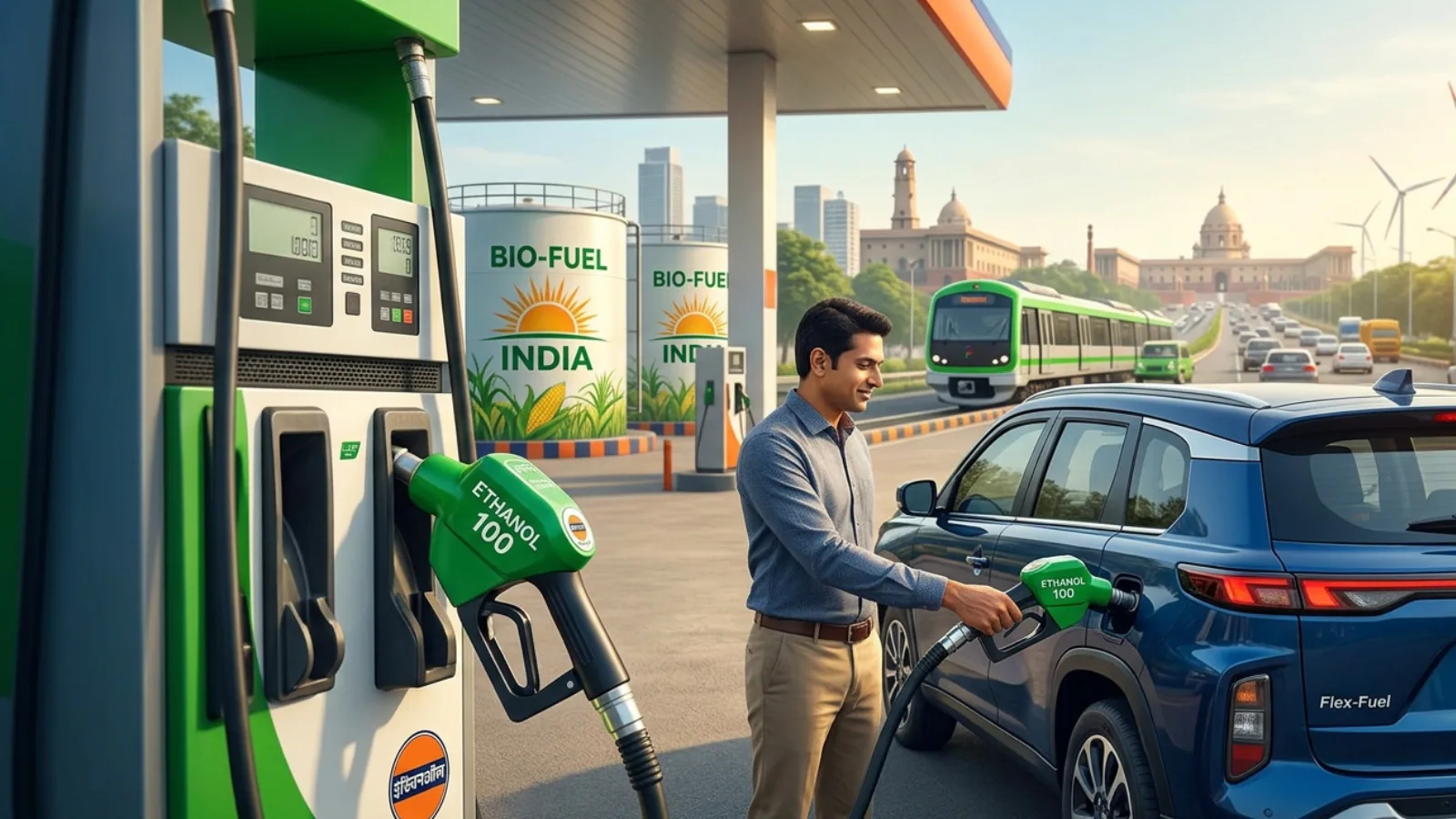
In a major structural move aimed at providing consumer flexibility while deepening its alternative energy roadmap, the Government of India is preparing to allow fuel stations to offer multiple distinct grades of ethanol-blended petrol.
According to reports by Mint, the Ministry of Petroleum and Natural Gas has advised state-run Oil Marketing Companies (OMCs)—including Indian Oil Corporation (IOC), Bharat Petroleum (BPCL), and Hindustan Petroleum (HPCL)—alongside private fuel retailers like Jio-bp, Nayara Energy, and Shell, to begin upgrading retail infrastructure to handle a diverse menu of fuel blends.
Instead of a single, mandatory state-wide blend, consumers will soon be able to pull up to a dispensing pump and select a specific ethanol percentage tailored to their vehicle’s technical compatibility—much like picking a product off a supermarket shelf.
The Catalyst: New BIS Fuel Standards Notified
The policy shift follows a critical regulatory milestone established by the Bureau of Indian Standards (BIS). On May 15, 2026, the BIS formally notified standard IS 19850:2026, which defines strict fuel specifications for intermediate and higher ethanol-petrol admixtures.
The new guidelines lay the formal framework for the commercialization of four new high-blend variants:
- E20 (20% Ethanol)
- E22 (22% Ethanol)
- E25 (25% Ethanol)
- E30 (30% Ethanol)
This development arrives just over a month after the government successfully enforced its baseline mandate requiring all standard nationwide petrol to be blended with up to 20% ethanol, calibrated to a premium minimum Research Octane Number (RON) of 95 to protect engines from knocking.
Why Allow Choice? Managing Surplus and Engine Wear
The dual rationale behind moving away from a one-size-fits-all fuel model combines massive supply surpluses with growing consumer pushback regarding vehicle wear and tear.
1. Absorbing Excess Biofuel Capacity
India’s domestic ethanol manufacturing capacity has grown exponentially under the Ethanol Blended Petrol (EBP) programme, surging from a 1.5% average blend rate in 2014 to the 20% nationwide achievement. By March 2026, domestic production had generated roughly 20 billion litres of ethanol. Because supply is now actively outpacing the structural requirements of the standard E20 mandate, the government needs higher-volume outlet options to absorb the agricultural yields of sugarcane and grain-based ethanol manufacturers.
2. The Older Vehicle Friction Point
The mandate has introduced noticeable real-world challenges for everyday motorists. A multi-thousand-user survey published this week by LocalCircles revealed that 50% of surveyed petrol car owners reported notable drops in fuel efficiency over the last nine months, with some registering mileage drops up to 20% due to ethanol’s lower energy density.
Furthermore, 29% of individuals owning vehicles built before 2022 reported unusual fuel-line corrosion, tank rust, or damaged rubber gaskets—issues stemming from ethanol’s natural tendency to absorb atmospheric moisture. Offering separate, tiered blends ensures that owners of older, non-compliant vehicles can choose lower ethanol mixes, while drivers of modern, flex-fuel-ready models can opt for higher, cheaper eco-blends.
Infrastructure Transformations at the Pump
Implementing a supermarket-style fuel choice across India’s sprawling network of roughly 100,000 retail fuel stations will require targeted operational modifications:
- Storage & Dispensing Separation: Retailers will need to install separate underground storage tanks or section existing ones off, alongside independent blending controls and quality monitoring mechanisms.
- Clear Labeling Mandates: Government directives specify that the exact ethanol blend percentage must be boldly and legibly displayed on individual nozzles.
- Tiered Pricing Structures: Because ethanol is priced differently than raw petroleum, the retail price at the pump will scale dynamically based on the blend ratio, offering clear cost incentives for higher-blend users.
Industry bodies like the Grain Ethanol Manufacturers Association highlight that this modular framework mirrors successful international models in countries like Brazil, where multi-blend pumps allow consumers to alternate between pure gasoline, intermediate E25 mixes, and E100 pure bio-ethanol based on personal budgets and localized engine performance.
Get the day’s top stories in your inbox
One concise email. No spam, unsubscribe anytime.