South Korean automotive and manufacturing conglomerate Hyundai Motor Group has finalized a deal to purchase SoftBank Group’s remaining 9.65% stake in Boston Dynamics for $325 million (around ₹2,715 crore).
Let’s Data Science
The transaction officially transitions the legendary American robotics pioneer into a wholly owned subsidiary of Hyundai, ending SoftBank’s involvement in the firm.
Let’s Data Science
1. Triggering the 2021 Put Option
The full buyout wasn’t a sudden hostile takeover, but rather the execution of a pre-arranged exit path established five years ago:
- The Baseline Deal: When Hyundai initially acquired an 80% controlling stake in Boston Dynamics from SoftBank in 2021 for $1.1 billion, SoftBank retained a minority slice (later adjusted to 9.65% following capital changes). Reddit
- The Trigger Condition: Under the original shareholder agreement, if Boston Dynamics did not launch an Initial Public Offering (IPO) within four years of the closing date, SoftBank held a legal “put option” allowing it to force Hyundai to buy out its remaining equity. Seoul Economic Daily
- The Valuation Formula: With the IPO window passing and the option exercised, the $325 million payout reflects a calculated enterprise valuation of roughly $3.37 billion. While this represents a notable step up from its 2021 baseline, market analysts view the transaction as a massive bargain for Hyundai given that independent brokerages place Boston Dynamics’ fair-market value at north of $19 billion due to the modern “Physical AI” boom.
[2021: Hyundai Buys 80% Control] ──► [4-Year Pass Without an IPO] ──► [SoftBank Triggers Put Option] ──► [Hyundai Pays $325M for 100% Ownership]
2. Consolidating the Affiliate Cap Table
Because Hyundai Motor Group operates through an interconnected network of corporate entities, the 9.65% block will be absorbed proportionately across internal affiliate boards:
| Affiliate Entity | Role in the Robotics Stack | Pre-Transaction Share % |
|---|---|---|
| Hyundai Motor Co. | Core assembly, factory infrastructure, and processing data. | 28.00% |
| Chairman Chung Euisun | Personal strategic capital alignment. | 22.60% |
| Kia Corporation | Secondary high-volume automotive manufacturing infrastructure. | 17.20% |
| Hyundai Mobis | Component engineering (supplying the advanced actuators for Atlas). | 11.30% |
| Hyundai Glovis | Supply chain synchronization and smart automated logistics. | 11.25% |
| SoftBank Group | Exiting minority investor. | 9.65% → 0% |
3. Strategic Integration: The “Metaplant” Factory Deployment
Gaining 100% control removes the friction of managing external co-investors with conflicting exit timelines, allowing Executive Chair Chung Euisun to tie Boston Dynamics’ engineering output straight into Hyundai’s heavy commercial lines.
Let’s Data Science
                           ┌──► Component Standardization: Hyundai Mobis co-engineering Atlas parts
                           │
[E2E Robotics Value Chain] ┼──► Internal Training Ground: Access to high-volume automotive lines
                           │
                           └──► Commercial Target: Deployment at Georgia Metaplant by 2028
Rather than keeping the robots isolated inside experimental laboratory environments, Hyundai is using its massive industrial network to build an End-to-End (E2E) AI Robotics value chain:
Boston Dynamics
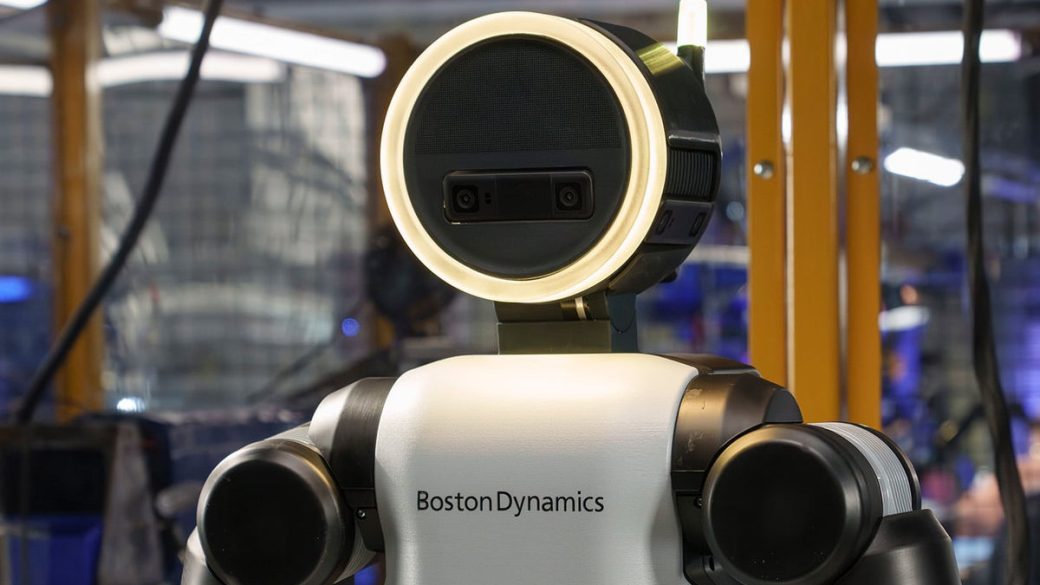
- The Component Partnership: Hyundai Mobis has signed a formal framework to develop and mass-produce specialized, high-performance rotational actuators for the brand-new, completely electric version of the Atlas humanoid robot (which won “Best Robot” at CES 2026). Hyundai Motor Group
- The Robot Metaplant: The group is establishing a dedicated Robot Metaplant Application Center. The current roadmap aims to have a fleet of Atlas humanoids operational inside Hyundai Motor Group Metaplant America (HMGMA) in Savannah, Georgia, by 2028, handling parts sequencing and complex component assembly. Hyundai Motor Group+ 1
- Target Pricing Efficiency: Internal documentation indicates that Hyundai aims to bring the volume list price of an industrial Atlas robot down to approximately $320,000 per unit—positioning it systematically below the two-year cost of traditional manufacturing payroll overhead. KED Global
By absorbing the business completely, Hyundai transitions from a pure automotive player into a dominant platform controller of physical artificial intelligence, owning the software brains, the mechanical joints, and the factories where the machines will go to work.