Key takeaways
- Humanoid has raised $152 million at a $1.35 billion valuation.
- The deal makes the European robot company a unicorn.
- A unicorn is a private startup valued at $1 billion or more.
- The money could help Humanoid turn robot demos into working tools.
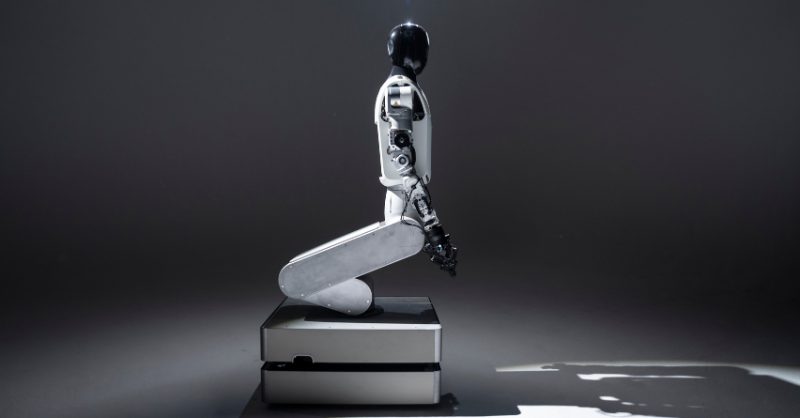
Humanoid robot maker Humanoid has raised $152 million in new funding, according to Forbes. The deal values the firm at $1.35 billion, making it Europe’s newest robot unicorn. Humanoid funding here means fresh investor money for a company building human-shaped machines that are meant to work in spaces designed for people.
The number is striking because the company is still young. Investors are betting that human-shaped machines can do useful jobs. They are not buying a finished mass-market product yet. Instead, they are paying for a chance to back an early leader.
What does the Humanoid funding tell us?
The raise shows that investors still see a big opening in robots that work around people. Factories, warehouses, and shops already have machines. Yet many spaces were built for human hands, stairs, doors, and tools. A humanoid robot with arms, legs, and hands may fit those places better.
The $1.35 billion figure is a valuation. A valuation is an estimate of what the whole company is worth. It does not mean Humanoid has $1.35 billion in cash. It means investors agreed to price shares using that value.
| Measure | Reported figure | What it means |
|---|---|---|
| New funding | $152 million | Money raised from investors |
| Company valuation | $1.35 billion | Estimated value after the deal |
| Unicorn line | $1 billion | Level needed for the startup label |
Humanoid sits $350 million above that unicorn line. In simple terms, its valuation is 35% higher than $1 billion. That is a large vote of confidence, but it also raises the pressure. The company must now prove its robots can work safely and often.
Why is this humanoid robot deal attracting attention?
The funding is drawing attention because human-like robots have become a crowded race. Tesla, Figure AI, Agility Robotics, and several Asian firms are chasing similar goals. Each wants robots to move boxes, carry parts, or handle dull tasks. Large electronics groups are entering too — Samsung’s robotics division has begun a bigger humanoid push.
Building one is hard. A robot needs cameras and sensors to understand a room. Sensors are parts that help a machine detect what is around it. It also needs software that can plan actions without causing harm. Chipmakers are targeting exactly that layer, as seen when NVIDIA launched Cosmos 3 Edge for real-time AI on robots.
Then comes the real test: repeat work. A robot that folds one shirt in a lab is interesting. A robot that folds thousands of shirts without stopping is useful. Businesses will care most about speed, safety, repair costs, and how much work the machine saves.
Humanoid’s $152 million raise shows investors expect human-shaped robots to leave the lab, but their value will depend on reliable work in real places.
Where could the money go next?
The funding can support the expensive steps between a prototype and a working fleet. The company may need more engineers, test sites, parts, and computing power. Training robot software can require huge sets of video and movement data. That takes time and money.
It may also need to build more machines. One demo robot is very different from 100 robots. Parts must arrive on time, and each unit must meet the same safety checks. Those problems have slowed many hardware startups before.
For Europe, the deal matters beyond one company. The region has strong factories and research groups. But it has often watched American and Chinese firms raise larger sums. A new unicorn could bring more talent and money into European robotics. Private equity has been circling the sector elsewhere too, as with the Blackstone Futronic deal targeting Korea’s robotics boom.
Humanoid will also face rules on workplace safety and artificial intelligence. The European Union’s AI rules set duties for some higher-risk uses. Rules can slow a launch, but they can also make buyers more willing to trust a product.
What should buyers and investors watch?
Funding alone does not show whether a robot business will win. Buyers should ask what tasks the robot can finish today. They should also ask how long it runs between charges. A machine that needs frequent help may cost more than it saves.
Investors will watch for customer trials and repeat orders. A trial is a small real-world test with a customer. Repeat orders matter because they show a customer found real value. Revenue, rather than a flashy video, will decide whether the $1.35 billion price looks wise.
The company’s own Humanoid website describes its aim to build general-purpose humanoid robots. General-purpose means a machine can try more than one task. That goal is exciting, but it remains one of robotics’ toughest challenges.
How does the funding compare with the goal?
The raise gives the company a large budget, yet the job ahead is larger. Robots must act in messy spaces where boxes shift and people walk nearby. They must also recover when something goes wrong. That is much harder than repeating a fixed move behind a factory fence.
For now, the deal marks a financial milestone. The next milestone is practical proof. Can Humanoid place reliable machines at customer sites? The answer will shape whether Europe’s new robot unicorn becomes a lasting business.
Frequently Asked Questions
What is a humanoid robot?
A humanoid robot is a machine built in roughly the shape of a person, with arms, hands, and often legs. The design is meant to let it use stairs, doors, and tools made for humans, instead of needing a workplace redesigned around it.
How much does a humanoid robot cost?
There is no confirmed public price for Humanoid’s machines, and the company has not disclosed one. Across the industry, humanoid robots are still largely pre-commercial, so buyers should treat any quoted figure as provisional until a vendor publishes firm pricing and service terms.
Which companies are building humanoid robots?
Alongside Humanoid, the field includes Tesla, Figure AI, Agility Robotics, several Asian manufacturers, and large electronics groups such as Samsung. Chip and software suppliers, including NVIDIA, are also building the AI platforms these robots run on.
Get the day’s top stories in your inbox
One concise email. No spam, unsubscribe anytime.