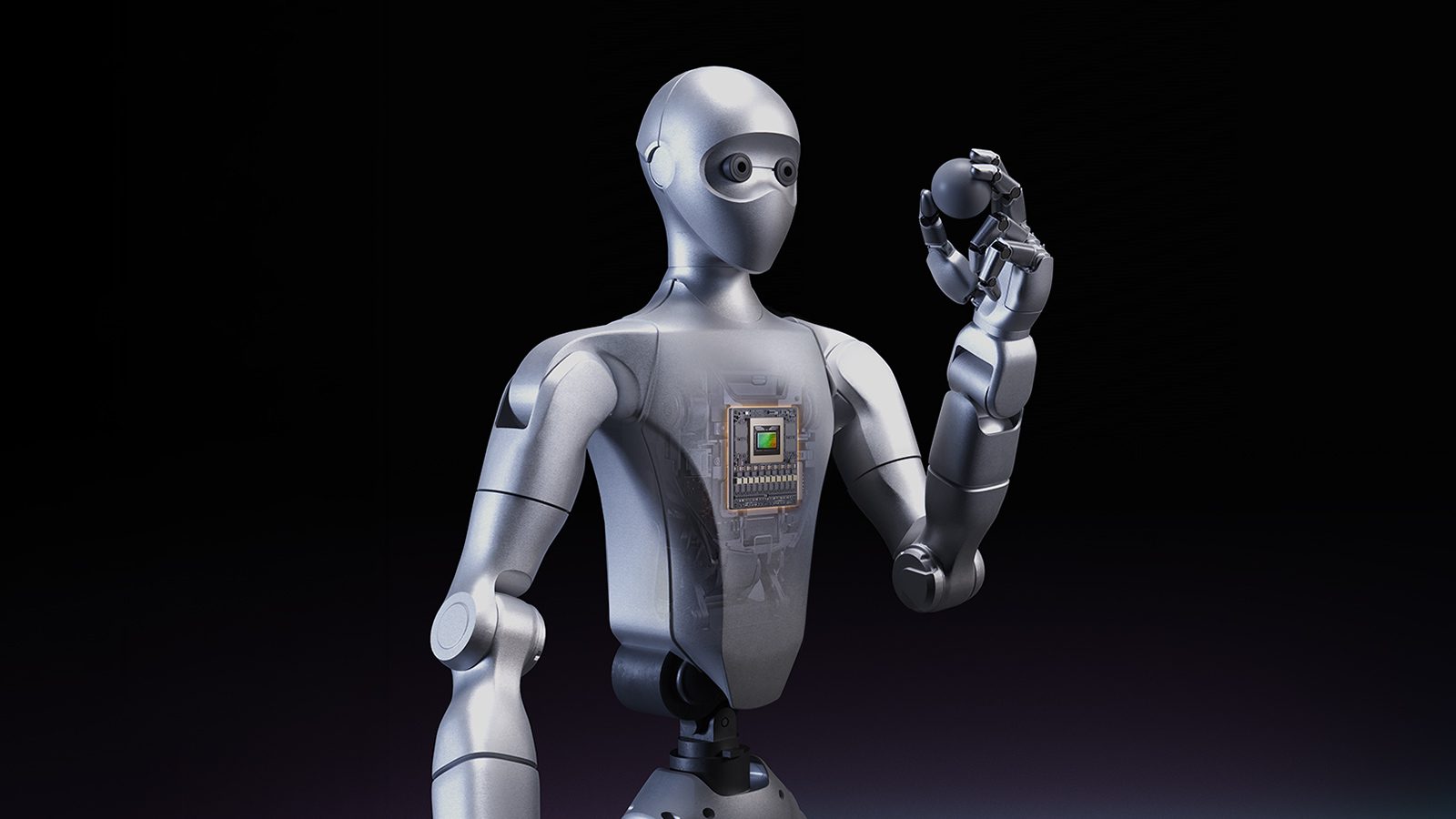
NVIDIA has expanded its Cosmos family of physical AI models with the launch of Cosmos 3 Edge, a lightweight world model designed to bring advanced AI reasoning and perception directly to edge devices such as robots, autonomous vehicles, drones, and industrial machines. Unlike large cloud-based AI models, Cosmos 3 Edge is optimized to run with low latency and limited computing resources while maintaining real-time understanding of the physical world. The launch is part of NVIDIA’s broader strategy to make AI models practical for robotics and edge computing, where immediate decision-making is critical.
Cosmos 3 Edge builds on the capabilities of the recently introduced Cosmos 3 platform, which NVIDIA describes as an “omnimodal world model” capable of processing and generating text, images, video, audio, and action sequences within a unified architecture. By introducing an edge-optimized variant, NVIDIA aims to enable physical AI applications that can operate independently of cloud connectivity while still benefiting from sophisticated environmental understanding and prediction.
What Is Cosmos 3 Edge?
Cosmos 3 Edge is designed specifically for AI systems that interact with the physical world.
Key capabilities include:
- Real-time perception of surrounding environments.
- On-device AI reasoning.
- Low-latency inference for autonomous systems.
- Support for robotics and industrial automation.
- Reduced reliance on cloud-based processing.
Cosmos 3 Edge at a Glance
| Feature | Details |
|---|---|
| Developer | NVIDIA |
| Model | Cosmos 3 Edge |
| Deployment | Edge devices |
| Primary applications | Robotics, autonomous vehicles, drones, industrial AI |
| Core focus | Real-time physical AI inference |
Optimized for Physical AI
Unlike traditional large language models that primarily process text, Cosmos 3 Edge is built to understand and predict real-world environments.
Potential deployment scenarios include:
- Autonomous mobile robots.
- Factory automation systems.
- Warehouse logistics.
- Self-driving vehicles.
- Smart cameras and vision systems.
- Autonomous drones.
The model enables devices to analyze sensor inputs, understand dynamic environments, and make rapid decisions without continuously sending data to cloud servers.
Why Edge AI Matters
| Cloud AI | Cosmos 3 Edge |
|---|---|
| Requires internet connectivity | Runs locally on edge devices |
| Higher latency | Near real-time response |
| Centralized computing | On-device inference |
| Higher bandwidth usage | Reduced network dependence |
Part of NVIDIA’s Expanding Cosmos Platform
Cosmos 3 Edge is the latest addition to NVIDIA’s broader Physical AI ecosystem.
The Cosmos platform includes technologies for:
- World modeling.
- Synthetic data generation.
- Robotics simulation.
- Autonomous vehicle development.
- Embodied AI training.
According to NVIDIA, Cosmos 3 was trained on approximately 20 trillion multimodal tokens, including nearly a billion images, hundreds of millions of videos, audio, text, and action data, enabling the models to better understand and predict complex physical environments.
Key Advantages
| Benefit | Enterprise Impact |
|---|---|
| Edge deployment | Faster AI decisions |
| Lower latency | Improved responsiveness |
| Reduced bandwidth | Lower operating costs |
| Physical world understanding | Better autonomy for robots and vehicles |
Strengthening NVIDIA’s Physical AI Strategy
The launch reinforces NVIDIA’s ambition to extend its leadership beyond AI chips into foundational AI software for robotics and autonomous systems.
The company’s Physical AI portfolio now spans:
- AI accelerators and GPUs.
- Robotics development platforms.
- Omnimodal world models.
- Synthetic data generation tools.
- Edge AI inference technologies.
As industries increasingly adopt autonomous machines, AI models capable of running efficiently at the edge are expected to play an essential role in reducing latency, improving reliability, and enabling real-time decision-making.
Looking Ahead
With Cosmos 3 Edge, NVIDIA is extending its vision of Physical AI from the cloud to edge devices, enabling robots, autonomous vehicles, and industrial systems to perform sophisticated AI inference with minimal latency. The launch complements the broader Cosmos 3 platform and reflects the industry’s growing emphasis on deploying intelligent models closer to where data is generated, rather than relying solely on centralized cloud infrastructure.
As edge computing continues to evolve, lightweight world models like Cosmos 3 Edge are expected to become increasingly important for autonomous systems operating in factories, warehouses, cities, and transportation networks. Combined with NVIDIA’s GPUs, networking technologies, and robotics software, Cosmos 3 Edge strengthens the company’s position as a provider of end-to-end infrastructure for the next generation of physical AI applications.
Get the day’s top stories in your inbox
One concise email. No spam, unsubscribe anytime.