Key takeaways
- Kering will take back the Gucci Beauty license from Coty earlier than planned.
- Coty said the deal is worth about $400 million.
- The move gives Kering more direct control of Gucci perfumes and makeup.
- Investors watch this closely because Gucci is a major name in luxury beauty.
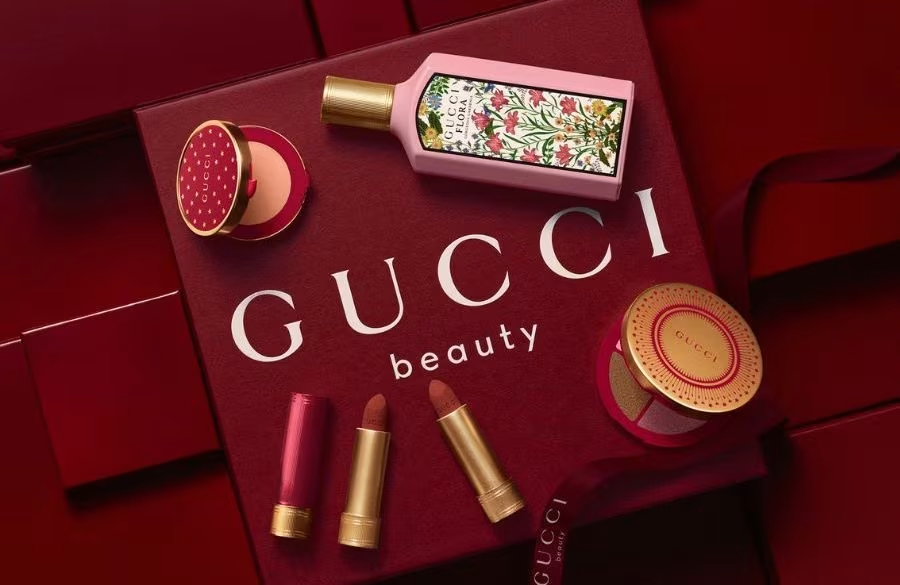
The Gucci Beauty license is the legal right to make and sell Gucci perfumes and makeup. Kering is taking that right back from Coty early in a deal worth about $400 million. That means Gucci’s owner wants more control of its beauty business, not later, but now.
Reuters reported that Coty will return the license to Kering before the original end date. A license is a formal business permission. In this case, it let Coty run Gucci’s beauty products, from fragrance to cosmetics, using the Gucci brand name.
Why is the Gucci Beauty license changing hands?
Kering owns Gucci, so it already controls the fashion label. But many big luxury groups don’t run every product line themselves. They often hand beauty work to a specialist, because making, marketing, and shipping beauty products is its own tough business.
Now Kering wants that business back in-house. In-house means a company runs the work itself. That can help a brand keep one clear look and message across handbags, clothes, lipstick, and perfume.
Coty said the agreement is valued at around $400 million. That is a big number, even in luxury. To picture it, $400 million is about ₹3,300 crore if you use an exchange rate near ₹83 to the dollar.
This shift also fits a wider luxury trend. Big groups want tighter control over fast-growing beauty lines, because perfumes and makeup can bring steady cash. They also reach more shoppers than a ₹2 lakh handbag ever will.
What does this mean for Coty and Kering?
For Kering, the upside is simple. It gets direct control over a famous beauty label. That matters because Gucci has had a mixed run in fashion lately, so beauty can help support the wider brand.
For Coty, the deal brings in cash, but it also means losing a known name from its portfolio. A portfolio is a company’s collection of brands and businesses. Coty still owns and manages other beauty labels, so this is important, but not the whole story.
Here is the heart of the news in one line:
Kering is paying about $400 million to end Coty’s control of Gucci beauty early, so Gucci can run perfumes and makeup more directly under its own roof.
That sentence matters because investors often ask the same question. Who will control the brand, the product plan, and the profits? After this deal, the answer points much more clearly to Kering.
How big is the beauty business, really?
Beauty may sound smaller than fashion, but it often scales faster. A perfume bottle costs far less than a luxury coat. So more people can buy it, and brands can reach millions of shoppers across airports, malls, and online stores.
That is why licenses matter. A beauty license can turn a fashion name into a global business. For example, one scent line can be sold in dozens of countries with repeated purchases every year.
The reported deal value also gives a clue about how much the Gucci Beauty license matters. Companies do not spend $400 million just to tidy up paperwork. They do it because they think long-term control will pay off.
| Item | What it means |
|---|---|
| Company giving up control | Coty |
| Company taking control | Kering |
| Brand involved | Gucci Beauty |
| Reported deal value | About $400 million |
| Main effect | Kering gets earlier direct control |
How does the Gucci Beauty license fit a bigger trend?
Luxury groups are rethinking who should run beauty. Some want outside experts. Others want direct control, because beauty links brand image, pricing, and product launches very closely.
Kering has been building out more beauty capability in recent years. Capability means the people, tools, and systems to do the job. Taking back the Gucci Beauty license early suggests Kering thinks it is ready.
This comes at a time when many consumer businesses are making sharper choices. Some raise cash. Some cut weaker units. For example, we recently covered how Porsche may cut 4,000 jobs in Germany and how tech layoffs topped 119,000 in the first half of 2026.
Luxury and beauty are not the same as cars or software, of course. But the pattern is similar. Companies want tighter focus, clearer control, and better returns from their strongest assets.
What numbers stand out in this deal?
Three numbers tell the story fast. First, the deal value is about $400 million. Second, the return of the Gucci Beauty license will happen early, not at the original end date. Third, one major luxury owner is taking back one major beauty brand from one major cosmetics company.
Gucci Beauty license: key deal numbers$400mEarly return2 firmsValueTimingPlayers
The chart is simple on purpose. One bar shows the money. The others show the two things that make this news important: speed and control.
If you follow business news, you may have seen other ownership and control stories lately. We also covered how SEBI allowed direct buybacks via stock exchanges and how Flipkart’s valuation crossed $38 billion in an ESOP buyback. Different sectors, same lesson: structure matters.
What should shoppers and investors watch next?
First, watch whether Kering builds a bigger in-house beauty team. That could include product design, marketing, and global sales. If it moves fast, new Gucci launches may show a more unified brand style.
Second, watch Coty’s next steps. It may use the money to support other brands, cut debt, or invest elsewhere. Debt means money a company owes. Investors care about that because debt can limit future choices.
Third, watch the luxury market itself. If shoppers slow spending, beauty can still hold up better than very expensive fashion. A ₹9,000 perfume is still costly, but it is much easier to buy than a ₹3 lakh bag.
For primary details, readers can track company statements from Coty and Kering. Reuters first reported the deal based on the companies’ announcement.
Why does the Gucci Beauty license matter beyond one brand?
The Gucci Beauty license matters because it shows how luxury groups think about power. A famous name is not just about logos. It is about who decides the scent, the packaging, the stores, the ads, and the profit split.
That is why this is more than a contract update. It is a strategy move. And if Kering can make Gucci beauty stronger under its own control, other luxury groups may look at their own deals more closely too.
So the story is easy to sum up. Coty gets paid about $400 million. Kering gets the Gucci Beauty license back early. And the luxury beauty business gets one more sign that control is becoming the big prize.
FAQs
What is the Gucci Beauty license?
The Gucci Beauty license is the right to make and sell Gucci perfumes and makeup. Coty had that right, but Kering is taking it back early.
Why is Kering taking the Gucci Beauty license back?
Kering appears to want more direct control of Gucci’s beauty business. That can help it manage branding, launches, and profits more closely.
How much is the deal worth?
Coty said the deal is worth about $400 million. That is roughly ₹3,300 crore at an exchange rate near ₹83 per dollar.
Get the day’s top stories in your inbox
One concise email. No spam, unsubscribe anytime.