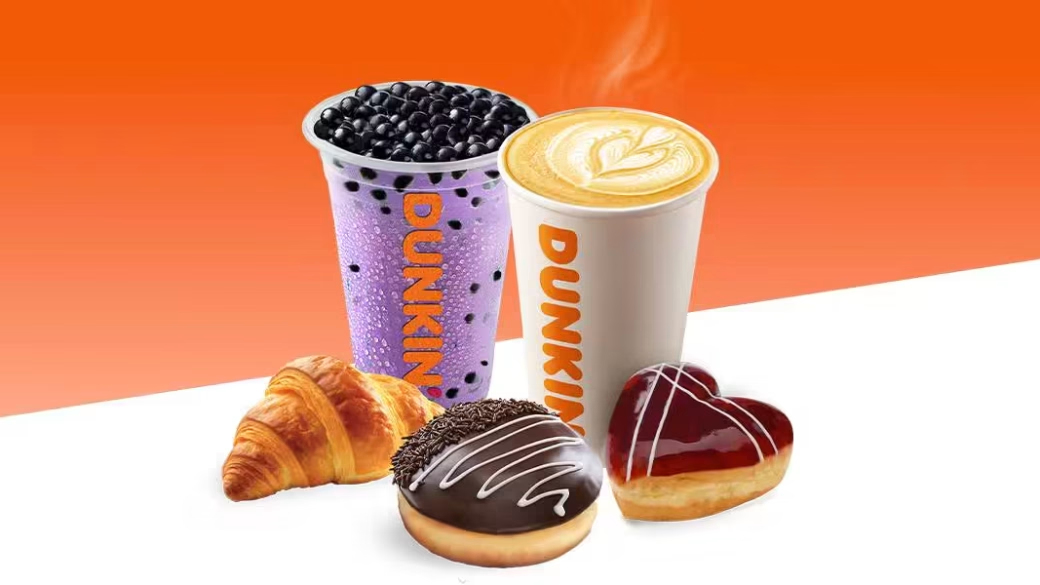
The Indian quick-service restaurant (QSR) landscape is bracing for a major consolidation. Graviss Group, the master franchise operator of ice cream giant Baskin Robbins in India, has entered advanced discussions to acquire the exclusive domestic franchise rights for Dunkin’ (formerly Dunkin’ Donuts).
The talks are taking place directly with Dunkin’s U.S.-based global parent, Inspire Brands. This strategic maneuver follows a decision by Indian QSR giant Jubilant FoodWorks (which also operates Domino’s Pizza and Popeyes locally) to pull the plug on its 15-year partnership with Dunkin’ due to persistent financial drag and mounting operational losses.
1. The Synergies Driving the Deal
A potential consolidation makes strong commercial sense for both companies because it leverages an existing global relationship. Under the Inspire Brands umbrella in the United States, Baskin Robbins and Dunkin’ function as sister brands, often deployed in high-efficiency co-branded “combo stores” sharing a singular retail footprint.
Plaintext
[ THE PROPOSED SYNERGY MATRIX ]

├── Shared Real Estate  ──► Co-locating Dunkin' kiosks inside premium Baskin Robbins locations
├── Backend Logistical  ──► Combining cold-chain storage and delivery routes for efficiency
└── Q-Commerce Scale    ──► Funneling donuts and ice cream through a unified digital pipeline
Graviss Group hopes to utilize its sprawling physical real estate to scale Dunkin’ at a fraction of the cost a new player would incur. Through its foods division (Graviss Foods), the company operates more than 1,000 Baskin Robbins parlours across 290 Indian cities, alongside 5,000 general retail points of sale.
2. Re-engineering a Struggling Business Model
Jubilant FoodWorks originally introduced Dunkin’ to India in April 2012. While the brand initially expanded aggressively to more than 70 locations within its first four years, the standalone “donuts-and-coffee” concept faced severe cultural headwinds.
Indian consumers traditionally view donuts as occasional sweet treats rather than daily breakfast staples, making it hard for large, expensive storefronts to achieve sustainable foot traffic. By the time Jubilant announced its exit, the network had withered to just 27 operational stores, contributing an insignificant 0.61% to Jubilant’s top-line revenue while racking up an annual loss of roughly ₹19.1 crore.
If the acquisition materializes, Graviss Group plans a complete structural overhaul of the brand’s identity in India:
- Menu “Indianization”: Transitioning the menu away from heavy reliance on conventional American breakfast items to feature localized desserts, regional flavor profiles, and a wider savory menu.
- Health-Conscious Layering: Introducing zero-sugar or low-calorie alternatives, mirroring Graviss’ success with its independent low-calorie ice cream brand, The Brooklyn Creamery.
- The Kiosk Play: Moving away from large-format casual dining spaces in favor of compact, low-overhead kiosks and express takeaways built into highly transient transport hubs and tech parks.
3. Financial and Corporate Profiles
The acquisition would add another premium hospitality asset to Graviss Group’s diverse business portfolio, which spans real estate, FMCG manufacturing, and elite hotels, including the InterContinental Marine Drive in Mumbai and Mayfair Banquets.
| Corporate Entity | Key Operational Metric | Strategic Position |
| Graviss Foods | ₹354 crore (FY25 Revenue) | Holds 100% brand ownership of Baskin Robbins across the entire SAARC region (India, Nepal, Sri Lanka, Maldives). |
| Jubilant FoodWorks | ₹19.1 crore (Dunkin’ FY25 Loss) | Formally terminating its master franchise deal effective December 31, allowing Inspire Brands a clean handoff. |
| Inspire Brands | $32.6 billion (Global Sales) | Seeking a stable local operator to keep Dunkin’ in India without establishing direct corporate subsidiaries. |
Inspire Brands has explicitly stated it has no intention of pulling the Dunkin’ brand out of the Indian market. While both Graviss Group and Inspire Brands have declined to comment publicly on active non-disclosure agreements, retail analysts view the transition as an optimal survival path for the donut chain to piggyback off the quick-commerce delivery boom currently driving India’s food sector.
Get the day’s top stories in your inbox
One concise email. No spam, unsubscribe anytime.