The Indian government is actively considering a temporary, one-time price increase of 10% to 20% for around 300 essential medicines under price control.
The emergency measure is under review by the National Pharmaceutical Pricing Authority (NPPA) and the Department of Pharmaceuticals to shield the domestic healthcare supply chain from severe global supply shocks.
1. The Trigger: The West Asia Supply Shock
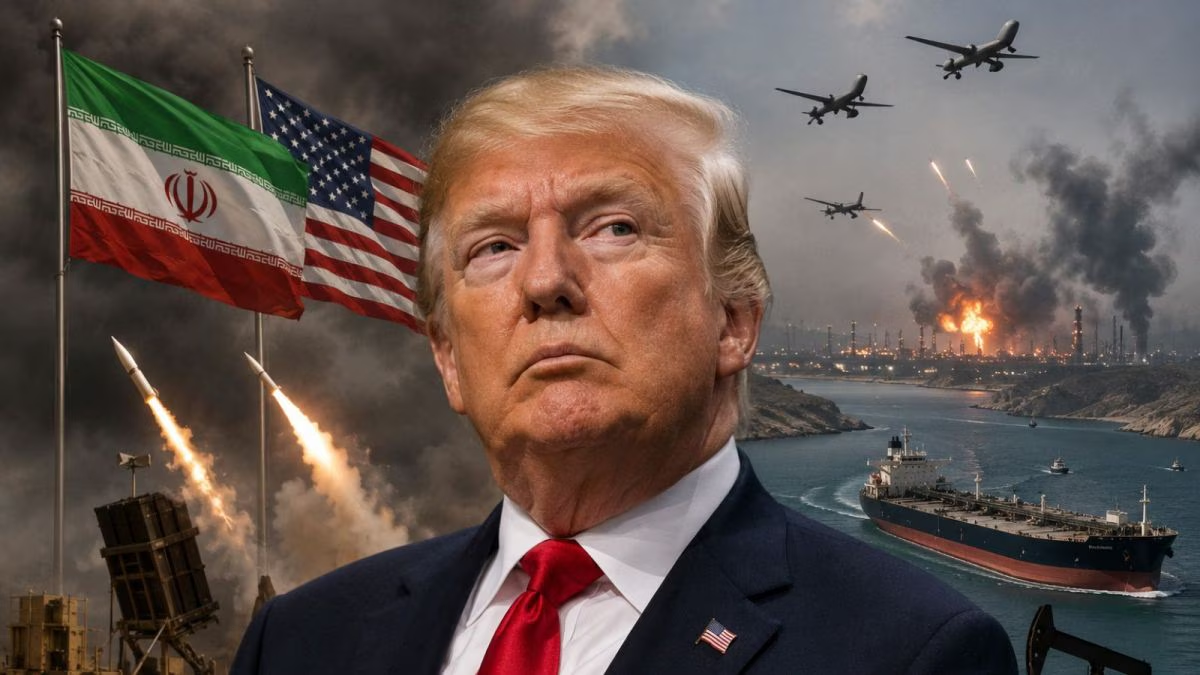
The sudden necessity for an unscheduled price revision stems from the ongoing conflict in West Asia, which has choked major shipping lanes and severely disrupted chemical ecosystems.
- Petrochemical Input Spikes: The conflict has caused severe infrastructure and logistics bottlenecks in the Gulf region. As a result, the costs of critical petrochemical solvents and intermediates—such as propylene, ammonia, and methanol—have skyrocketed by 200% to 300%.
- The Dissolution Bottleneck: While these solvents are not necessarily components of the final, packaged tablet or capsule, they are absolutely vital chemical agents used to dissolve, purify, and synthesize Active Pharmaceutical Ingredients (APIs) during the manufacturing process. Because of safety and stability regulations, drugmakers cannot easily store large buffer stocks of these volatile solvents, making them highly vulnerable to sudden spot-market spikes.
2. The Strategy: Preventing Structural Shortages
The proposal is being evaluated as a highly calibrated, temporary intervention under exceptional emergency provisions rather than a permanent policy shift.
- The Industry Appeal: Prominent industry bodies, including the Indian Pharmaceutical Alliance (IPA) and the Organisation of Pharmaceutical Producers of India (OPPI), originally requested price relaxations of up to 50% for highly affected lines. They cautioned that thinning margins would make the continuous production of certain low-cost formulations completely unviable, particularly for smaller generic manufacturers.
- A Planned Reversal: Government officials have indicated that any approved price support will be explicitly time-bound—likely lasting for a minimum duration of three to four months. Once global supply routes stabilize and raw input costs cool down, prices are mandated to automatically revert to their baseline levels.
- The Consumer Buffer: The direct impact on patients’ wallets is expected to be cushioned. Analysts estimate that a 10% to 20% factory-level hike will translate into a modest 3% to 5% net increase in retail Maximum Retail Prices (MRPs) for end consumers.
3. The Affected Therapeutic Segments
The temporary price relaxations will target roughly 300 high-demand molecules and formulations that rely heavily on chemical solvent-based processing:
| Therapeutic Class | Key Examples Impacted |
| Broad-Spectrum Antibiotics | Amoxicillin, Ciprofloxacin, Azithromycin |
| Common Pain Management | Paracetamol formulations, Ibuprofen, Tramadol |
| Critical Chronic Care | Atorvastatin (Cholesterol), Metformin (Diabetes) |
| Critical Specialty Care | Select high-density injectables, IV fluids, and targeted anti-cancer drugs |
4. Contrast with the Regular Annual Revision
This emergency proposal is entirely separate from India’s standard, index-linked pricing cycle. Under the normal framework of the Drugs (Prices Control) Order (DPCO) 2013, the NPPA already implemented its annual price adjustment across 907 scheduled formulations effective April 1, 2026. Because the calendar year 2025 Wholesale Price Index (WPI) came in at a very mild 0.65%, that standard annual price adjustment was virtually unnoticeable to consumers. The current West Asia crisis, however, represents a sudden macroeconomic shock that the annual WPI framework was never built to absorb.
Get the day’s top stories in your inbox
One concise email. No spam, unsubscribe anytime.