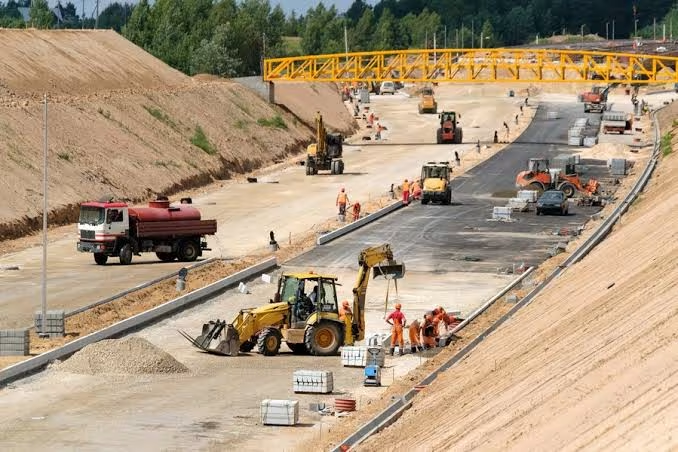
Government capex rose 19% in April and May, and that matters for cement. Government capex is money the state spends to build things like roads, rail lines, bridges, and homes. When that spending goes up, cement demand often follows. That is why brokerage Nuvama says FY27 could look stronger for cement makers.
Key takeaways
- Government capex rose 19% in the first two months of the fiscal year.
- More public works can mean higher cement demand, because big projects use huge amounts of concrete.
- Nuvama thinks FY27 may see better demand if this spending trend holds.
- The link is simple: more roads, rail, and housing work usually means more bags of cement sold.
Why does government capex matter for cement?
Cement is one of the first materials needed on a big project. A highway needs it. A metro line needs it. So does a warehouse, tunnel, flyover, or public housing block.
That is why government capex is watched so closely. Capital expenditure means spending on long-term assets. In plain words, it is money used to build useful things that last for years.
When the government speeds up this spending, builders order more cement. The effect is not always instant, but it tends to show up as projects move from plans to actual work on the ground. In fact, even a modest rise in public construction can change demand for the whole sector.
What did the new numbers show?
Nuvama said government capex was up 19% in April and May from the same period a year earlier. That is a sharp jump for just two months. It suggests the state started the year with more energy on project spending.
The fiscal year in India starts on April 1. So these numbers cover the opening stretch of the year. Early spending matters, because it shows whether ministries are moving fast or waiting.
Here is the simple picture.
Key numbers at a glance19%FY27Apr-May capex growthStronger demand hopeHigher0
One number stands out: 19%. Another key marker is FY27, the financial year ending March 2027. Nuvama is not saying a boom is guaranteed, but it sees a better chance of stronger cement demand if this pace lasts.
How can a 19% rise turn into more cement sales?
Think of a road project like a chain reaction. First, the government clears money. Then agencies award contracts. After that, machines arrive, workers start, and material orders rise.
Cement usually comes in once work moves beyond paperwork. So government capex today can support cement demand over the next several quarters. That is why investors study these numbers well before company sales fully reflect them.
Big public works also create wider demand. A new industrial zone may need warehouses. A new rail line may trigger housing nearby. As a result, one project can pull in many more cement orders around it.
Which projects usually drive cement demand?
The biggest drivers are roads, railways, urban projects, irrigation, and affordable housing. These use heavy volumes of cement, steel, and aggregates. Aggregates are crushed stone and sand. They are the rough materials mixed into concrete.
India has pushed hard on infrastructure in recent years. That includes expressways, freight corridors, metro systems, ports, and rural housing. If government capex keeps rising, these areas could stay busy.
| Project type | Why it uses cement | Demand impact |
|---|---|---|
| Roads and flyovers | Concrete, culverts, barriers | High |
| Rail and metro | Stations, pillars, track support | High |
| Housing | Foundations, walls, slabs | Medium to high |
| Irrigation | Canals, dams, lining work | Medium |
Why is FY27 getting attention already?
Because cement companies plan ahead. They track not just current sales, but future project pipelines too. A pipeline is the list of projects likely to move forward. It helps firms decide where to add capacity, trucks, and dealer stock.
Nuvama’s view points to FY27 because large projects take time. A road approved now may need months before heavy cement use begins. So the market often looks one year ahead, not just at the next quarter.
That matters for prices too. If demand improves but supply stays balanced, cement makers may get better pricing power. Pricing power means a company has more room to hold or raise prices without losing too many buyers.
What should investors and readers watch next?
First, watch whether government capex stays strong beyond May. Two months are useful, but they do not tell the whole story. A steady trend over six months would be a stronger signal.
Second, track execution, not just announcements. A project on paper does not use cement. A project with land cleared, contracts signed, and work started does.
Third, watch other costs. Cement companies still face pressure from fuel, freight, and power bills. Freight means transport costs. If diesel or energy gets expensive, part of the demand benefit can get eaten up.
Readers can also compare this with broader market signals. For example, bond moves can hint at growth and borrowing trends, as seen in our report on India 10-year bond yield falls as oil risk heats up. And sector shifts driven by big policy bets can reshape industries over time, much like the GLP-1 opportunity could lift Indian pharma at home story showed in healthcare.
So, is this good news for cement companies?
Yes, but with a small warning label. Rising government capex is clearly helpful for cement demand. It gives the sector a stronger base than demand that relies only on private real estate.
Still, the real test is follow-through. If ministries keep spending, and if projects move fast, cement makers could see better volumes in FY27. Volumes means the amount sold. In simple terms, more trucks could leave plants carrying more bags.
A clear way to put it is this:
When government capex rises, the odds improve that more roads, railways, and housing projects will start or speed up. That usually leads to stronger cement demand, though the full effect often takes a few quarters to show up.
For primary data, readers can track Union government spending trends through the Union Budget documents and the Monthly Economic Report from the Department of Economic Affairs. Those sources help show whether this early rise in government capex keeps going.
FAQs
What is government capex?
Government capex is spending on building long-term assets. That includes roads, bridges, rail lines, ports, and public housing.
Why does government capex affect cement demand?
Because construction projects use a lot of cement. When the state builds more, cement makers often sell more.
When could cement companies feel the benefit?
Usually after projects move from approval to actual construction. That can take a few months or even several quarters.
Get the day’s top stories in your inbox
One concise email. No spam, unsubscribe anytime.