DCM Shriram renewable energy is the company’s clean power plan for running its factories with sun and wind. The company says this capacity will rise to 176 megawatts, or MW, with a new hybrid power project. A megawatt is a unit of power. One MW can supply electricity for many homes, depending on use.
Key takeaways
- DCM Shriram plans to lift its clean power capacity to 176 MW.
- The new project is a hybrid power plant, which means it mixes solar and wind.
- The company wants to cut energy costs and use less fossil fuel power.
- This matters because energy is a big cost for chemical and farm-linked factories.
What did DCM Shriram announce?
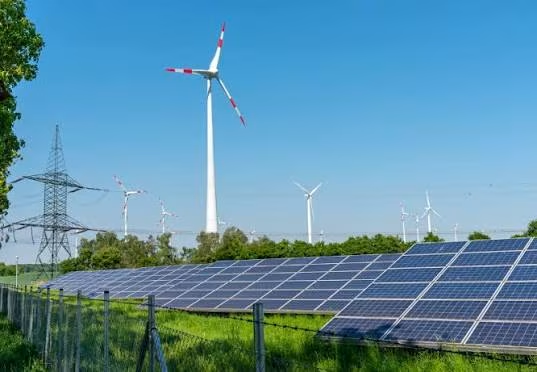
DCM Shriram said it will expand its clean power footprint through a new hybrid energy project. Hybrid means two power sources work together. In this case, that usually means solar panels for sunny hours and wind turbines for breezy hours.
That matters because one source alone can be patchy. Solar power drops after sunset, while wind can change by season. Put them together, and the power supply becomes steadier for factories that need electricity all day.
The headline number is 176 MW. That is the total renewable capacity the company expects after the new project. For a simple picture, 176 MW is like 176 large one-megawatt blocks of electricity capacity lined up side by side.
Why is DCM Shriram renewable energy important?
Power is a huge part of industrial costs. Companies like DCM Shriram make products such as chemicals, sugar, and farm inputs, so they use a lot of electricity and steam. Farm inputs are products used by farmers. For example, fertilisers help crops grow.
When grid power or fuel gets costly, factory margins can shrink. Margins are the money left after costs. So a company that makes more of its own clean power can protect itself better.
DCM Shriram renewable energy also helps with emissions. Emissions are gases released into the air, often from coal, oil, or gas. If more electricity comes from solar and wind, the company may lower its carbon footprint over time.
That fits a wider trend in India. Big manufacturers are trying to lock in cheaper, cleaner power for years ahead. Many are doing this because energy prices can swing fast, especially when global oil or gas markets get tense.
How big is 176 MW, really?
Numbers like 176 MW can feel abstract, so let’s break them down. Before this expansion, the company’s renewable capacity was lower. The new project lifts the total to 176 MW, which shows a clear step up in scale.
Here is a simple view of the capacity target:
DCM Shriram renewable energy targetExistingTargetLower than 176 MW176 MW176
The chart shows the main point, not every detail. The key fact is simple: the company is moving to 176 MW. That is large enough to matter for multiple industrial sites, not just a single small plant.
To make the figures easier to scan, here is a quick summary table:
| Item | What it means |
|---|---|
| Target capacity | 176 MW of renewable power |
| Project type | Hybrid project using solar and wind |
| Main goal | Lower power costs and cleaner energy use |
| Business impact | Supports factories with steadier in-house green power |
How does a hybrid power project work?
A hybrid project combines more than one clean energy source at one setup. Most often, it mixes solar and wind. This is useful because the sun and wind do not peak at the same time.
Solar works best in bright daytime hours. Wind often picks up in different periods, sometimes at night or in another season. So the two together can produce more balanced output across the day.
Some projects also use the same transmission line or grid link. Transmission means the wires and systems that carry electricity. Sharing that setup can improve efficiency and lower some costs.
In plain terms, a hybrid plant is like a team with two players. If one slows down, the other can help keep the score moving.
What does this mean for DCM Shriram’s business?
First, it could help the company control costs. Energy is one of those bills that never really rests. If a factory can source more renewable power directly or through linked projects, it may save money over the long run.
Second, it can make planning easier. A business with more stable power costs can budget better. That matters a lot in sectors where selling prices can change but input costs stay stubborn.
Third, the move may strengthen the company’s image with investors and customers. Investors are people or funds that put money into a company. Many now watch climate plans closely, because energy choices can shape profits and risk.
This does not mean renewable power solves every problem. Factories still need backup systems and smart planning. But it does give DCM Shriram another tool to manage costs and cut dependence on fossil fuel-based electricity.
Why are Indian companies racing into clean power?
India’s industrial groups are moving fast on renewables because the economics are changing. Economics means the money side of a decision. In many cases, solar and wind can now compete well with older power sources.
There is also pressure from markets and policy. Global buyers increasingly ask suppliers about emissions. Meanwhile, companies want protection from fuel price shocks, like the kind seen when oil prices jump. You can read more about energy price swings in our report on Brent oil price tops $85 as war fears shake markets.
Another reason is supply security. If companies build or contract more clean power, they reduce exposure to sudden changes in outside supply. That is one reason metals, chemicals, and other heavy industries are rethinking energy. Our explainer on why the world is racing for copper demand shows how the clean-energy shift is changing industry too.
For the broader official picture, readers can track India’s renewable push through the Ministry of New and Renewable Energy. Company filings and disclosures on the BSE also help investors check the details.
What should readers watch next?
The next thing to watch is execution. Execution means turning a plan into a working project. Investors will want to know when the hybrid project starts supplying power and how much of the company’s energy use it can cover.
They will also watch the cost benefit. If the new setup lowers power bills, that could support earnings later. Earnings are the profit a company reports after costs and taxes.
One clear takeaway stands out: DCM Shriram renewable energy is not just about being green. It is also about making industrial power cheaper, steadier, and less risky.
That is why this announcement matters. It connects clean energy to the real world of factory costs, investor pressure, and long-term growth. For a company that runs power-hungry businesses, 176 MW is not a side project. It is a serious business move.
FAQs
What is DCM Shriram renewable energy?
DCM Shriram renewable energy is the company’s clean power capacity, mainly from sources like solar and wind, used to support its business operations.
Why does a hybrid power project help?
It mixes solar and wind, so power supply is more balanced. When one source is weak, the other can help.
How big is 176 MW?
It is a large industrial-scale clean power target. In simple terms, it is enough capacity to make a real difference to factory energy use and costs.
Get the day’s top stories in your inbox
One concise email. No spam, unsubscribe anytime.