The China EV boom is the fast rise of electric car making and sales in China. A new study says that boom did not come only from Beijing. It says city and provincial governments did a lot of the heavy lifting, because they gave land, cash, tax breaks, and charging support.
Key takeaways
- A new study says local governments were central to the China EV boom.
- City and provincial leaders often backed EV firms before national policy fully kicked in.
- Support came in many forms, including land deals, subsidies, and charging networks.
- The finding matters because it changes how people explain China’s lead in electric cars.
Why is the China EV boom back in the spotlight?
The story is back because researchers looked closely at where help really came from. Their conclusion was simple. The China EV boom grew from the ground up as much as from the top down.
That matters because many people think Beijing planned everything alone. Beijing is China’s central government. The study says that picture is too neat, because local officials often moved first and took big risks.
China is now the world’s biggest electric car market. In 2024, battery electric and plug-in hybrid sales in China topped 11 million units, according to the International Energy Agency. A plug-in hybrid is a car with both a battery and a fuel engine. That huge market did not appear overnight.
What did local governments actually do?
Local governments used many tools to build the China EV boom. They offered cheap land for factories. They also gave tax breaks, which means firms paid less tax for a while.
Some cities helped companies get loans. A loan is borrowed money that must be paid back. Others bought electric buses and taxis, so young EV makers had their first big customers.
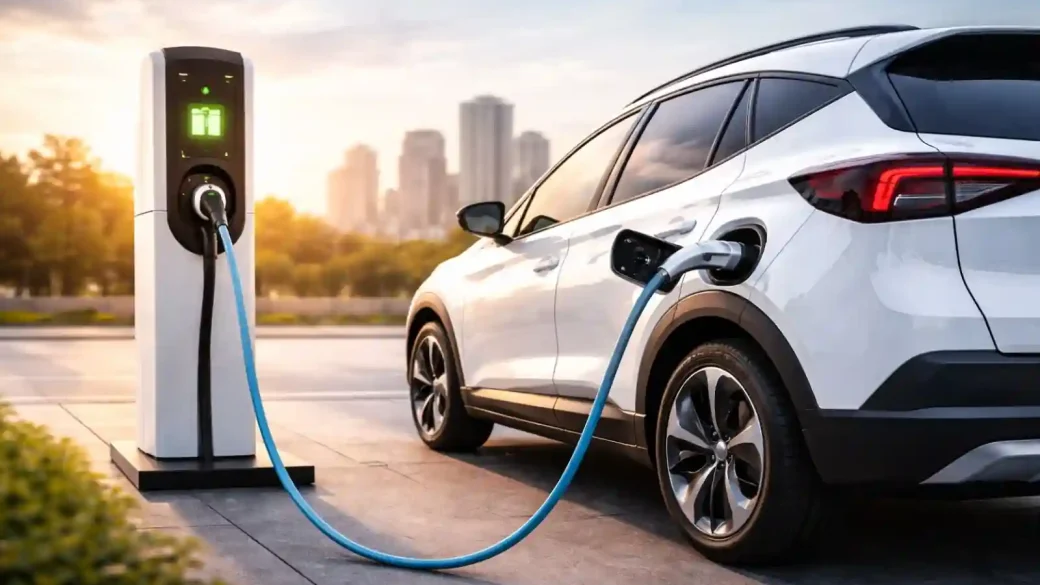
Charging stations were also a big part of it. A charging network is the system of places where EVs can power up. If drivers worry about running out of charge, they don’t buy as many EVs, so city support mattered a lot.
Local leaders also chased jobs and growth. That gave them a strong reason to back carmakers. In fact, they were not just following orders from Beijing. They were competing with each other to attract the next big factory.
Local support behind the China EV boomLandTaxLoansChargingHighVery high
How does this change the usual story about policy?
The usual story says Beijing designed an industrial policy and China won. Industrial policy means government action to help certain industries grow. The study does not say Beijing did nothing, but it says that story misses half the picture.
Instead, the China EV boom looks more like a team effort. National policy set broad goals. Meanwhile, local governments did the gritty work on the ground.
That ground work can be messy. Some local bets worked well, like support for major winners such as BYD. Some likely wasted money, because not every company survived.
Still, that trial-and-error process may explain why China moved so fast. It created many chances for firms to test products, build supply chains, and cut costs. A supply chain is the network that brings parts and materials into a factory.
Which numbers help explain the China EV boom?
China’s EV market is massive now. The country accounted for roughly two-thirds of global electric car sales in 2024, according to the IEA. That is a giant share for one country.
It also dominates battery making. Chinese firms have built strong positions in batteries, minerals processing, and key parts. That helps because a carmaker can source parts faster and often more cheaply.
One more number stands out. New energy vehicles, or NEVs, made up more than 40% of new car sales in China in recent months, based on industry data cited by official and market trackers such as the China Passenger Car Association. NEV is China’s label for battery EVs, plug-in hybrids, and fuel-cell cars.
| Area | What helped | Why it mattered |
|---|---|---|
| Factories | Cheap land and permits | Lowered setup costs |
| Buyers | Local subsidies and public fleets | Created early demand |
| Charging | City charging build-out | Made EV use easier |
| Finance | Loans and state-backed support | Helped firms survive longer |
Why should India and other countries care?
This matters far beyond China. Many countries want their own EV industry. So they need to know whether big national plans are enough.
The lesson from the China EV boom is blunt. Local action can matter just as much as national slogans. If a state or city cannot provide land, power, roads, permits, and charging, then factory plans may stay on paper.
India faces similar questions now. It is trying to grow EVs, battery plants, and supply chains at the same time. You can see the wider auto policy battle in our report on Bajaj Auto’s multi-platform strategy and the EV policy fight in Tesla’s EV policy push in Delhi.
The China example also shows a risk. Local governments can overspend chasing prestige projects. That can leave debt behind if factories fail or demand slows.
Is there a downside to the China EV boom model?
Yes, and it is worth watching. Heavy local support can create too many factories. If supply grows faster than demand, prices fall hard and weaker firms get crushed.
That may be good for buyers in the short term. But it can hurt profits, jobs, and smaller suppliers later. We have seen similar pressure in other sectors, including fast-moving internet markets like quick commerce in India.
Trade tensions are another risk. The US and Europe say Chinese EV support can distort competition. Distort means it bends the market in an unfair way. That is one reason trade fights have spread from steel and chips to electric cars.
So the China EV boom is not just a story about smart planning. It is also a story about fierce local rivalry, deep state backing, and hard global pushback.
What is the clearest takeaway?
Here is the core point in one line: the China EV boom was not built by Beijing alone, because local governments turned policy into real factories, real chargers, and real sales.
That makes the story more human and more practical. Big plans matter, but local execution matters just as much. If you want to understand why China pulled ahead, start with the cities.
FAQs
What is the China EV boom?
The China EV boom is the rapid rise in electric vehicle production and sales in China over the past decade.
Why were local governments so important?
They gave land, tax breaks, loans, and charging support. They also created early demand through bus, taxi, and fleet purchases.
How is this different from Beijing’s policy?
Beijing set big goals. Local governments carried them out on the ground, and sometimes moved faster than the centre.