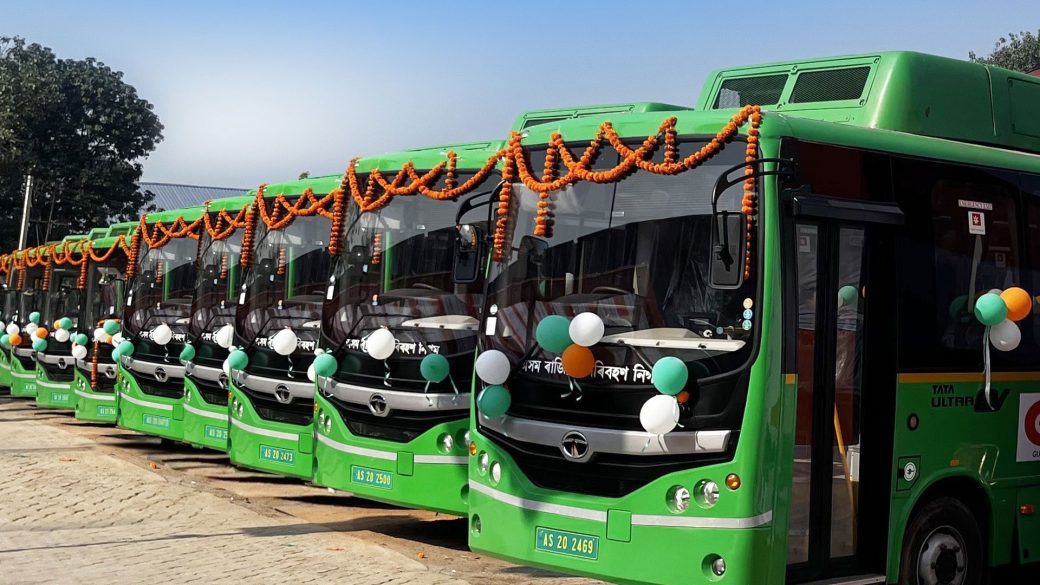
The Government of India is preparing a significant financial push to accelerate the electrification of privately owned commercial vehicles. While the central government’s public transit initiative, PM e-Bus Sewa, features a ₹20,000 crore central assistance budget to deploy 10,000 electric buses via public-private partnerships, the upcoming scheme specifically targeting the private fleet operator market is structured at approximately ₹12,000 crore.
This targeted framework aims to bridge the financing gap for private transport operators and de-risk the transition to clean intercity and commercial mobility.
1. The Financial Architecture of the ₹12,000 Crore Scheme
Private operators have historically hesitated to adopt electric buses due to steep upfront capital requirements—an electric bus costs roughly ₹1 crore to ₹1.25 crore compared to just ₹25 lakh to ₹50 lakh for a diesel variant. To lower these barriers, the proposed package introduces a mix of fiscal levers:
- Interest Subvention: The Centre plans to offer interest subvention benefits that could lower commercial financing and loan costs by 3% to 5%, making loan repayment profiles manageable for smaller fleet owners.
- Partial Credit Guarantees: By establishing a dedicated credit risk buffer, the government aims to reduce lending risks for commercial banks and NBFCs, who are otherwise wary of high EV asset depreciation and evolving battery lifespans.
- Capital Subsidies & Operational Waivers: In addition to upfront capital subsidies, the framework is expected to bundle operational sweeteners, including waivers on highway toll charges and state vehicle registration fees.
2. Unlocking Massive Long-Term Scale
The initiative is designed to run on a distributed lifetime window to fundamentally alter the composition of India’s long-distance and tour travel fleets:
- Target Deployment: The framework aims to support the rollout of 50,000 private electric buses over the next decade, with the core funding disbursed systematically over an initial five-year cycle.
- Leveraging Private Capital: Government officials project that the ₹12,000 crore incentive foundation will act as a force multiplier, successfully attracting ₹70,000 crore to ₹80,000 crore in direct private investments into the commercial EV ecosystem.
3. Parallels in the Public Sector: PM e-Bus Sewa
The new private-sector policy complements the ongoing, heavily capitalized public transport frameworks driven by the Ministry of Housing and Urban Affairs (MoHUA):
- The Public Pivot: The ₹20,000 crore central assistance pool under PM e-Bus Sewa is strictly optimized to augment city bus operations across urban centers with populations over 3 lakh.
- Infrastructure Assistance: Under the public scheme, the government provides 100% financial assistance for behind-the-meter power infrastructure and up to 60%–100% backing for physical depot civil works.
By rolling out this parallel ₹12,000 crore private-sector corridor modeled closely on the PM E-Drive program, New Delhi is opening a secondary front to tackle industrial emissions. This shifts the green mobility focus from purely local state transport undertakings (STUs) to the massive, highly fragmented network of private intercity operators across the country.
Get the day’s top stories in your inbox
One concise email. No spam, unsubscribe anytime.