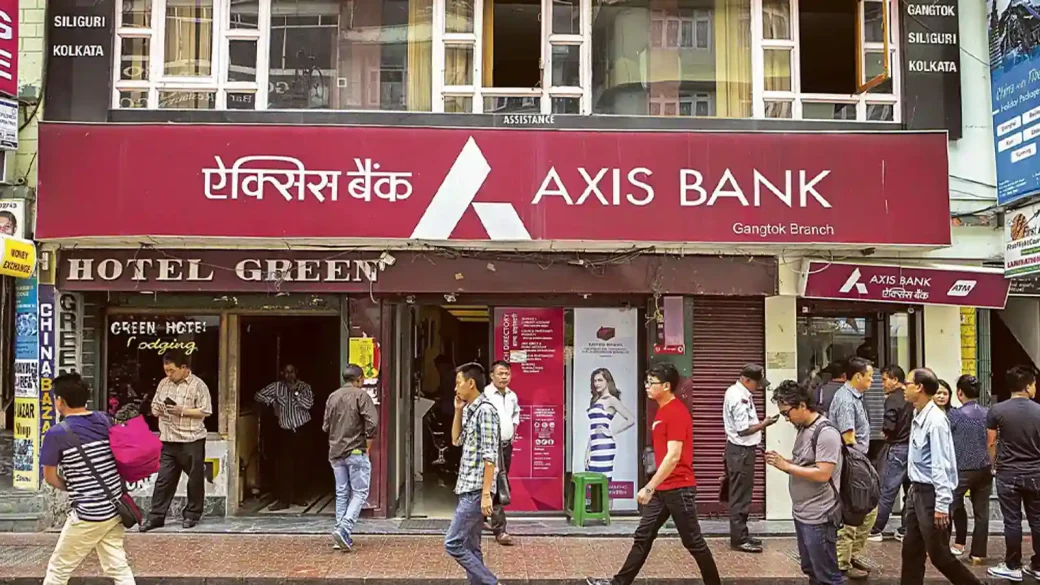
Axis Bank, India’s third-largest private-sector lender, has successfully raised $800 million (approximately ₹66,800 crore) through a dual-tranche US dollar offshore bond issuance under its Global Medium Term Note (GMTN) programme.
The deal locked in heavy demand from major global asset managers—including BlackRock and London-headquartered Ninety One—generating a total order book exceeding $2.2 billion.
1. Dissecting the Dual-Tranche Structure
By structuring the deal into two distinct tranches, Axis Bank simultaneously shored up its core regulatory capital buffers and secured medium-term corporate funding. Because it was executed as a Regulation S offering, the bonds were distributed primarily to institutional investors across Asia and Europe.
| Tranche Asset | Size Raised | Final Coupon/Yield | Strategic Purpose |
| Additional Tier 1 (AT1) Perpetual Notes | $500 Million | 6.875% per annum | Counts as equity to strengthen regulatory Tier-1 capital adequacy. Likely used to refinance older perpetual bonds callable in September. |
| 5-Year Senior Unsecured Notes | $300 Million | 5.348% per annum | Straight commercial debt maturing on June 30, 2031. Provides stable, medium-term foreign currency funding. |
2. Beating the Initial Price Guidance
Strong global investor bidding allowed Axis Bank to price both tranches tightly inside its initial guidance, keeping its long-term borrowing costs down:
- The Senior Debt Compression: Initial targets placed the 5-year senior note at 130 basis points over the 5-year US Treasury. Strong demand squeezed that spread down by 20 basis points, finally pricing at 110 basis points above the US benchmark.
- The AT1 Discount: The risky, perpetual equity-like notes opened with an initial yield guidance of 7.12% before intense bidding compressed the final coupon to 6.875%.
                           ┌──► $500M AT1 Perpetual Notes (Priced lower at 6.875%)
                           │
[$800M Dollar Bond Sale] ──┼──► $300M 5-Year Senior Notes (Compressed to +110 bps over Treasuries)
                           │
                           └──► Order Book: Outstripped supply to cross $2.2 Billion total
3. The Strategic Cushion: RBI’s Concessional Swap
A major catalyst driving Axis Bank—and a wave of other large Indian financial entities—into the offshore bond market is a specialized fiscal sweetener provided by the Reserve Bank of India (RBI).
The Hedging Shield: The bonds qualify for the RBI’s 1.5% fixed-rate concessional swap facility for external commercial borrowings. This allows Axis Bank to instantly convert its newly raised offshore dollar liquidity into Indian Rupees at a heavily discounted rate, completely mitigating foreign exchange volatility and lowering the effective cost of borrowing compared to domestic debt markets.