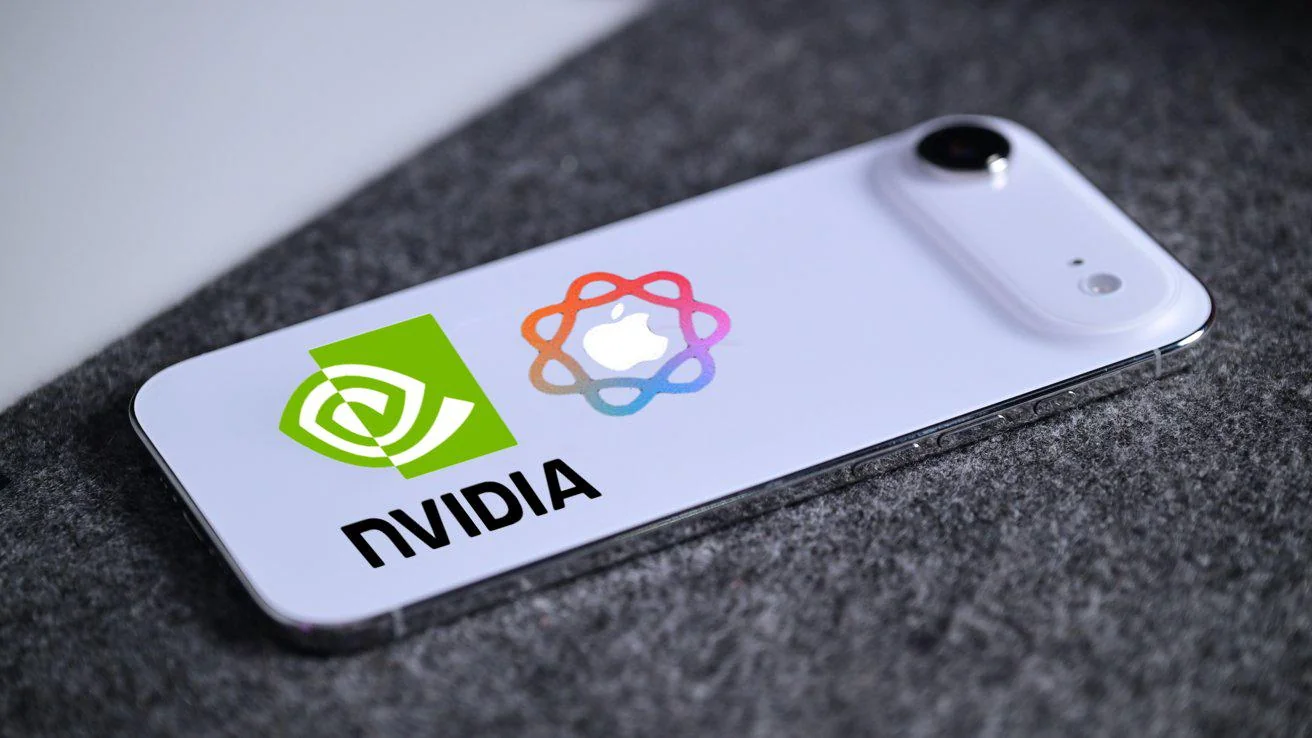
In a distinct shift away from its historic mandate to control every core ingredient of its technology stack, Apple will reportedly rely on NVIDIA’s high-performance hardware to power its heavily upgraded version of Siri.
According to an investigative report from The Information, the tech giant plans to handle complex, heavy voice-assistant requests by tapping into Google’s cloud infrastructure fleet of NVIDIA Blackwell B200 data center chips.
The hardware hand-off anchors a landmark infrastructure compromise: while Apple prides itself on building top-tier mobile and desktop silicon, its in-house server setups reportedly struggled to run Google’s heavy, cloud-based Gemini models at the fast speeds required for real-time conversational tasks.
1. The Cloud Matrix: Google Brains, NVIDIA Muscle
The under-the-hood setup reveals a highly collaborative arrangement between three of the world’s most dominant tech forces to bring Siri into the modern chatbot era:
- The Core Logic: Smaller, high-frequency requests will continue to execute locally on your physical device using Apple’s neural processing units. For dense, multimodal requests requiring deep context analysis, Siri will pull context from a specialized, licensed edition of Google’s Gemini foundation model hosted in the cloud.
- The Silicon Engine: Instead of deploying these server workloads onto Google’s native Tensor Processing Units (TPUs) as originally explored, Apple altered its route to leverage NVIDIA Blackwell B200 GPUs.
- The Performance Leap: Designed explicitly as the architectural successor to Hopper, the Blackwell framework offers substantial upgrades in memory bandwidth, multi-GPU scaling, and raw computational efficiency. This allows the revamped assistant to process massive context arrays without stalling conversational flow.
2. Bridging the Privacy Gulf: Confidential Computing
Entrusting user queries to a competitor’s cloud infrastructure presents an immediate corporate paradox for Apple, which continuously markets absolute consumer data privacy as its primary competitive moat. To safely bridge this gap without compromising user data, Apple is directly leveraging a hardware-level safety net built into NVIDIA’s latest architecture: Confidential Computing.
[User Siri Query] ──► [On-Device Filter] ──► [Google Cloud Pipeline]
                                                    │
                                                    ▼
                                    [NVIDIA Blackwell B200]
                                    • Hardware-level encryption
                                    • Active data sandboxing
                                    • Zero third-party visibility
NVIDIA’s Confidential Computing technology works by creating a secure, isolated sandbox inside the physical GPU memory. Data stays strictly encrypted not just while traveling through transit networks, but while it is actively being processed by the chip cores.
This guarantees that sensitive user tokens, screen-read histories, and file uploads remain completely invisible to unauthorized entities—including Google system administrators and Apple itself.
3. The Unresolved Fate of Private Cloud Compute
The decision to route heavy infrastructure demands through NVIDIA-powered Google Cloud nodes introduces major questions regarding the long-term roadmap of Private Cloud Compute (PCC).
Unveiled at WWDC 2024, PCC was introduced as Apple’s bespoke, highly audited server network running exclusively on Apple Silicon (M-series) hardware to safely scale complex Apple Intelligence operations beyond local device boundaries.
Industry insiders note that while Apple will likely retain the Private Cloud Compute branding to reassure users during commercial rollouts, its internal operations will look starkly different. Because attempts to cleanly port a modified version of Gemini onto Apple Silicon servers reportedly ran too slowly to maintain zero-latency responsiveness, the immediate operational burden is shifting squarely to NVIDIA’s processing clusters.
4. What the Blackwell Overhaul Brings to the Screen
With Worldwide Developers Conference (WWDC 2026) getting underway next week, the Blackwell-backed backend is expected to completely reset the narrative around Siri’s capabilities:
- Full Chatbot Form Factor: The voice assistant is evolving beyond a floating glowing ball into a full-fledged dedicated app and chatbot interface. Users will have the option to toggle voice modes on or off, see chronological message logs, and upload files directly into chat threads.
- Visual and On-Screen Intelligence: By processing heavy multimodal models via Blackwell, Siri will gain the ability to continuously read what is happening on your screen. It can then take contextual actions on your behalf across both native iOS tools and third-party apps.
- Interface Fluidity: The voice assistant will find a new home nested inside the Dynamic Island with custom, fluid animations. Activating the system will seamlessly slide out a centralized “Search or Ask” omni-bar for direct user interaction.
While the technical setup diverges from Apple’s classic, control-everything handbook, the choice proves that the sheer speed of the generative AI race is forcing even the world’s most protective hardware empires to form pragmatic partnerships to stay competitive.
Get the day’s top stories in your inbox
One concise email. No spam, unsubscribe anytime.