Anthropic Micron AI Memory Deal: The Two Companies Will Co-Design Chips for AI
Two companies have made a new deal. One is Anthropic. It builds an AI helper called Claude. The other is Micron. It makes memory chips. Memory is the fast storage a computer uses to hold the data it is working on right now.
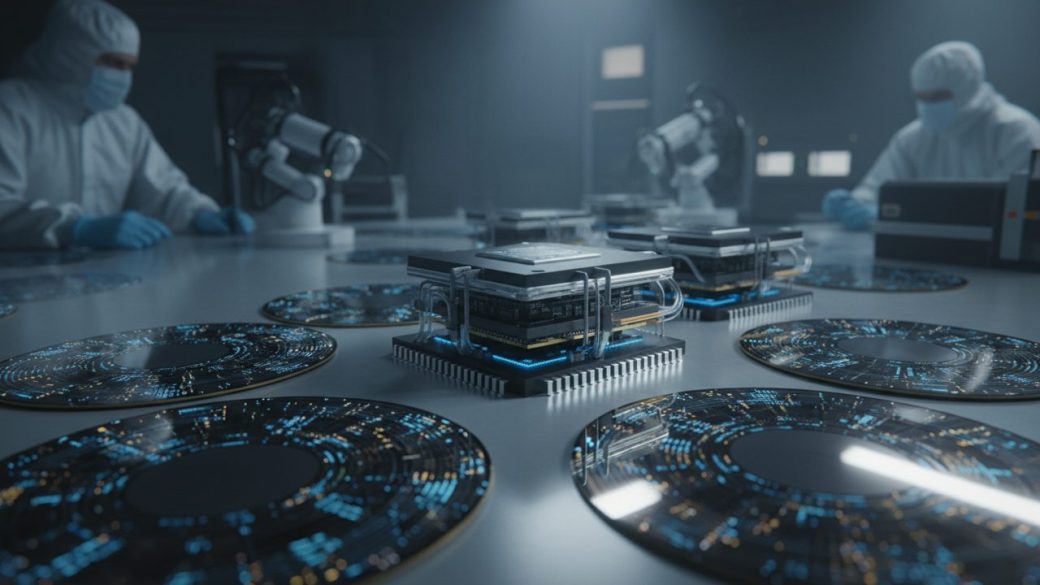
Now the two companies want to design memory hardware together. They want to build it specially for AI.
The deal was shared with the public on June 22, 2026. It is about more than just chips. It mixes four things: hardware design, a long buying contract, software, and money. Let us go through it in easy words.
What is in the Anthropic Micron AI memory deal?
The deal has four main parts. Each part links the two companies in its own way.
- Designing memory together: Both companies will plan the memory design (the way a memory chip is built) as a team. They will build it for AI jobs.
- A multi-year buying contract: A multi-year contract is a promise that lasts for several years. Anthropic promises to buy Micron’s data center products for many years. A data center is a big building full of computers that run online services.
- Using Claude inside Micron: Micron will use Anthropic’s AI, Claude, to help with its own work.
- Putting in money: Micron will put money into Anthropic’s Series H funding round. A funding round is a time when a company collects cash from investors. Investors are people or firms who give money hoping the company grows.
What kind of memory chips are involved?
The deal covers a few kinds of memory and storage that data centers use.
- HBM (high-bandwidth memory): a very fast kind of memory. It can move huge amounts of data quickly. AI chips love it.
- DRAM: the normal working memory that most computers use. It holds the data a computer is using right now.
- SSDs: fast storage drives. They keep your data safe even when the power is turned off.
Why memory matters so much for AI
People often talk about AI processors, like GPUs. A processor is the brain chip that does the math. A GPU is a strong kind of processor that AI uses a lot.
But AI also needs to read and write data very fast. That data sits in the memory.
If the memory is slow, the strong processor has to wait. This wait is called a bottleneck. A bottleneck is a spot where work slows down because one part cannot keep up. Better memory removes that wait.
This matters most during inference. Inference is when an AI answers your question or does a task after it has already learned. It also matters during training. Training is when the AI first learns. Tom Brown is a co-founder of Anthropic. A co-founder is one of the people who started the company. He said memory is very important both for training Claude and for running it.
The two companies also want to study how memory acts under different AI workloads. An AI workload is just the job an AI is doing, like writing text or looking at data. They hope to get better speed. They also hope to use less energy.
Key facts
| Item | Detail |
|---|---|
| AI company | Anthropic (maker of Claude) |
| Chip company | Micron |
| Announcement date | June 22, 2026 |
| Memory types covered | HBM, DRAM, SSDs |
| Micron stock (past year) | Surged more than 1,000 percent |
| Micron CEO | Sumit Sadana |
What the leaders said
Micron’s CEO is Sumit Sadana. A CEO is the top boss of a company. He said the AI boom has “permanently elevated the role of memory and storage solutions from the data center to the edge.” In simple words: AI has made memory chips more important everywhere. That goes from big data centers to small devices in your hand. “The edge” means those small devices, close to the user.
Micron already uses Claude inside its own company. It uses the AI to help write code. It also uses it to run factory and engineering work on its own, with less human effort.
Is there a catch? The “circular deal” worry
Some people called this a “circular deal.” That means one company puts money into another company. Then it buys that company’s products. So the money flows in a loop between the two firms.
These critics worry that such loops can make demand look bigger than it really is. Demand means how much people want to buy something. It is a fair point to keep in mind. Still, this deal also brings real engineering work and a real buying contract.
Why it matters (especially for India and founders)
This deal shows where AI is going. The race is no longer only about who has the best processor. It is also about who has the best memory.
For founders building AI products, this is a good lesson. A founder is a person who starts a company. The cost and speed of your AI app depend a lot on memory and storage. As memory gets faster and uses less power, running AI could get cheaper over time.
For India, this matters too. India is building more data centers. It wants a bigger role in chips and AI. Knowing that memory is now a key battleground helps Indian students and startups pick smart things to learn and build.
AI is moving fast on every side. We have seen new models like GLM-5.2 push the limits. We have seen big platforms launch AWS’s new AI agent services. Hardware deals like this one are the quiet engine behind all of it.
FAQ
What is the Anthropic Micron AI memory deal?
It is a partnership between Anthropic and Micron. They will design memory chips for AI together. They will sign a contract that lasts several years. Micron will use Claude inside its work. And Micron will put money into Anthropic.
What is HBM?
HBM stands for high-bandwidth memory. It is a very fast kind of memory. It moves large amounts of data quickly, which is just what AI chips need.
Why does memory matter for AI?
AI reads and writes huge amounts of data. If the memory is slow, the processor has to wait. Faster memory removes that wait, called a bottleneck, and it also saves energy.
The takeaway
The Anthropic Micron AI memory deal shows that memory is now a core part of the AI race. Designing chips and AI together could make future AI faster and cheaper. We will learn over time whether the “circular deal” worry turns out to be true.
Source: Anthropic and Micron want to co-design AI memory architecture (The Decoder).