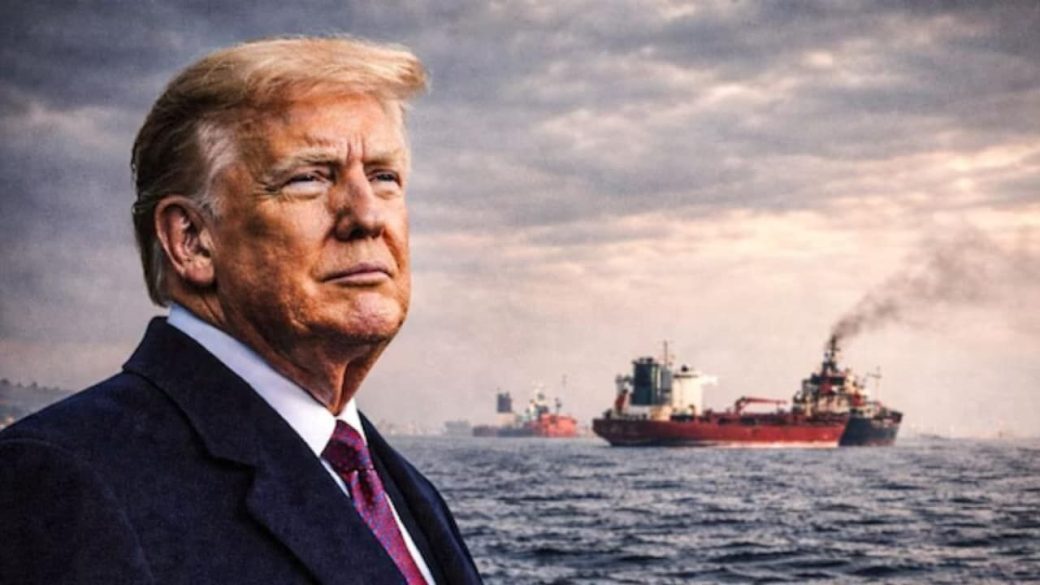
U.S. President Donald Trump has withdrawn his proposed 20% cargo fee on commercial vessels transiting the Strait of Hormuz, replacing the plan with trade and investment agreements with Gulf nations. At the same time, he announced that the United States would maintain a full naval blockade on shipping to and from Iranian ports, while allowing commercial vessels serving non-Iranian destinations to continue using the strategic waterway.
The policy reversal comes just a day after Trump proposed charging ships for using the Strait of Hormuz as compensation for U.S. military efforts to secure the passage. Following discussions with Gulf leaders, Trump said the proposed fee would be abandoned in favor of economic partnerships, while the blockade on Iranian maritime trade would remain in force.
Trump Drops 20% Hormuz Cargo Fee
The U.S. administration has altered its approach to securing one of the world’s most important energy shipping routes.
| Policy Update | Details |
|---|---|
| Previous proposal | 20% cargo fee on ships using the Strait of Hormuz |
| Current decision | Fee withdrawn |
| Replacement | Trade and investment agreements with Gulf countries |
| Iranian shipping | Full U.S. naval blockade remains in place |
The revised policy aims to encourage regional investment while continuing economic pressure on Iran.
Full Blockade on Iranian Shipping Continues
Although the cargo fee has been scrapped, the United States will continue enforcing restrictions on vessels connected to Iran.
According to the announcement:
- Ships entering or leaving Iranian ports remain subject to the blockade.
- Commercial traffic to non-Iranian destinations can continue through the Strait of Hormuz.
- The U.S. says the measure is intended to limit Iran’s maritime trade.
- Freedom of navigation for most international shipping through the strait will continue.
Why Trump Changed Course
The administration cited discussions with Gulf allies as the main reason for reversing the cargo-fee proposal.
Key factors include:
- Planned trade and investment agreements with Gulf nations.
- Concerns raised by regional partners.
- Questions over the legality and practicality of a transit fee.
- Desire to maintain free commercial navigation while isolating Iran.
Why the Strait of Hormuz Matters
| Strategic Importance | Details |
|---|---|
| Global role | One of the world’s busiest energy shipping routes |
| Key cargo | Crude oil, petroleum products and LNG |
| Economic impact | Vital for global energy markets and international trade |
Any disruption in the Strait of Hormuz can significantly affect oil prices, shipping costs, and global supply chains.
Potential Impact on Global Markets
The latest policy could influence several sectors.
Possible effects include:
- Continued uncertainty in global energy markets.
- Elevated geopolitical risks in the Middle East.
- Potential increases in shipping insurance costs.
- Greater volatility in crude oil prices.
- Increased monitoring of maritime traffic through the Gulf.
Challenges Ahead
Several uncertainties remain.
These include:
- Iran’s response to the continued blockade.
- The possibility of further military escalation.
- Impact on commercial shipping.
- Diplomatic efforts to reduce regional tensions.
- Stability of global energy supplies.
Outlook
Trump’s decision to abandon the proposed 20% cargo fee while maintaining a full blockade on Iranian shipping reflects a shift from direct transit charges to a strategy centered on regional economic partnerships and continued sanctions pressure on Iran. The move seeks to preserve free passage for most commercial shipping while restricting maritime trade linked to Iran.
The policy is likely to keep geopolitical tensions elevated in the Gulf, with markets closely watching developments involving shipping security, energy exports, and diplomatic negotiations. As the Strait of Hormuz remains one of the world’s most strategically important maritime chokepoints, any further escalation could have significant consequences for global trade and oil markets.
What It Means for Global Trade
The latest policy highlights how geopolitical decisions can quickly reshape global shipping and energy markets. While withdrawing the transit fee reduces concerns over new costs for international cargo operators, the continued blockade of Iranian shipping maintains pressure on one of the region’s major oil exporters.
For businesses, investors, and governments, the focus will remain on the security of maritime trade routes, oil price movements, and the broader economic impact of prolonged tensions in the Middle East.
Get the day’s top stories in your inbox
One concise email. No spam, unsubscribe anytime.